Now Reading: Cloud Repatriation: When Moving Off the Cloud Makes Sense
-
01
Cloud Repatriation: When Moving Off the Cloud Makes Sense

Introduction to Cloud Repatriation and its Strategic Context
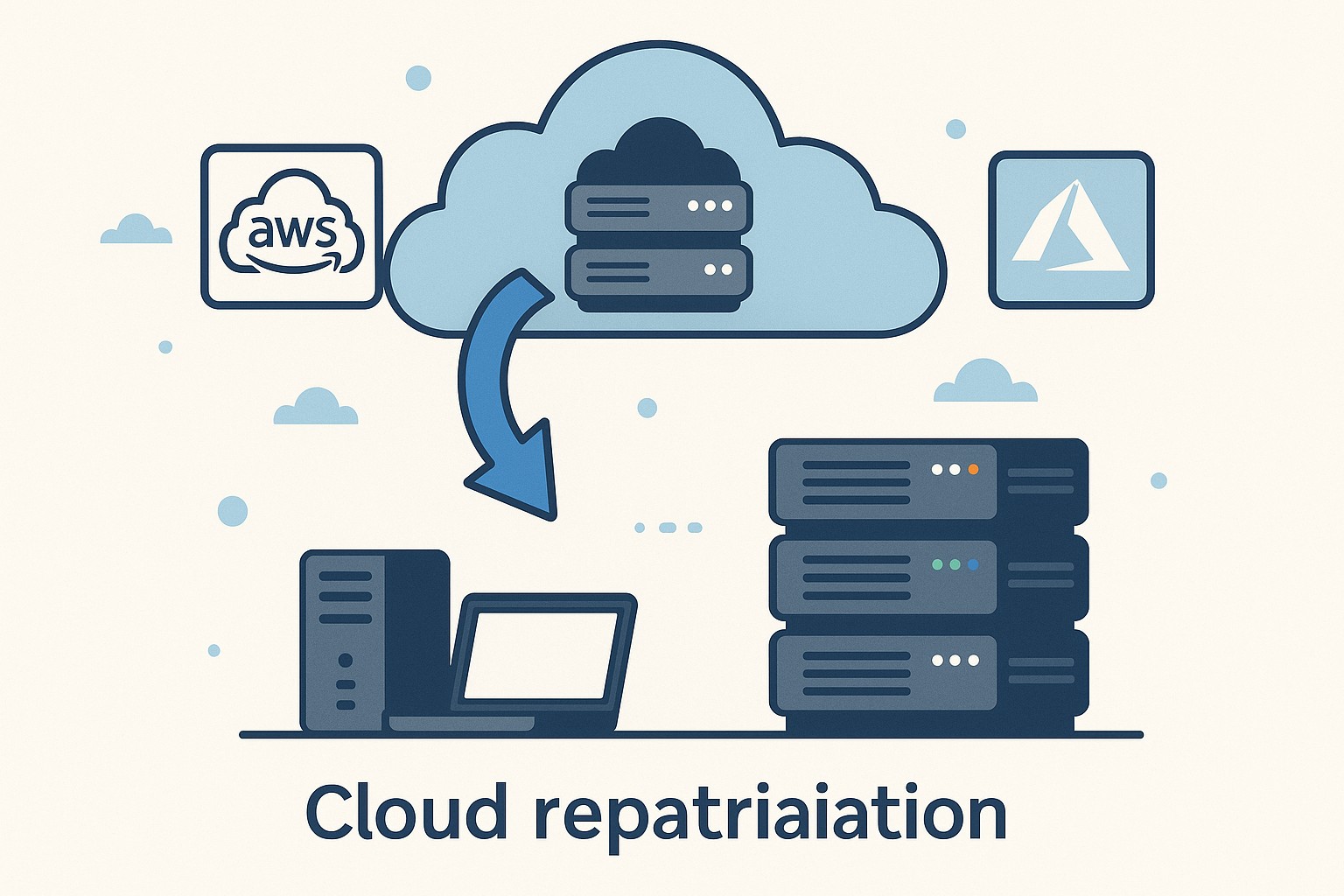
Cloud repatriation describes the deliberate decision to move workloads and data from public cloud environments back toward on‑premises infrastructure or private cloud constructs. It is not a retreat from cloud thinking; rather, it is a strategic recalibration that reflects evolving business needs, cost realities, and governance requirements. In many organizations, repatriation sits alongside cloud adoption, forming a hybrid approach that blends the benefits of external scalability with the control and predictability of internal platforms.
As organizations mature in cloud usage, they often encounter hidden costs, operational complexity, and data governance considerations that are difficult to scale indefinitely in a public cloud. Repatriation acknowledges these dynamics and seeks to optimize the total technology stack by selecting the right destination for each workload. The result can be improved performance, stronger security posture, and better alignment with enterprise roadmaps while preserving the agility that cloud platforms deliver for experimentation and rapid development when appropriate.
Key Drivers for Repatriation
Understanding why repatriation makes sense requires looking at both strategic and practical factors. In many cases, organizations discover that certain workloads, especially those with stringent latency or data residency requirements, perform better or become more cost-effective when kept on or moved to private infrastructure. Others find that the management overhead, billing complexity, or service level guarantees offered by cloud providers do not align with long‑term governance objectives. Below are the most common drivers that lead to reconsidering a cloud-first posture.
- Cost predictability and total cost of ownership, including data egress, storage, and steady-state compute costs
- Need for tighter control over security, access, and audit trails
- Performance and latency requirements closely tied to on-premises networks
- Regulatory constraints and data residency obligations that require explicit data localization
- Data gravity and the practical challenges of frequent data transfers between environments
- Existing investments in private cloud tooling, automation, and expertise that can be leveraged more effectively
Economic and Total Cost of Ownership Considerations
Cost is the most visible trigger for repatriation, but the economics are nuanced. Public cloud offers pay‑as‑you‑go patterns that are compelling for certain workloads, yet they can accumulate to a surprising sum when data movement, peak capacity, disaster recovery, and management tooling are all included. A rigorous TCO exercise compares both platforms across direct costs (compute, storage, data transfer) and indirect costs (people, process, compliance).
To make an informed decision, organizations often build a multi‑dimensional model that includes workload profiling, peak versus steady‑state usage, and the cost of risk mitigation in each environment. This allows decision makers to distinguish cases where temporary cloud bursts are useful from cases where an enduring private or hybrid approach yields better long‑term value. The aim is not to favor one path outright but to align the most durable economic signal with the business outcome—stability, innovation velocity, or a sustainable security posture.
Technical Considerations: Performance, Architecture, and Data Management
Repatriation touches architecture, data pipelines, and operational practices. Workloads that require deterministic performance, deterministic security controls, or predictable maintenance windows often benefit from a more controlled environment. Conversely, applications that leverage cloud-native services, large-scale global distribution, or managed services may remain best suited to public cloud unless substantial integration and modernization efforts are undertaken. The technical decision framework typically weighs integration complexity, data transfer realities, and the potential for modernization during the transition.
In practice, successful repatriation involves designing target environments with clear boundaries, standardized operating models, and automated governance. It may require refactoring certain components to leverage private cloud capabilities such as orchestration platforms, software-defined networking, and enhanced monitoring, while keeping other components in the public cloud to capitalize on scalable analytics or AI services. A disciplined approach reduces risk and helps ensure that the new home for each workload remains aligned with business goals over time.
Security, Compliance, and Control in Repatriation Initiatives
Security and compliance considerations are central to any repatriation strategy. Moving away from a shared, multi‑tenant cloud environment can simplify some control points while introducing new responsibilities, particularly around data protection, identity management, and incident response. Organizations must map security requirements to the capabilities of the target environment, including encryption at rest and in transit, access controls, and robust logging for audit readiness. A well‑designed repatriation program treats security as an ongoing outcome rather than a one‑time checkbox.
Key concerns often revolve around data governance, regulatory alignment, and third‑party risk. The repatriation plan should define data classification schemes, retention policies, and continuous compliance monitoring. It is equally important to establish clear incident response playbooks, vulnerability management cycles, and routine assurance activities to maintain a strong security posture in the new environment while preserving flexibility for future modernization efforts.
Migration Patterns and Phasing: Planning a Repatriation Program
Most successful repatriation efforts follow a structured phased approach. By starting with careful assessment, organizations reduce risk, validate assumptions, and learn from early pilots before scaling. The phased pattern typically combines discovery, rationalization, target design, migration, and optimization. Each phase builds on the previous one, with governance and stakeholder engagement playing a critical role throughout the journey.
- Assess workloads and classify workloads by importance, sensitivity, and technical fit for private versus public environments
- Map dependencies and data flows to understand data transfer needs and integration points
- Choose target environments (on‑prem, private cloud, or hybrid) based on architecture and risk profiles
- Plan data synchronization, cutover windows, and rollback strategies to minimize downtime
- Pilot the migration with representative workloads to validate performance and security controls
- Cutover, optimize, and continuously monitor to sustain value and adapt to evolving requirements
Organizational Readiness, Governance, and Operating Model Changes
People and process changes are as important as technology in repatriation programs. Establishing a clear operating model, roles, and decision rights helps ensure that technical choices align with business priorities and that cost accountability is transparent. Organizations often implement governance structures that span architecture review, security, compliance, financial management, and supplier management to sustain momentum and avoid backsliding into ad hoc decisions.
A practical governance framework emphasizes collaboration among central IT, line of business teams, security, and procurement. It also requires a disciplined approach to automation, standards, and documentation so that the repatriated environment remains maintainable as workloads evolve. When combined with a plan for training and talent development, governance increases the likelihood that the repatriation program delivers durable benefits without creating brittle silos or accidental complexity.
Repatriation Readiness Checklist (Practical Guidance)
- Workload inventory with ownership, criticality, and data sensitivity classifications
- Cost and performance baselines across candidate targets
- Security and compliance mapping for each workload in its target environment
Operational Best Practices and Modernization Opportunities
Repatriation is also an opportunity to re‑engineer and modernize applications for a private environment. This can involve containerization, orchestration, and modernization of legacy components to reduce maintenance costs and improve resilience. The process should balance preserving business capabilities with adopting practices that make the on‑prem or private cloud environment more agile, testable, and observable. A deliberate modernization effort can lead to longer‑term advantages, including easier capacity planning, consistent automation, and tighter integration with internal security and compliance controls.
Resource Planning, Skills, and Talent Strategy
Backing a repatriation program requires a clear view of the required skill sets and resource commitments. On‑prem and private cloud environments demand different tooling expertise, monitoring paradigms, and incident response practices than a public cloud. Organizations often invest in retraining, partner support, and targeted hires to close capability gaps while maintaining project momentum. A thoughtful talent strategy also considers knowledge transfer to ensure that internal teams retain capability to operate, optimize, and evolve the repatriated stack over time.
Vendor and Tooling Strategy for a Hybrid Approach
Choosing the right mix of platforms, tools, and managed services is critical to sustaining a successful repatriation. While some workloads benefit from private cloud tooling, others may rely on hybrid connectivity and cloud‑agnostic management platforms that reduce drift and simplify governance. An effective vendor strategy emphasizes interoperability, clear pricing models, and well‑defined exit or migration pathways. The goal is to keep options open, avoid lock‑in, and enable continuous improvement across the technology stack.
Organizational Communication and Change Management
Finally, communication and change management are essential to the success of repatriation programs. Stakeholders across the business must understand the rationale, timing, and expected benefits. Transparent reporting, regular updates on cost and performance, and inclusive decision‑making help maintain trust and ensure that the program remains aligned with strategic priorities. A robust change management plan also addresses potential resistance, clarifies new processes, and provides support for teams adapting to new environments and operating models.
FAQ
What is cloud repatriation, and how is it different from migrating to the cloud?
Cloud repatriation is the deliberate movement of workloads from a public cloud back to on‑premises infrastructure or a private cloud, typically to regain control, reduce long‑term costs, or meet regulatory and performance requirements. In contrast, migrating to the cloud generally means expanding or shifting workloads to public cloud environments to leverage elasticity, managed services, and scalability. Repatriation may be part of a broader hybrid strategy that uses the strengths of both private and public clouds.
When should a company consider repatriation rather than expanding cloud usage?
Consider repatriation when total cost of ownership, data residency, latency, or regulatory constraints make a private environment more attractive for certain workloads. If a workload experiences unpredictable spikes in demand, a hybrid approach that retains core systems on private infrastructure while keeping experimentation in the cloud can offer better governance and cost control. Decision criteria should include performance, security, data governance, and the availability of internal capabilities to operate the target environment efficiently.
How do you calculate the total cost of ownership for repatriation projects?
A rigorous TCO calculation accounts for direct costs (compute, storage, licensing, and data transfer between environments) as well as indirect costs (staff time, tooling, maintenance, and incident response). It should also factor in risk reduction, compliance impacts, and potential benefits from modernization or automation. In many cases, a multi‑year horizon with scenario analysis (baseline private cloud, hybrid, and ongoing cloud usage) yields the clearest view of value and risk.
What are common security concerns during repatriation, and how can they be mitigated?
Common concerns include data protection, access governance, and incident management in a private environment. Mitigation strategies involve implementing strong encryption, granular identity and access controls, centralized logging, regular vulnerability management, and tested disaster recovery. A clear mapping of security controls to business requirements, along with ongoing validation and independent audits, helps sustain a robust security posture in the repatriated environment.
How should organizations approach governance and staffing during a repatriation program?
Organizations should establish a formal operating model with defined roles, responsibilities, and decision rights that cover architecture, security, cost management, and vendor governance. Staffing plans should align with the phases of the project, emphasize cross‑functional collaboration, and include training and knowledge transfer to secure long‑term capability. Regular reviews, transparent reporting of metrics, and a clear escalation path for risk or scope changes help maintain momentum and accountability throughout the program.