Now Reading: CTO vs CIO: Differences in Tech Leadership Roles
-
01
CTO vs CIO: Differences in Tech Leadership Roles

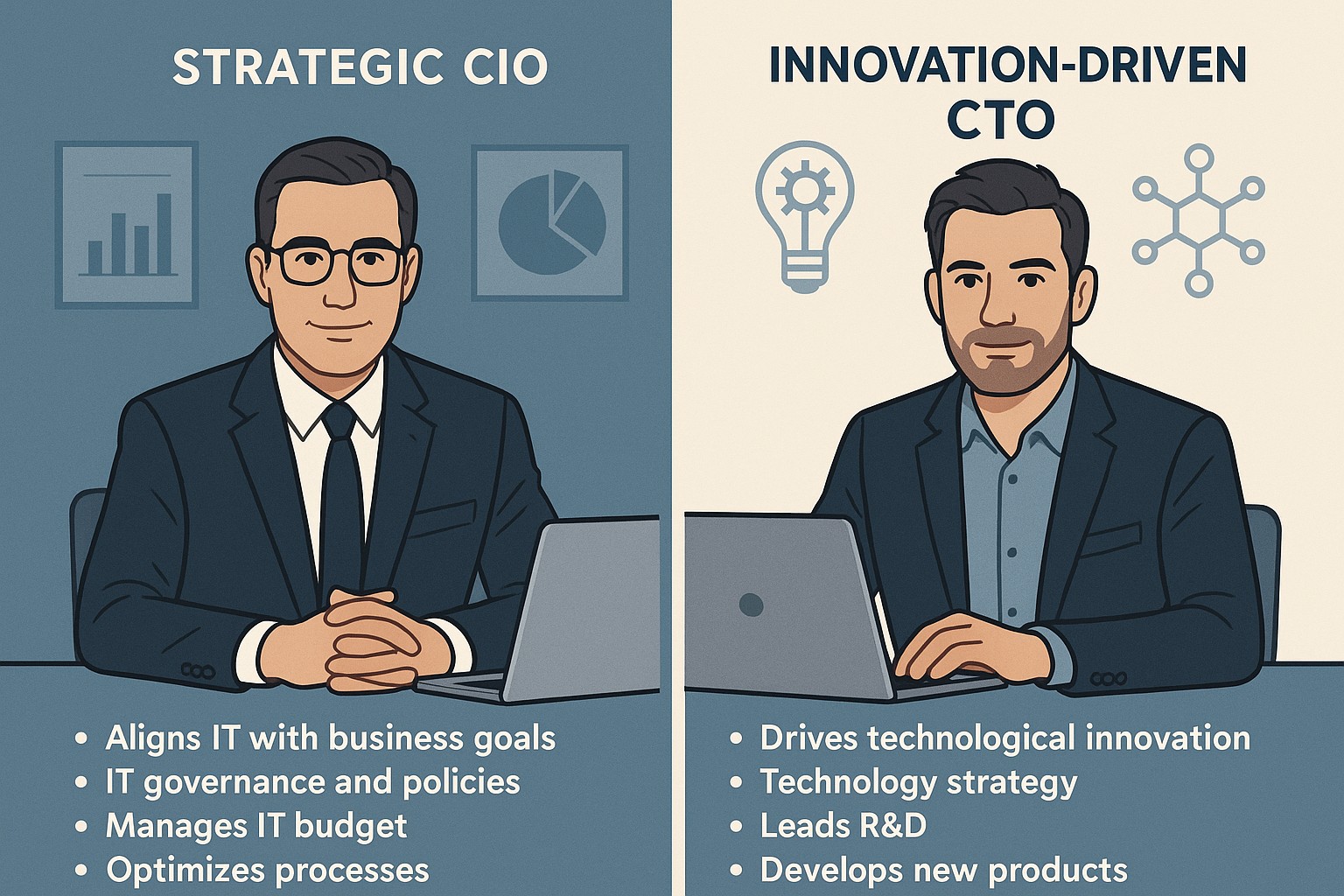
CTO vs CIO: Distinct Lenses on Technology Leadership
Across industries, the CTO and CIO occupy distinct but overlapping domains in technology leadership. The CTO tends to own the external technology strategy that fuels growth, differentiates products, and shapes the platform for innovation. The CIO, by contrast, is responsible for the internal information systems that keep the business running—its data, its applications, and its infrastructure. Together they form a two-front approach to technology: one eye on market-facing capabilities and product velocity, the other on operational resilience, governance, and risk management. This separation is not a dichotomy but a spectrum; the exact split depends on company strategy, industry regulations, and stage of digital maturity. When aligned, CTO and CIO decisions reinforce each other: architecture choices support product goals, while information systems enable reliable delivery and decision support.
A modern digital enterprise requires both roles to move with urgency. The CTO’s work often centers on scouting technology trends, building scalable platforms, and creating an engineering culture that can ship quickly while maintaining quality. The CIO’s remit includes maintaining service levels, protecting data, and steering the portfolio of enterprise applications. As technology becomes the backbone of business strategy, the two leaders must coordinate around roadmaps, budgeting, and governance to ensure that innovation does not outpace operational capability, and that reliable operations can be leveraged to accelerate experimentation. In practice, many organizations adapt these roles to their unique contexts—sometimes with a single executive wearing both hats, and sometimes with matrixed teams where product managers and IT service leaders collaborate under shared objectives.
Primary Focus of the CTO: Driving Innovation, Architecture, and Product-Technology Strategy
The CTO’s domain is outward-facing and future-oriented. This leader is responsible for translating business strategy into a technology roadmap that enables new products, creates competitive differentiation, and opens up new ecosystems. The CTO sets the architectural vision for platforms, APIs, data standards, and developer experience, ensuring that the technology stack can scale with product demand while staying adaptable to changing market needs. A core part of this remit is to balance experimentation with disciplined delivery, to ensure that prototypes and pilots eventually mature into production capabilities that customers can rely on. In many organizations, the CTO also acts as a bridge to external partners, vendors, and communities, seeking opportunities to accelerate innovation through collaboration and open ecosystems.
To execute effectively, the CTO builds a coherent pipeline of innovation initiatives, aligns them with product strategy, and manages a portfolio of bets that range from incremental improvements to disruptive breakthroughs. This includes maintaining a backlog of architectural decisions, evaluating emerging technologies, and guiding the engineering culture toward speed without sacrificing reliability. The CTO also shoulders responsibility for security by design, scalability, and performance as primary design principles rather than afterthoughts. The end goal is to enable the business to differentiate itself in the market through technology-enabled capabilities, faster time to value, and a more resilient platform that can support growth across products, channels, and geographies.
- Define technology strategy that is tightly linked to product-market fit and growth objectives
- Drive product engineering and platform architecture to support rapid experimentation and scalable delivery
- Scout and integrate emerging technologies, partnerships, and ecosystems
- Ensure security-by-design, reliability, and performance are woven into the design from day one
- Lead research and development efforts, prototypes, and MVPs that de-risk major bets
- Align engineering practices, DevOps, and release governance with business outcomes
Primary Focus of the CIO: Information Systems, Governance, and Operational Excellence
The CIO concentrates on the internal machinery that keeps the business running. This includes the information systems portfolio, data architecture, cybersecurity, IT service management, and the controls that ensure regulatory compliance. The CIO is responsible for delivering dependable IT services to employees, customers, and partners, optimizing costs, and maintaining the governance framework that protects data and mitigates risk. In many organizations, the CIO also oversees enterprise applications, infrastructure, and the integration layer that connects disparate systems into a coherent operating model. The goal is to create a stable, secure, and cost-efficient information backbone that enables the business to assemble, deploy, and scale capabilities with confidence.
Effective CIO leadership requires balancing day-to-day operational excellence with strategic investments in modernization. This means designing robust IT operations, formalizing incident response, and implementing data governance that ensures data quality, lineage, privacy, and compliance. The CIO collaborates with finance, risk, compliance, and business units to articulate service-level expectations and to monitor performance against a set of well-defined metrics. By turning IT from a cost center into a strategic enabler of business outcomes, the CIO helps ensure that internal processes, analytics, and decision support systems deliver reliable value to the organization and its customers.
- Oversee IT operations, service management, and end-user support to ensure reliable service levels
- Manage enterprise data governance, privacy, security, and regulatory compliance
- Establish IT policies, risk management frameworks, and audit readiness
- Align infrastructure, applications, and integrations with business continuity and disaster recovery plans
- Drive enterprise applications strategy and automation to improve efficiency and interoperability
- Optimize IT costs, vendor management, and portfolio prioritization
Collaboration and Governance: How CTO and CIO Align for Digital Transformation
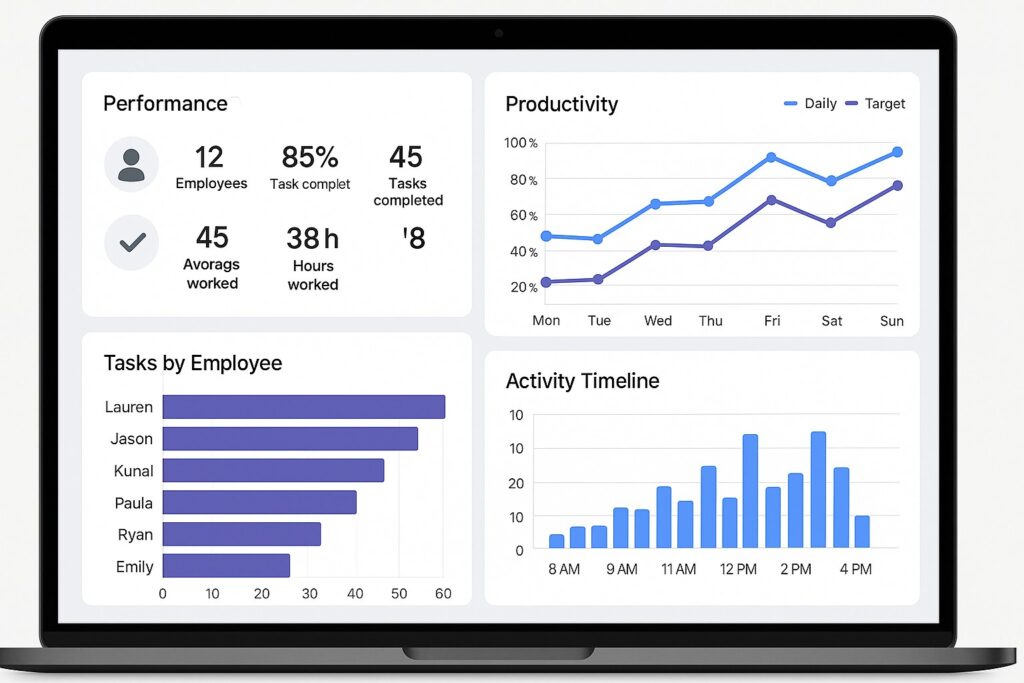
Successful digital transformation depends on strong collaboration between the CTO and CIO. They must establish shared objectives, aligned roadmaps, and transparent governance mechanisms that prevent duplication while maximizing synergy. This collaboration rests on clear decision rights, regular communication, and a principled approach to risk and resource allocation. When CTO and CIO leaders co-create strategic plans, the resulting architecture supports both product velocity and dependable operations. This dual focus reduces the risk of chasing innovation at the expense of stability, or of preserving stability at the cost of losing competitive differentiation. The most effective organizations structure joint planning sessions, escalation paths, and performance dashboards that make the interdependencies between product innovation and operational capability visible to the executive team and the board.
In practice, several mechanisms help sustain productive collaboration. Cross-functional steering committees ensure that major initiatives receive input from product, engineering, IT, risk, security, and finance. A combined program management office coordinates roadmaps and milestones, while a shared risk and compliance framework aligns security and data governance with business objectives. Regular cadence meetings—quarterly strategic reviews and monthly execution reviews—keep both sides synchronized on priorities, budgets, and resource allocation. Finally, fostering a culture of mutual respect for each role’s domain helps teams balance ambitious innovation with the discipline required to scale responsibly.
- Joint governance structures and decision rights for high-impact initiatives
- Regular strategy reviews and coordinated quarterly roadmaps
- Common metrics, dashboards, and reporting to leadership and stakeholders
- Clear escalation paths for incidents that affect both technology layers
- Cross-functional teams and program management to drive end-to-end delivery
- Defined service level agreements and expectations for internal customers
Organizational Impact and Talent: Building Capabilities Across CTO and CIO Functions
Beyond individual responsibilities, the most enduring impact comes from how the CTO and CIO cultivate capabilities across the organization. This includes attracting and developing technical leadership, fostering collaboration between product and IT teams, and embedding a culture that values both experimentation and reliability. A mature organization aligns performance incentives with shared outcomes—such as time-to-market for strategic initiatives, system resilience, data quality, and the ability to respond quickly to regulatory changes. The talent strategy should emphasize cross-functional movement, mentorship, and ongoing learning that bridges the gap between product management, software engineering, data analytics, and IT operations. In the long run, this creates a workforce capable of sustaining continuous improvement while delivering on ambitious business goals.
Leadership in this space also entails shaping organizational design and governance around risk, privacy, security, and ethics. The CTO and CIO should model disciplined risk-taking, ensuring that experimentation with new platforms and data practices does not undermine controls or customer trust. By investing in governance frameworks, documentation, and transparent communication, they enable teams to move faster with confidence. This approach helps the business stay competitive while maintaining a resilient operational posture, ultimately turning technology from a potential bottleneck into a source of strategic advantage.
FAQ
What is the primary difference between a CTO and CIO?
The primary difference lies in focus and scope. The CTO concentrates on externally facing technology strategy, product platforms, and innovation that drives growth and competitive differentiation. The CIO focuses on internally facing information systems, data governance, IT operations, and risk management that ensure reliability, efficiency, and regulatory compliance. In many organizations, these roles collaborate closely, yet their core responsibilities center on different endpoints: growth-oriented innovation versus stable, compliant operations.
How do the CTO and CIO collaborate during a digital transformation?
Collaboration occurs through aligned roadmaps, joint governance, and shared metrics that bridge product goals with operational capabilities. They establish common communication channels, regular strategy and execution reviews, and cross-functional teams that include product management, engineering, IT operations, security, and risk. A successful collaboration preserves speed and experimentation while ensuring resilience, data integrity, and security, thereby enabling the organization to move quickly without compromising control or reliability.
What leadership traits distinguish CTOs from CIOs?
CTOs typically exhibit a strong orientation toward strategic vision, customer-centric thinking, and a proclivity for experimentation and architectural foresight. They are skilled at evangelizing technology as a driver of product value and business growth, and they excel at navigating external ecosystems and partnerships. CIOs tend to emphasize operational discipline, governance, risk management, and reliability. They excel at optimizing processes, enforcing policies, and delivering stable services that underpin business continuity. Both roles require collaboration, clear communication, and the ability to translate technical concepts into business impact, but their emphasis on outward-facing innovation versus inward-facing controls distinguishes their leadership profiles.
When might a company consolidate roles or restructure these functions, and what triggers that decision?
A consolidation or restructuring often occurs in response to growth scale, regulatory complexity, or shifting strategic priorities. Startups that lean toward speed may combine the roles under one executive to streamline decision-making. Large, mature enterprises with complex governance needs might separate them to avoid bottlenecks and to ensure both innovation and compliance receive dedicated attention. Triggers include persistent misalignment between product velocity and operational stability, frequent incidents that indicate weak governance, or a strategic pivot that requires a unified or reorganized technology leadership model. The decision should be guided by a clear assessment of capacity, risk, and the anticipated value of aligning or differentiating the leadership responsibilities.
How should organizations measure the success of CTO and CIO initiatives?
Measurement should reflect both innovation outcomes and operational excellence. For the CTO, consider metrics such as time to market for new features, platform scalability, rate of successful experiments, and the value generated from partnerships with ecosystems. For the CIO, focus on service reliability, incident resolution times, data quality, regulatory compliance, and total cost of IT ownership. A blended scorecard that links these metrics to strategic objectives—such as revenue growth, customer satisfaction, and risk posture—helps leadership assess whether the combined technology leadership is delivering the desired business impact.