Now Reading: Customer Churn Analysis: Using Analytics to Reduce Churn
-
01
Customer Churn Analysis: Using Analytics to Reduce Churn

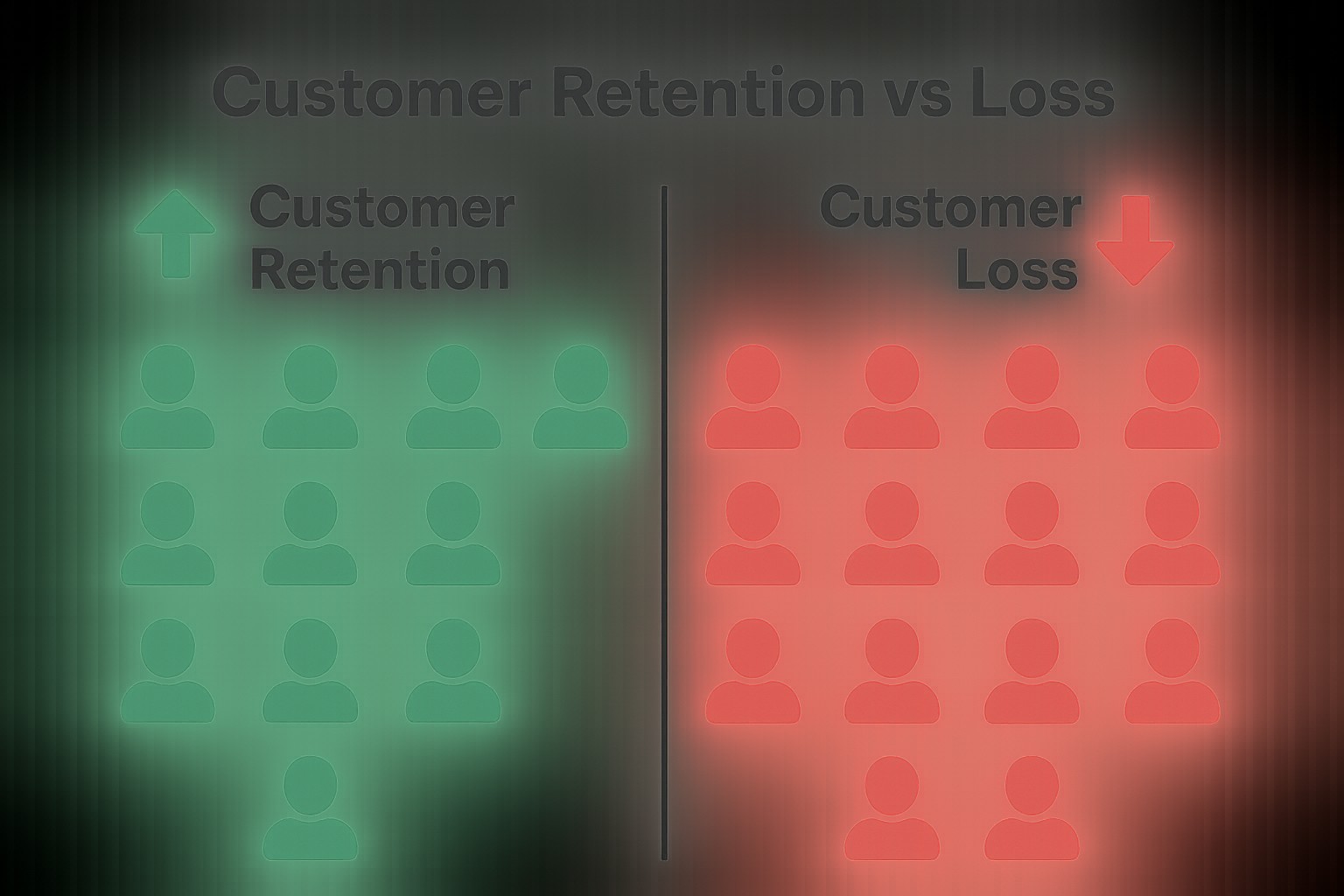
Understanding Churn and the Value of Analytics
Churn refers to the loss of customers over a defined period, and it is a fundamental signal of product-market fit, customer satisfaction, and competitive positioning. While churn can be measured in many ways, the core idea is to track how many customers stop using a service and, crucially, what happens to the revenue lost as a result. Revenue churn captures the monetary impact of those departures, while gross churn focuses on customer counts alone. In many businesses, reducing churn yields a larger and faster payoff than chasing new customers, making analytics an essential capability for sustaining growth. A data-driven approach brings discipline to the pursuit of retention by identifying which customers are at risk and why they are at risk, rather than relying on gut feeling or anecdotal evidence.
Analytics-based churn programs begin with a clear measurement framework that ties customer behavior to churn outcomes. This means linking product usage signals, pricing events, support interactions, and engagement patterns to the likelihood of leaving. Segmentation reveals which groups churn at higher rates, while time-to-event analyses help pinpoint critical windows when customers are most vulnerable. By combining descriptive dashboards with predictive models, organizations can shift from explaining past churn to anticipating future churn and designing targeted interventions that prevent it.
A mature churn program aligns analytics with frontline teams—product, marketing, and customer success. It creates clear ownership of churn drivers, supports rapid experimentation, and tracks business impact in near real time. The outcome is not a single insight but a sustainable feedback loop: data informs action, action alters behavior, and new data refines the understanding of churn dynamics.
Key Churn Metrics and Diagnostic Measures
To diagnose churn accurately, teams rely on a spectrum of metrics that capture behavior, value, and risk. Each metric offers a different lens on why customers leave and when they are most likely to depart. Interpreting these metrics requires context, including seasonality, customer segment, product lifecycle stage, and the presence of any recent changes to pricing or onboarding. A rising revenue churn alongside stable customer churn, for example, often signals that high-value customers are leaving or reducing their spend rather than a broad exodus of all users.
- Churn rate
- Revenue churn
- Net revenue retention
- Gross churn
- Customer lifetime value impact
- Cohort churn
- Reactivation rate
- Time-to-churn
- Activation rate and time-to-first-value
- Engagement churn (stickiness, DAU/MAU)
These metrics become powerful when paired with cohort analysis and diagnostic dashboards. For instance, cohort churn can reveal whether recent onboarding changes are improving early retention, while time-to-churn insights indicate when to trigger proactive outreach. When interpreted in combination, they help teams distinguish between product issues, pricing friction, and support gaps as drivers of churn, enabling more precise interventions.
Data Sources, Quality, and Governance
Effective churn analytics depends on clean, integrated data. Core sources include product event streams that capture feature usage and engagement, subscription and billing records that reflect active status and revenue, customer support tickets that reveal friction, and marketing or onboarding communications that influence perception and value realization. The value of analytics rises when these sources are harmonized around common customer identifiers and time zones, so that signals from different systems can be stitched into a coherent customer journey.
Data quality requires governance processes such as standardized definitions, deduplication, data validation, and lineage tracking. A mature program also treats privacy and consent as a first-order consideration, embedding data minimization, access controls, and transparent model disclosure into daily workflows. Regular data quality checks, coupled with guardrails for data drift, help ensure that churn predictions remain accurate over time and that interventions do not misfire due to stale signals.
Modeling Approaches to Predict Churn
Predicting churn starts with a strong data foundation and thoughtful feature engineering that captures usage patterns, value signals, and friction points. The modeling approach should balance predictive performance with interpretability and operational practicality. The following progression reflects common practice in organizations seeking reliable, actionable churn models.
- Data preparation and feature engineering
- Baseline models (logistic regression) for interpretability and quick deployment
- Survival analysis to model time-to-churn and identify drift in risk over the customer lifecycle
- Tree-based machine learning models (random forest, gradient boosting) for capturing nonlinear patterns
- Validation, calibration, and deployment considerations to ensure reliable scores and governance
Beyond model selection, successful churn prediction emphasizes robust evaluation: holdout validation, backtesting on historical cohorts, calibration of predicted risk to actual outcomes, and monitoring for model drift after deployment. Models should be integrated into a workflow that triggers timely actions, such as onboarding nudges, targeted offers, or risk-based customer success outreach. Interpretability tools can help stakeholders understand drivers of risk, facilitating buy-in and responsible decision-making.
From Insights to Action: Retention Strategies Informed by Analytics
Analytics-driven retention translates risk signals into targeted, value-adding interventions that customers experience as meaningful improvements. The best strategies are data-informed, customer-centric, and executed with discipline to avoid fatigue or perception of intrusion. A practical way to operationalize insights is to implement interventions that are timely, measurable, and scalable across segments.
- Personalization and segmentation: tailor messaging, onboarding paths, and feature recommendations to high-risk cohorts
- Onboarding optimization: shorten time-to-value for new users and reinforce early wins to reduce early churn
- Proactive engagement campaigns: schedule check-ins, health checks, and proactive support for customers showing usage or satisfaction signals decline
- Product-led growth and feedback loops: use product analytics to surface friction points and prioritize improvements that reduce churn drivers
- Price optimization and packaging: adjust plans, bundle features, and communicate value changes transparently to preserve willingness to stay
To maximize impact, these tactics should be tested and refined in small, isolated experiments before broader rollout. Cross-functional collaboration ensures that insights from analytics translate into customer experiences that feel value-driven rather than intrusive. Documentation of expected outcomes, success criteria, and post-implementation review helps sustain momentum and align stakeholders around shared retention goals.
Measuring Impact, Ethics, and Governance
Because churn programs influence both revenue and customer experience, it is essential to design experiments with appropriate controls and clear success metrics. A/B tests, quasi-experimental designs, and pre-post analyses help quantify the effect of retention initiatives on churn, expansion, and overall lifetime value. Effectively interpreting these results requires considering seasonality, cohort composition, and potential network effects where interventions in one segment influence another.
Ethical use of data is a cornerstone of credible analytics practice. Minimize reliance on sensitive attributes, implement opt-out options where appropriate, and document model decisions to support accountability. Ongoing monitoring for model drift and unintended consequences helps maintain trust with customers and reduces risk of bias or deteriorating performance. Governance should also clarify roles, data access, model iteration cadence, and escalation paths when interventions underperform or raise concerns.
FAQ
What is customer churn, and why does analytics matter?
Customer churn is the rate at which customers stop using a product or service over a defined period, and analytics matters because it reveals not just how many leave, but why and when. By translating churn signals into actionable insights, analytics enables proactive retention strategies, better onboarding, and product improvements that reduce the likelihood of departure, ultimately protecting revenue and improving long-term value.
How do you calculate churn rate?
Churn rate is typically calculated as the number of customers who canceled or became inactive during a period divided by the number of customers at the start of that period. For revenue-driven contexts, revenue churn looks at lost recurring revenue from departing customers. Many teams also track net revenue retention, which accounts for expansion revenue from remaining customers. Using multiple churn definitions provides a fuller picture of risk and opportunity.
What data do I need to predict churn?
Predicting churn requires a mix of behavioral, transactional, and contextual data: product usage events, time-to-first-value metrics, subscription status and payment history, support interactions and sentiment, onboarding progress, feature adoption, and marketing engagement. Demographic or firmographic information can help for segmentation, but it should be used cautiously to avoid biased outcomes. Clean, well-integrated data with consistent identifiers is essential for reliable predictions.
Which modeling technique is best for churn prediction?
There is no single best method; the choice depends on data volume, interpretability needs, and deployment constraints. Logistic regression offers strong interpretability and quick wins for baseline models. Survival analysis is valuable for time-to-churn insights. Tree-based methods like random forests or gradient boosting can capture complex patterns and interactions. A practical approach combines methods, validating results against business goals and ensuring alignment with deployment realities.
How can analytics-driven strategies be implemented without disrupting customers?
Adopt a cautious, test-and-learn approach with clear guardrails. Start with small, controlled experiments to validate hypotheses, then escalate to targeted segments. Communicate value transparently, respect user preferences, and avoid sending excessive or irrelevant messages. Align retention actions with customer success and product teams to ensure interventions feel helpful rather than intrusive, and monitor customer sentiment to detect any negative reactions early.
How do you measure the impact of churn reduction initiatives?
Impact is measured through a combination of churn rate changes, retention improvements, and shifts in lifetime value, often assessed via randomized or quasi-experimental designs. Pre- and post-implementation comparisons, along with control groups, help isolate the effect of the intervention. Additional metrics such as activation rates, time-to-value, net promoter score, and revenue retention provide a holistic view of how retention efforts affect customer health and business outcomes.