Now Reading: Data Lake vs Data Warehouse: Key Differences
-
01
Data Lake vs Data Warehouse: Key Differences

What is a Data Lake
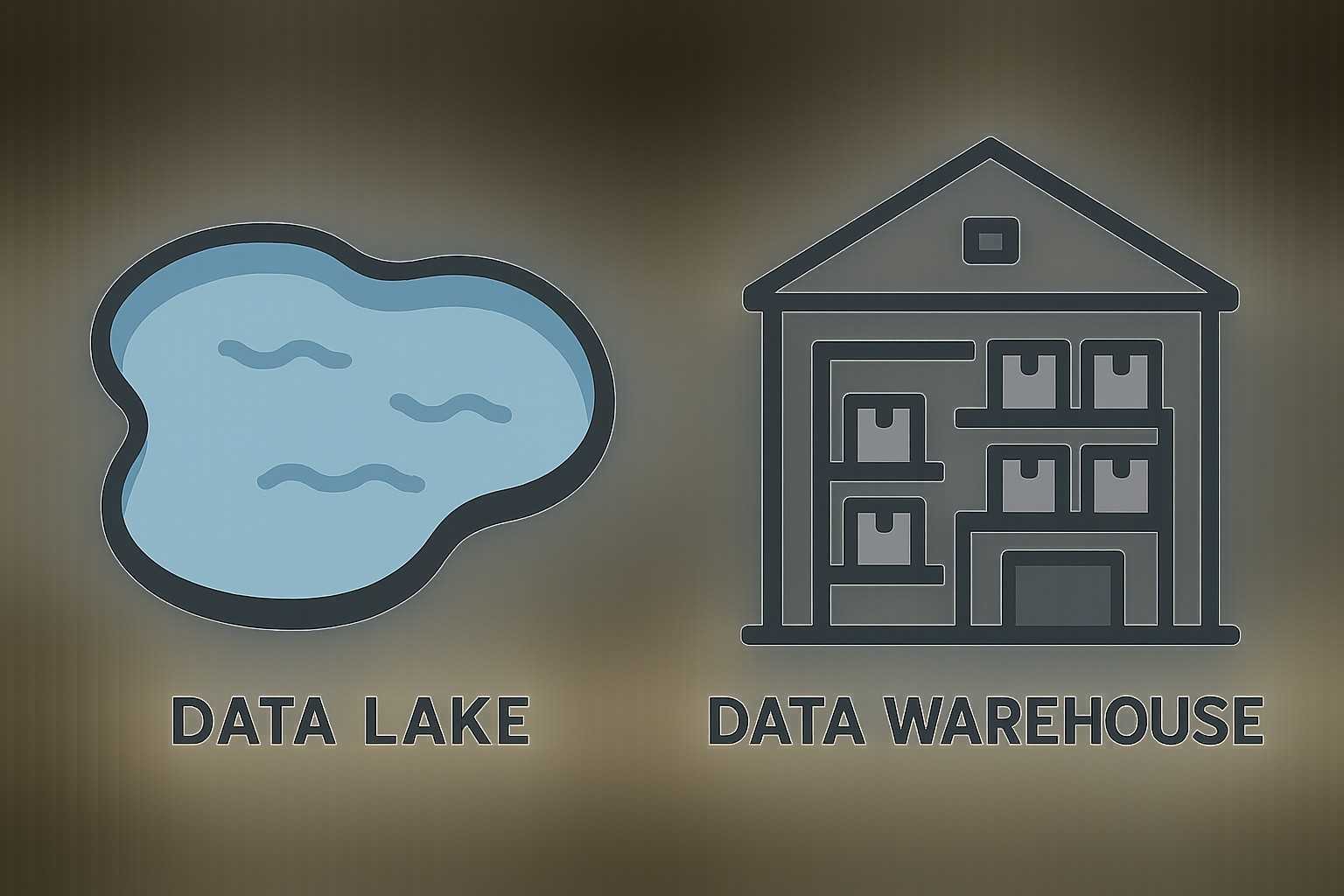
A data lake is a centralized repository designed to store vast amounts of raw data in its native formats, from structured tables to unstructured files such as text, images, and video. It emphasizes flexibility over pre-defined schemas, enabling data to be ingested quickly without heavy upfront transformation. This schema-on-read approach means that the interpretation of data is applied when a user reads it, not when it is stored, which supports exploratory analysis and data science workflows.
In practical terms, a data lake is built to accommodate high-velocity data ingestion, diverse data types, and heterogeneous data sources. Storage tends to be scalable and cost-efficient, often leveraging cloud-based object stores or distributed file systems. Users—from data engineers to analysts—can ingest raw data and then refine, transform, and enrich it as needed for downstream consumption. In healthcare contexts, what is big data in healthcare often involves combining EHRs, medical imaging, genomic data, sensor data, and administrative records into a single repository for discovery and advanced analytics.
- Schema-on-read: interpretation occurs at query time rather than at load time
- Raw data retention: preserves source formats for future re-processing
- Support for structured and unstructured data: supports a wide variety of data types
- Scalable and cost-efficient storage: designed for growth and long-tail analytics
- Data exploration and experimentation: enables rapid prototyping and data science workloads
- Ingests data at diverse velocities: batch, streaming, and real-time data
What is a Data Warehouse
A data warehouse is a curated repository that consolidates data from multiple sources and subjects it to substantial structuring and governance before storage. It uses a schema-on-write approach, meaning data is transformed, cleaned, and modeled prior to loading. This creates a stable, consistent, and query-optimized environment that supports reliable reporting, dashboards, and business intelligence at scale.
Because data in a warehouse is standardized and governed, organizations typically implement robust metadata management, lineage, and access controls. This makes it easier for analysts to run complex queries, produce accurate metrics, and reproduce results. In contrast to data lakes, warehouses generally emphasize fast, repeatable analytics over raw data exploration, often with strong data quality and compliance requirements. This makes them a preferred foundation for financial planning, regulatory reporting, and strategic decision-making.
- Schema-on-write: data is modeled and validated before storage
- Strong governance and data quality: standardized definitions and metrics
- Optimized for analytics performance: columnar storage, indexing, and materialized views
- Integrated data modeling: semantic layers and curated data marts
- ACID-like consistency and predictable SLA support: reliable reporting
Key Differences in Structure, Processing, and Governance
Understanding the core contrasts helps organizations decide how to allocate resources and design analytics platforms. Data lakes and data warehouses address different questions: lakes are built for breadth and flexibility, while warehouses prioritize precision, speed, and governance. The comparison table below highlights typical characteristics across common dimensions.
| Dimension | Data Lake | Data Warehouse |
|---|---|---|
| Data model | Schema-on-read; data stored in native formats | Schema-on-write; pre-modeled data |
| Data types supported | Structured, semi-structured, and unstructured | Structured and highly curated structured data |
| Governance and quality | Ad hoc governance; metadata exists but guidance is looser | Rigorous governance, lineage, and quality controls |
| Performance focus | Exploration, discovery, and data science workloads | Fast, repeatable analytics and reporting |
| Typical users | Data scientists, engineers, researchers | Business analysts, BI teams, executives |
| Cost and scalability | Lower storage cost; may incur compute costs for reads | Higher cost but optimized for performance and reliability |
| Latency and freshness | Ingestion-first; processing may occur after capture | Low-latency, near real-time if required |
When to Use Data Lake vs Data Warehouse
Decision criteria should align with data maturity, analytics goals, and regulatory constraints. A data lake shines when you need to ingest large volumes of diverse data types quickly, support experimentation, or enable data science and machine learning workflows. A data warehouse excels when stakeholders require consistent, auditable metrics, fast dashboards, and governance-friendly data for decision making. Organizations often start with a data lake for discovery and then build a data warehouse for governed, production analytics, or create a lakehouse that blends the best of both worlds.
In practice, teams might propagate a hybrid pattern: data lands in the lake for raw access, is refined in a curated layer, and then moves into the warehouse for reliable business reporting. For teams in regulated industries, maintaining traceability, access controls, and data lineage in the warehouse is often essential. To guide concrete decisions, consider the following criteria.
- Volume and variety of data: if you handle many data types (text, images, sensor streams), a data lake reduces upfront transformation.
- Analytics audience: if the primary consumers are BI users needing fast, consistent results, a warehouse-backed layer is advantageous.
- Regulatory requirements: where auditability and strict data controls matter, prioritize governance features of a warehouse.
- Time-to-value: for rapid experimentation and data science, a lake accelerates data access.
- Data quality expectations: for production metrics, a curated, governed warehouse helps ensure reliability.
The Data Lakehouse and Evolving Architectures
The data lakehouse concept represents an architectural evolution that seeks to unify the strengths of data lakes and data warehouses. A lakehouse provides a single storage and compute layer capable of storing raw data and delivering governed, optimized analytics on top. This approach reduces data duplication and promotes a consistent security model across exploration and reporting workloads. In practice, lakehouses leverage metadata catalogs, strong governance, and performance enhancements to support both data science and business intelligence use cases.
Adoption considerations include ensuring compatibility with existing BI tools, managing metadata, and selecting cloud or on-premises services that support unified governance and data lineage. For organizations exploring a transition path, a lakehouse can serve as a stepping-stone to a fully integrated analytics platform, enabling teams to maintain agility while delivering reliable analytics outcomes. The evolving architecture often emphasizes modularity, interoperability, and clear data contracts between ingestion, processing, and consumption layers.
Data Governance, Security, and Compliance
Governance, security, and compliance are foundational concerns for both data lakes and data warehouses, but the emphasis differs by architecture. A data lake benefits from strong metadata management and data discovery practices, enabling users to identify data lineage and provenance. Security models should enforce role-based access controls, encryption at rest and in transit, and fine-grained permissions for data subsets to protect sensitive information.
Compliance obligations—such as data retention policies, audit trails, and privacy protections—drive the need for auditable processes, data quality controls, and reproducible analytics. In regulated domains like healthcare, properly implemented governance reduces risk and supports trust in analytics outcomes. Across both platforms, lineage, cataloging, and data quality checks help ensure that data remains usable as it flows through discovery, experimentation, and production reporting.
Practical Implementation Considerations
When planning an implementation, it is important to align technology choices with business goals, data maturity, and organizational capabilities. Cloud-native services often provide rapid scalability and reduced operational overhead, but on-premises or hybrid deployments may be preferred for latency-sensitive workloads or stricter regulatory contexts. A balanced approach typically includes clear data contracts, standardized ingestion pipelines, and a governance layer that spans both lake and warehouse components.
Key considerations include metadata management, data catalogs, and a phased rollout that preserves analytical continuity. Vendors and frameworks vary in how they handle security, cost, and performance, so it is essential to evaluate total cost of ownership, interoperability with existing tools, and the ease of extending the architecture as needs evolve. For teams charting a path forward, starting with a pragmatic, scalable data platform design focused on business value tends to yield the strongest long-term outcomes.
What is the difference between a data lake and a data warehouse?
A data lake stores raw, diverse data in native formats with schema applied at read time, supporting exploratory analysis and data science. A data warehouse stores curated, structured data with strict governance and optimized performance for reliable reporting. The lake emphasizes flexibility and scale, while the warehouse emphasizes consistency and speed for business analytics.
Can a data lake replace a data warehouse?
Not typically. While a data lake can support many discovery and experimentation activities, most organizations require a governed layer for production analytics. A common pattern is a data lake providing raw data and an accompanying data warehouse (or lakehouse) delivering governed, production-ready analytics. The lakehouse pattern increasingly offers a unified solution that aims to bridge both capabilities.
What is a data lakehouse?
A data lakehouse is an architectural concept that combines the storage flexibility of a data lake with the data management and performance features of a data warehouse. It enables storing raw data while also supporting governance, indexing, and fast analytics, often through metadata layers and optimized storage formats. The goal is to provide a single platform that serves both data science and business intelligence workloads.
How should a business decide which to implement first?
Start with business goals and analytics needs. If rapid data experimentation and handling heterogeneous data types are priorities, a data lake can provide the foundation. If consistent metrics, governance, and fast BI are paramount, a data warehouse (or lakehouse) may be the better initial focus. A staged approach—beginning with a lake for discovery, then adding a governed analytics layer for production insights—helps manage risk and demonstrates value early.