Now Reading: DevOps vs Traditional IT Operations: What’s the Difference?
-
01
DevOps vs Traditional IT Operations: What’s the Difference?

Core Differences Between DevOps and Traditional IT Operations
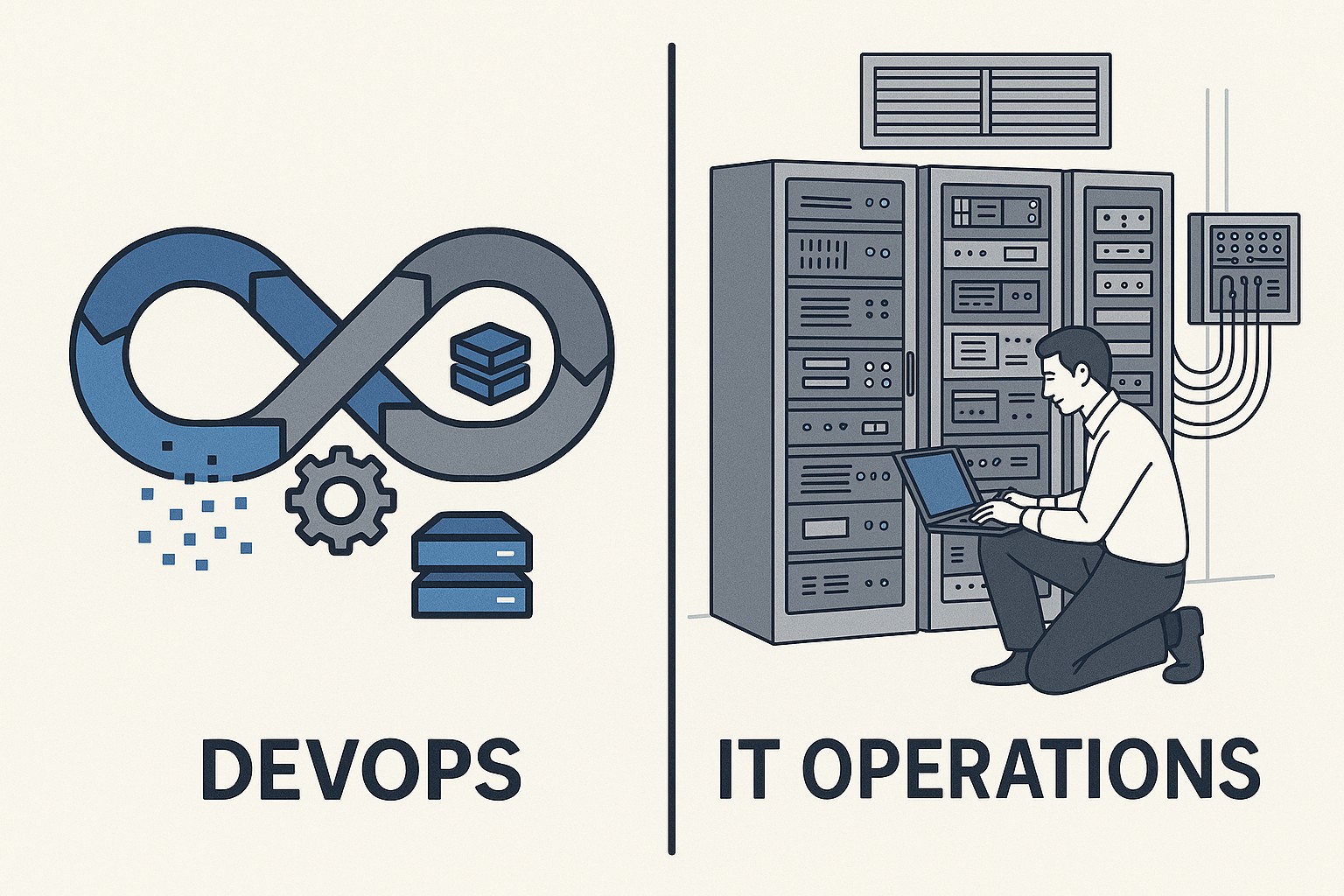
DevOps represents a shift in how teams design, build, and run software. It emphasizes end-to-end responsibility, faster feedback loops, and automation that spans development and operations. Unlike traditional IT operations that separate planning, coding, testing, deployment, and maintenance into silos, DevOps seeks to align these activities around common objectives like customer value, reliability, and speed. The goal is not to discard governance or quality but to rewrite the workflow so that changes can be delivered safely and frequently.
In traditional IT, changes are often heavy-weight, gate-based, and risk-averse, with long lead times between code commit and production. DevOps integrates development, testing, deployment, and monitoring into a cohesive pipeline, enabling teams to measure and improve reliability as a product feature. The shift is as much cultural as it is technical: teams adopt shared responsibility, experiment with small changes, and use automation to reduce manual toil. The result is a software delivery model that scales with the business and reduces the friction that previously slowed innovation.
Culture and Collaboration: Breaking Down Silos
At its core, DevOps asks for a cultural transformation. Teams move from functionally oriented silos to cross-functional partnerships where developers, operators, and security professionals work together across the lifecycle. This requires new norms, such as blameless postmortems, shared dashboards, and common incentives that align team goals with overall business outcomes.
- Shared responsibility for outcomes rather than isolated milestones
- Blameless postmortems focused on learning and rapid improvement
- Cross-functional squads with end-to-end ownership
- Rapid feedback loops from production back to development
- Experimentation and small-batch delivery supported by automation
These cultural shifts enable faster, more predictable delivery and create an environment where engineers are empowered to make decisions closer to the code and the customer. By aligning incentives with customer value, organizations reduce the friction that often arises when teams compete for scarce resources or authority. The result is a more resilient organization that can respond to changing requirements without sacrificing quality or security.
Processes and Workflows: From Waterfall to Continuous Delivery
DevOps changes not only who does the work but how work is organized. It moves teams away from sequential handoffs toward continuous delivery pipelines that automate build, test, release, and deployment. With this approach, a change can be introduced into production multiple times per day or per week, depending on risk tolerance, while maintaining quality through automated validation and governance checks.
- Plan and prioritize work with clear acceptance criteria
- Code and review changes in small, testable units
- Automate builds to produce repeatable artifacts
- Run automated tests including unit, integration, and performance checks
- Release and deploy through automated, auditable pipelines
- Monitor production and feed insights back to development
In practice, this requires refactoring release processes, adopting feature toggles, and designing for resilience. Teams define service level objectives (SLOs) and error budgets to balance velocity with reliability. The goal is not to remove governance but to institutionalize governance within the pipeline so that every change is transparent, reversible, and measurable in terms of impact on users and business metrics.
Toolchains and Automation: Enabling Speed and Quality
Automation and a robust toolchain are the technical backbone of DevOps. Rather than fighting with manual, error-prone processes, organizations leverage integrated tools that automate repetitive tasks, enforce standards, and provide visibility across the delivery lifecycle. A well-designed toolchain reduces toil, accelerates feedback, and makes compliance and security an intrinsic part of daily work rather than a late-stage gate.
- Continuous Integration/Continuous Deployment (CI/CD) systems to automate builds, tests, and releases
- Infrastructure as Code (IaC) to provision and manage environments deterministically
- Configuration management and orchestration to maintain consistency across systems
- Monitoring and observability to detect, diagnose, and respond to issues in production
- Containerization and orchestration to ensure portability and scalability
Tool selection should be guided by the organization’s scale, existing skills, and the desired balance of speed and reliability. It’s common to start with a focused subset of the toolchain, prove the value through a few critical services, and gradually expand to cover more of the portfolio. With the right patterns and guardrails, automation becomes a competitive advantage rather than a cost center.
Metrics, Governance, and Risk Management
DevOps introduces a data-driven approach to measuring success and guiding improvements. Rather than relying solely on delivery dates, teams track metrics that reflect the health of the system, the efficiency of the pipeline, and the user impact of changes. These metrics inform governance in a way that is actionable and transparent for stakeholders across the organization.
Key metrics commonly used in DevOps programs include flow-based measures such as lead time and deployment frequency, performance and reliability indicators like change failure rate and mean time to recovery, and quality signals derived from testing and monitoring data. Teams pair these metrics with risk-aware practices, enabling them to set objective budgets for changes (error budgets), govern release cadences, and maintain security and compliance standards throughout the lifecycle.
Organizational Structure and Roles: SREs, Platform Teams, and Beyond
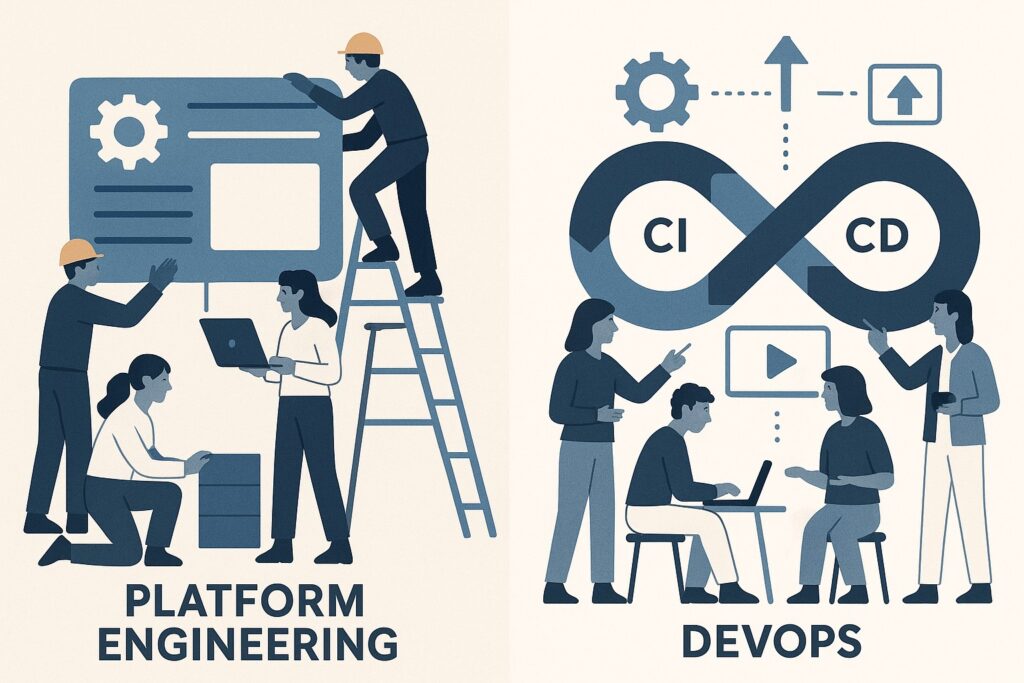
To scale DevOps beyond a few pioneer teams, many organizations adopt new structural patterns. Site Reliability Engineering (SRE) introduces a formal discipline focused on reliability, incident response, and capacity planning, while platform engineering creates shared capabilities (self-service tooling, standardized environments) that enable product teams to ship faster. These roles and teams do not replace developers or operators; they provide the scaffolding that makes end-to-end delivery repeatable and scalable.
Other organizational considerations include aligning product ownership with delivery outcomes, creating governance models that balance autonomy with security and compliance, and investing in a culture of continuous learning. A mature DevOps approach often requires executives and line managers to sponsor transformation initiatives, provide adequate funding for automation, and measure progress against business outcomes like uptime, customer satisfaction, and time-to-market.
FAQ
What is DevOps, and how does it differ from traditional IT operations?
DevOps is a cultural and technical approach that unifies software development and IT operations to shorten delivery cycles and improve reliability. Unlike traditional IT, which often emphasizes siloed responsibilities and lengthy change gates, DevOps emphasizes cross-functional collaboration, automation, continuous testing, and rapid feedback from production to inform ongoing development.
How can DevOps accelerate software delivery without sacrificing quality?
By automating repetitive steps, integrating testing into the pipeline, and using small, reversible changes, teams reduce risk and shorten lead times. Continuous integration and automated deployment ensure that every change is validated against real production-like environments, while monitoring provides early detection of issues so that remediation is swift and targeted.
What role do culture and organizational structure play in DevOps success?
Culture and structure are foundational. Blameless postmortems, shared goals, cross-functional teams, and clear incentives align behavior with business outcomes. Platform teams and SREs provide consistent capabilities while product teams retain autonomy. Without this alignment, automation and tools alone rarely deliver lasting improvements.
What is the difference between DevOps and DevSecOps?
DevSecOps extends DevOps by integrating security into the pipeline and making secure coding a shared responsibility from the outset. Rather than treating security as a final checkpoint, DevSecOps emphasizes automated security testing, secure defaults, and continuous compliance as part of the delivery process.
How should a traditional IT operation begin adopting DevOps?
Begin with a pilot that focuses on a small, valuable service or product, establish a cross-functional team, and implement a minimal but measurable automation. Build a repeatable pipeline, define SLOs and error budgets, and use the results from the pilot to inform broader adoption across the organization. Leadership support, training, and a willingness to change incentives are crucial for sustained progress.