Now Reading: Domo vs Sisense: BI Tools Comparison
-
01
Domo vs Sisense: BI Tools Comparison

Overview: Domo and Sisense in the BI landscape
In the competitive world of business intelligence, Domo and Sisense occupy distinct niches while sharing the core goal of turning data into actionable insights. Domo emphasizes a cloud-native, end-to-end platform that combines data integration, visualization, and collaboration in a single SaaS experience. Sisense, by contrast, has long positioned itself as a strong data modeling and embedded analytics platform, with a focus on scalable analytics workflows and flexible deployment options. Both aim to simplify data access for business users, IT teams, and analysts, but they approach the problem from different angles in terms of architecture, licensing, and day-to-day usage.
This article analyzes the differences between Domo and Sisense across key dimensions—dashboards and analytics, data handling, connectivity, pricing, and ideal use cases—to help organizations decide which solution better fits their data strategy, governance requirements, and growth trajectory. By comparing Domo vs Sisense, we illuminate where each tool shines, where trade-offs exist, and how to align selection with business objectives, technical constraints, and user adoption goals.
Core capabilities: dashboards, data modeling, and analytics
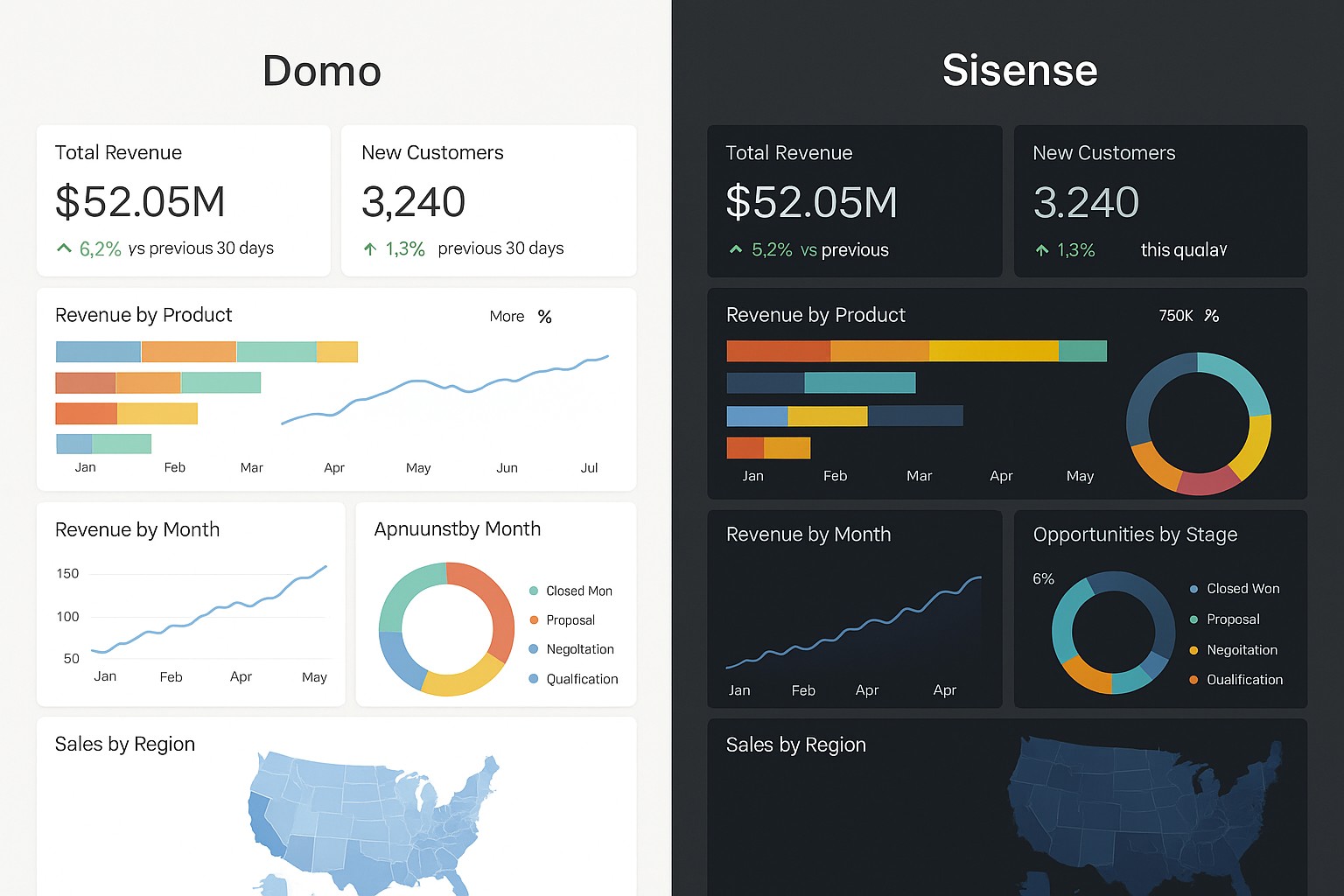
Both platforms offer robust dashboards and analytics capabilities, but their design philosophies shape the user experience. Domo tends to favor rapid dashboard creation with a wide array of prebuilt visualization options and a focus on collaboration features that keep stakeholders engaged through alerts, shareable cards, and discussions embedded in the workspace. Sisense emphasizes flexible data modeling and modular analytics, supporting complex data preparation and querying at scale, which can translate into highly tailored analytics experiences for data teams and power users.
When evaluating these capabilities, consider how each tool handles data preparation, model complexity, and reuse. Domo’s strength lies in quickly turning diverse data sources into consumable dashboards and mobile-ready insights, while Sisense often delivers deeper control over data schemas, transformations, and performance optimization, which can be critical for enterprises with intricate data architectures or embedded analytics programs. In practice, organizations often choose based on whether the priority is speed-to-insight and collaboration (Domo) or flexible modeling and developer-grade analytics (Sisense).
Data integration and connectivity
Connecting data sources is foundational for any BI platform, and both Domo and Sisense provide extensive connectors, but their approaches differ. Domo offers a broad library of connectors and an integrated data flow layer that blends ingestion, transformation, and governance into a single interface. This can shorten the time to value for users who need to pull data from cloud apps, databases, and flat files without requiring significant IT setup. Sisense, with its emphasis on data modeling and scalable queries, tends to appeal to teams that need precise control over how data is modeled and joined, especially when consolidating large on-premises and cloud datasets.
- Salesforce, Salesforce Marketing Cloud
- Snowflake, Amazon Redshift
- Google BigQuery, Azure Synapse
- Oracle, SAP HANA
- SQL Server, PostgreSQL
- Azure Data Lake, Amazon S3
- Cloud apps (HubSpot, Marketo, NetSuite)
- ERP/data warehouse sources and custom APIs
For organizations with complex data ecosystems, the ability to manage data pipelines, schedule refreshes, and enforce data quality within the same platform is a meaningful differentiator. Domo’s data flows are designed to be visually browsable and auditable, while Sisense emphasizes modeling accuracy and query performance as the data volume and variety grow.
Data modeling, preparation, and performance
Data modeling and preparation are core to delivering trustworthy analytics. Sisense has historically been recognized for its emphasis on data modeling through its Elasticube architecture, enabling developers to optimize how data is stored, joined, and queried for dashboards and reports. This can yield strong performance for large or complex datasets, particularly when embedded analytics and custom integrations are involved. Domo provides in-platform data preparation and transformation tools that streamline cleansing, enrichment, and blending, which reduces dependency on external ETL tools and accelerates iteration cycles for business users.
Performance considerations often hinge on data volume, query patterns, and how data is staged. Sisense’s approach to modeling can enable faster, more predictable query performance in environments with multi-terabyte datasets and multi-source joins, while Domo’s approach emphasizes accessibility and speed of updating dashboards for consumers who require near real-time visibility. When choosing between the two, map your data complexity, refresh cadence, and governance needs to your preferred modeling paradigm and performance expectations.
Deployment options, governance, and security
Deployment flexibility and governance capabilities influence total cost of ownership and risk management. Domo is primarily a cloud-native, SaaS platform that handles infrastructure, updates, and security in a managed fashion. This can reduce operational overhead for IT and security teams but may constrain some customization options. Sisense has evolved to support both cloud and on-premises deployments, offering more control over the hosting environment, data residency, and integration with enterprise security frameworks. This flexibility can be advantageous for organizations with strict regulatory requirements or existing on-prem data estates.
Governance features such as data lineage, access controls, and auditable activity help ensure responsible data usage. Domo provides centralized governance within its cloud environment, with user-friendly controls for sharing, access, and data standardization. Sisense emphasizes governance through its modeling layer and deployment options, enabling administrators to enforce data sources, roles, and security at the data and app level. Ultimately, the decision may hinge on whether your priority is managed cloud simplicity or enterprise-grade deployment flexibility and control.
Pricing models and total cost of ownership
Pricing models for Domo and Sisense reflect their strategic positioning. Domo typically uses a subscription model tied to the number of users, the volume of data processed, and the breadth of features required (such as connectors and data flows). This can translate into lower upfront costs and predictable monthly expenses, with the potential for rapid scaling as needs grow. Sisense often combines per-user licensing with data-processing components, and in some cases may require infrastructure or cloud hosting considerations, particularly for on-prem or hybrid deployments. This structure can offer predictable budgets for large analytics initiatives, but may involve more upfront planning for data capacity and integration efforts.
When evaluating total cost of ownership, include not only licensing, but also administrative time, data preparation effort, and any needed governance tooling. For organizations prioritizing speed-to-value and collaboration, Domo’s cloud-first model can reduce administrative overhead, while for data-heavy environments requiring precise modeling and flexible deployment, Sisense’s options may better align with long-term cost goals and architectural control.
Ideal use cases by organization size and industry
The best-fit use case for Domo or Sisense often comes down to organizational maturity, data culture, and the need for speed versus control. Domo tends to excel in organizations seeking rapid deployment, broad user adoption, and strong collaboration around dashboards and alerts. It is well-suited for mid-market to enterprise teams that want a turnkey cloud BI platform with minimal on-prem infrastructure concerns and a focus on business-facing insights. Sisense is frequently chosen by enterprises with sophisticated data teams, complex data models, and scenarios where embedded analytics, custom integrations, or hybrid deployment are important for governance and scalability.
- Small to mid-size companies needing fast time-to-value and an all-in-one BI workspace.
- Product-centric or data-driven organizations requiring rapid experimentation with dashboards and data visuals.
- Industries with strict data governance or on-prem requirements, such as manufacturing or financial services, where deployment flexibility matters.
- Large enterprises that require deep data modeling, scalable analytics, and embedded analytics capabilities for products or services.
Implementation considerations and user adoption
Successful implementation hinges on aligning platform capabilities with people, processes, and data. Domo’s strengths in rapid deployment and collaborative features can drive broad user adoption if governance, data quality, and change management are well planned. Sisense benefits from a clear data modeling strategy, a staged rollout with data engineers and analysts leading the way, and a robust performance plan to accommodate growing data volumes and complex joins. Consider starting with a small, engaged sponsor group to define success metrics, map data sources, and establish service levels for data refresh and quality checks. Training should address both business users’ needs for self-service and the IT team’s requirements for governance and security.
Practical implementation considerations include data readiness, connector reliability, and the design of a reusable analytics catalog. For organizations that require rapid experimentation, Domo’s in-product collaboration can accelerate decision-making, while for teams needing rigorous modeling, a Sisense-first approach with a clear data model and performance tuning can reduce long-term rework. Finally, plan for change management and ongoing governance to ensure that the chosen platform delivers sustained ROI as data needs evolve.
Comparison at a glance
The table below highlights a concise, high-level view of how Domo and Sisense compare across several key dimensions. Note that exact capabilities and pricing can change, so consult current vendor materials when making a decision.
| Dimension | Domo | Sisense |
|---|---|---|
| Deployment | Cloud-native SaaS, managed by vendor | Cloud, on-premises, or hybrid options |
| Core strength | Rapid dashboards, collaboration, breadth of connectors | Advanced data modeling, scalable analytics, embedded analytics |
| Data preparation | In-platform data flows and cleansing | Modeling-centric with strong ETL/ELT support |
| Governance | Cloud governance with access controls and lineage | Granular modeling governance and deployment controls |
| Ideal for |
FAQ
Which solution is cheaper to start with for a small team?
For many small teams, Domo’s cloud-first model can offer quicker onboarding and faster time-to-value with lower upfront infrastructure needs. However, cost depends on user counts, data volumes, and the scope of connectors required. Sisense may present a higher initial investment if complex modeling and multi-environment deployments are planned, but can offer favorable long-term TCO when data complexity is high and governance demands are strict.
Which platform is better for embedded analytics in products?
Sisense is often favored for embedded analytics because of its robust data modeling, API capabilities, and flexibility in integrating analytics into other applications or portals. Domo can also support embedded use cases, but its strength lies in a broader, self-serve BI experience for business users rather than developer-centric embedding in third-party products.
How do data governance and security compare?
Both platforms provide governance and security features, but the locus of control differs. Domo emphasizes cloud-based governance with centralized user management, data access controls, and auditing within a single SaaS environment. Sisense offers more deployment options and a modeling-centric approach to governance, which can appeal to organizations with complex regulatory requirements or strict data residency needs. Your specific regulatory landscape and data ownership policies will guide the best choice.
Which platform scales better with very large datasets?
Both platforms are designed for scale, but their architectural emphasis differs. Sisense’s modeling and optimized queries can yield predictable performance for very large datasets and sophisticated joins, particularly when deployed on-prem or in a hybrid setup. Domo scales effectively in a cloud-native environment, delivering fast visualization and broad connector support as data grows, with less operational overhead for the customer.
What about ease of use and adoption for non-technical users?
Domo generally excels in accessibility for business users, offering intuitive dashboards, cards, and collaboration features that encourage self-service insights. Sisense targets analysts and data professionals who need precise modeling and more advanced analytics capabilities, potentially requiring more skilled users during the initial ramp. A hybrid approach—designating business users for dashboards and analysts for data modeling—often yields the best balance.