Now Reading: E-Commerce vs M-Commerce: Online vs Mobile Commerce
-
01
E-Commerce vs M-Commerce: Online vs Mobile Commerce

Overview of E-Commerce and M-Commerce
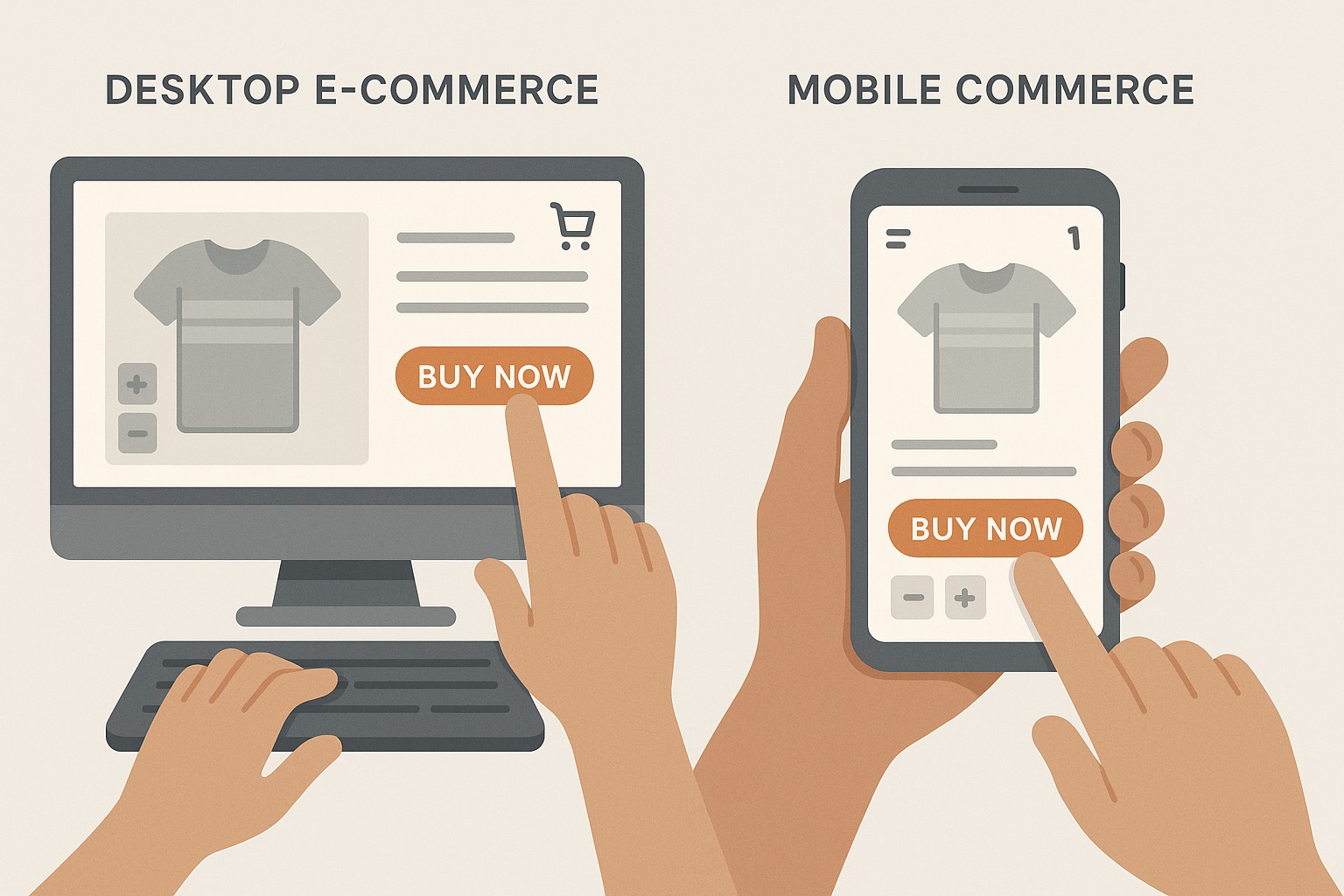
Electronic commerce encompasses online shopping conducted over desktop and web browsers, typically via a storefront that customers access from larger screens with longer browsing sessions. M-commerce, by contrast, centers on transactions completed through smartphones and dedicated apps, often leveraging mobile-specific features such as push alerts, in-app wallets, and location-aware offers. The distinction is not merely about devices; it reflects different user contexts, interaction models, and system capabilities that shape product discovery, decision-making velocity, and checkout pathways. Over the past decade, both channels have grown in tandem, yet their optimization requirements diverge in meaningful ways as consumer expectations shift toward immediacy, convenience, and personalization. In many sectors, the line between online and mobile commerce has blurred, giving rise to omnichannel experiences that unify inventory, pricing, and service across screens.
Businesses increasingly design for a single, cohesive ecosystem rather than two separate experiences. The online channel remains fundamental for wide product catalogs, complex configurations, and research-driven purchases, while the mobile channel delivers rapid, context-rich interactions—where speed, simplicity, and friction reduction in the checkout process become the decisive factors. The evolution of technology, from faster networks to smarter devices, has made it feasible to execute sophisticated commerce strategies in both environments. For organizations aiming to optimize revenue, profitability, and customer lifetime value, a clear understanding of how these channels complement one another is essential, especially when considering cross-channel analytics, unified customer profiles, and cross-device attribution.
In practice, discussions about e-commerce often intersect with topics such as mobile banking app features when considering how payment experiences, security models, and user authentication translate across domains. The core takeaway is that commerce is increasingly platform-agnostic at the highest levels—yet the tactical implementation on each device remains distinct. The goal is to deliver fast, secure, and personalized experiences that respect the constraints and opportunities of the user’s current context, whether they are researching products on a desktop, filtering options on a tablet, or completing a purchase from a pocket-sized screen.
Key Differences in User Behavior
Consumer behavior exhibits notable differences when shoppers move between online and mobile contexts. Desktop sessions tend to be longer, with broader product exploration, deeper comparisons, and slower decision cycles supported by multitasking capabilities and larger viewports. In contrast, mobile sessions are typically shorter and more exploratory in nature, driven by intent to solve a specific need quickly, aided by social discovery, push notifications, and in-app promotions. Understanding these dynamics is critical for aligning content strategy, search optimization, and conversion tactics to the dominant use case in each channel.
- Device usage patterns: Desktop users often engage with richer content, detailed specifications, and multi-tab research, while mobile users favor concise information, quick filters, and swipe-based interactions.
- Session length and checkout friction: Longer checkout flows on desktop may tolerate additional fields, while mobile checkout benefits from simplified forms, persistent autofill, and biometric authentication to reduce abandonments.
- Payment methods and trust signals: Mobile environments perform better with wallets, tokenized cards, and one-click payments, whereas desktop users may rely more on traditional card entry and bank transfers.
- Context and intent: Mobile purchases are frequently location-aware, time-sensitive, and influenced by in-app promotions or social content, whereas desktop shopping relies more on in-depth research and cross-device comparisons.
- Personalization cues: Mobile experiences leverage push notifications, geolocation, and in-app messaging, while desktop personalization often centers on email retargeting and on-site recommendations based on longer browsing histories.
Design and Technical Considerations
Designing for mobile commerce requires a deliberate emphasis on performance, usability, and security, without sacrificing the breadth of commerce capabilities that customers expect from online experiences. A mobile-first mindset does not imply a diminishment of features on larger screens; rather, it prioritizes speed, legibility, and streamlined interactions that reduce cognitive load and input effort. To achieve this, teams should align product information architecture, navigation patterns, and checkout flows with the realities of on-the-go shopping, offline considerations, and variability in network conditions.
- Performance and speed optimization: Prioritize Core Web Vitals, minimize render-blocking resources, optimize images and media, and implement aggressive caching and content delivery networks. Mobile pages should load in a fraction of a second to sustain engagement and reduce abort rates, with lightweight checkout experiences that preserve functionality across networks with varying reliability.
- UX design strategy for mobile-first and adaptive contexts: Develop responsive layouts that adapt seamlessly to screen size while preserving essential features such as search, filtering, and product comparison. Consider native-like affordances in hybrid apps where appropriate, and provide consistent visual language and accessible controls to support both touch and assistive technologies.
- Payment integration and security: Implement secure tokenization, strong customer authentication, and streamlined one-click or biometric payment options. Ensure PCI DSS compliance, regular security testing, and transparent risk controls that protect both customers and merchants without adding friction at critical moments of the purchase path.
- Accessibility and localization: Build inclusive experiences that comply with accessibility guidelines (contrast, keyboard navigation, screen reader support) and tailor content for currency, language, and regional payment preferences. Localization also extends to shipping methods, taxes, and customer support channels to reduce post-purchase friction.
Growth Trends and Market Outlook
The overall trajectory of e-commerce versus m-commerce reflects broader shifts in device ownership, network capabilities, and consumer expectations. Mobile devices have become the primary gateway for discovery, social engagement, and quick transactions, while desktop platforms continue to serve complex purchases, B2B procurement, and high-value configurations. Across industries, mobile commerce is expanding more rapidly when measured by incremental growth rates, driven by mobile wallets, in-app purchasing, and a proliferation of apps that embed shopping experiences directly into everyday workflows. As networks improve with 5G deployments and as brands invest in mobile-centric analytics, the barnacles of channel silos slowly erode, enabling more seamless, cross-device journeys that preserve context and intent.
Beyond raw traffic, the strategic emphasis is shifting toward holistic customer experiences that reconcile price transparency, fulfillment speed, and post-purchase service across channels. The most successful organizations deploy unified product catalogs, synchronized inventories, and a single customer view that sustains continuity regardless of where the interaction begins. In finance-focused segments and sectors with sensitive payment data, the emphasis on secure, frictionless mobile payment experiences parallels the development of mobile banking app features, illustrating how core principles—security, reliability, and speed—translate across verticals. As the market matures, expect continued growth in mobile-first commerce, increased acceptance of digital wallets, and more nuanced personalization that respects user privacy and consent preferences.
| Channel | Growth Rate (CAGR 2023–2028) | Key Drivers |
|---|---|---|
| E-commerce (online via desktop/web) | 8–12% | Broad product catalogs, cross-border shipping, search and research capabilities |
| M-commerce (mobile, apps, in-app) | 12–18% | Smartphone adoption, mobile wallets, push-based promotions, speed and convenience |
| Omni-channel integration | 10–15% | Unified inventory, consistent pricing, seamless handoffs between devices |
Operational Implications for Firms
To capitalize on the distinct advantages of online and mobile commerce, organizations must translate strategic intent into operational practice. This includes aligning product data, pricing, and promotions across channels so that customers experience consistent availability and messaging regardless of where they interact with the brand. Inventory synchronization is essential to prevent oversell scenarios and to enable features such as buy-online-pickup-in-store (BOPIS) and real-time fulfillment updates, which are increasingly expected by omnichannel shoppers. In addition, data governance and privacy controls must be designed to support personalized experiences while honoring user consent and regional regulations, particularly in jurisdictions with strict data protection regimes.
Analytics and attribution play a critical role in understanding channel effectiveness and optimizing investment. A unified customer view that aggregates on-site behavior, app engagement, and cross-device interactions enables more accurate measurement of lifetime value, conversion paths, and the incremental impact of mobile features such as push notifications and in-app messaging. Operationally, this requires robust identity resolution, measurement frameworks, and data pipelines that keep data fresh without creating latency that impairs decision making. As commerce becomes more mobile-centric, customer support and post-purchase services must also scale to address mobile-specific issues such as in-app order tracking, digital wallet problems, and device-based authentication challenges.
Operational success hinges on a disciplined approach to aligning technology, process, and governance across channels. A unified data layer, consistent product experiences, and clear ownership for cross-channel initiatives are the foundations of scalable, resilient commerce ecosystems.
FAQ
What is the difference between e-commerce and m-commerce?
E-commerce refers to online shopping conducted via desktop or web-based interfaces, typically involving richer browsing experiences and longer decision cycles, while m-commerce targets transactions completed on mobile devices through smartphones or apps, emphasizing speed, simplicity, and context-aware interactions. The two are complementary parts of a broader digital commerce strategy, with the distinction arising primarily from device characteristics, user context, and the design choices that optimize for each environment.
How do consumer behaviors differ across devices?
Consumers on desktops tend to perform more extensive product research, compare options across multiple tabs, and complete purchases with longer checkout flows. Mobile shoppers favor quick search, easy filtering, streamlined forms, biometric or wallet-based payments, and context-driven promotions. The differences influence how brands structure search, navigation, and checkout experiences to reduce friction in each context while maintaining a coherent brand experience across devices.
What metrics matter most for online vs mobile channels?
Key metrics include conversion rate, average order value, cart abandonment, and time-to-purchase, but the weighting of these metrics varies by channel. For mobile, metrics such as page load speed, one-click payment adoption, and push notification opt-in rates gain prominence because speed and friction reduction directly impact completion rates. For online desktop channels, metrics around depth of catalog exploration, cross-sell effectiveness, and multi-device attribution are often more relevant for long-form research and higher-value purchases.
What are the key design considerations when optimizing for mobile commerce?
Important considerations include speed optimization, touch-friendly navigation, simplified forms, resilient offline behavior where possible, secure and seamless payment options, and accessibility. Designers should prioritize mobile-first layouts, clear calls to action, readable typography, and consistent branding across apps and mobile sites, while ensuring that critical information such as shipping costs and return policies remains visible and understandable during the shortest path to purchase.