Now Reading: Everything-as-a-Service (XaaS): The Expansion of Cloud Offerings
-
01
Everything-as-a-Service (XaaS): The Expansion of Cloud Offerings

What is XaaS and why it matters
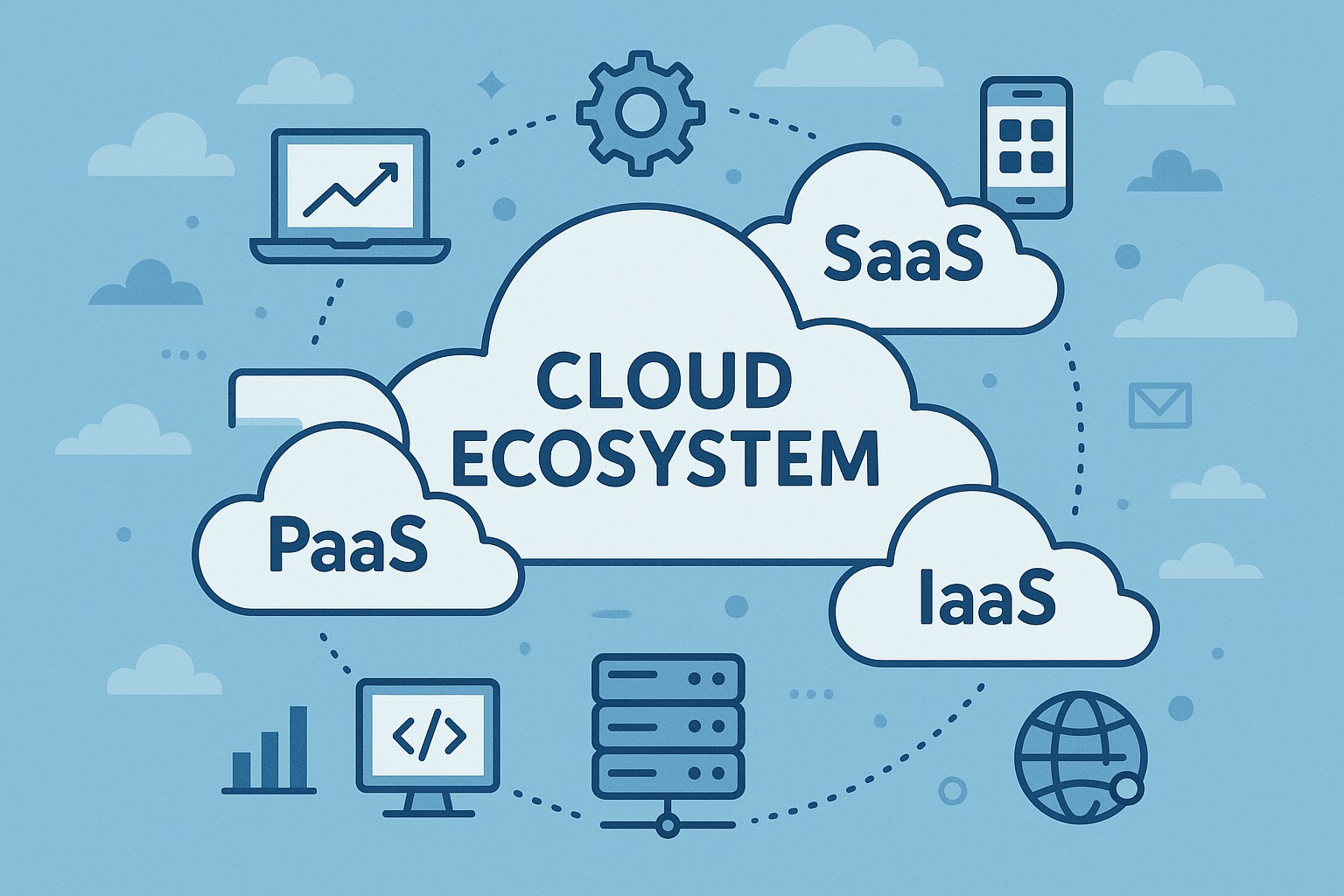
Everything-as-a-Service (XaaS) describes a broad shift in how organizations acquire and consume technology. Rather than purchasing, deploying, and maintaining on‑premises hardware, software, and platforms, companies subscribe to services delivered over the network, paying for what they use. The XaaS umbrella now spans not only the traditional cloud trio—infrastructure, platform, and software as a service—but also data services, device management, workflows, security, and evolving business-process capabilities. In practice, XaaS emphasizes outcomes over assets, enabling teams to scale resources, upgrade capabilities without disruptive projects, and partner with specialists who manage the underlying complexity. For many organizations, embracing XaaS is part of a broader digital transformation effort orchestrated by a digital transformation services provider who aligns technology choices with strategic goals such as speed, resilience, and customer-centric innovation.
- SaaS — Software as a Service
- PaaS — Platform as a Service
- IaaS — Infrastructure as a Service
- Data-as-a-Service (DaaS)
- Device-as-a-Service (DaaS)
Business leaders pursue XaaS for the speed of deployment, predictable operating costs, and access to capabilities that would be difficult to build in-house. The model shifts updates and maintenance to the provider, enabling teams to focus on value delivery and outcomes rather than upkeep. At the same time, XaaS introduces governance and risk questions, including integration across multiple vendors, data sovereignty, variable security postures, and potential dependence on external providers for mission-critical capabilities. A successful XaaS program requires disciplined governance, deliberate vendor management, and a clear view of how services map to business outcomes, not just technology trends.
Key components of XaaS ecosystems
XaaS ecosystems are networks of providers, customers, brokers, and marketplaces that must work in concert to deliver seamless services. The value appears where services integrate with an organization’s processes, data, and existing systems, supported by robust APIs and interoperable standards. A healthy XaaS ecosystem balances speed and control: rapid access to capabilities alongside governance that protects data, privacy, and compliance while enabling effective collaboration with external partners. Successful ecosystems are underpinned by shared reference architectures, practical security controls, and well-defined procurement and migration paths, all aligned to the organization’s strategic priorities.
- APIs and integration platforms that connect services to core systems
- Identity and access management (IAM) and policy enforcement
- Security, privacy, and regulatory controls aligned to industry standards
- Service catalogs, marketplaces, and broker capabilities to simplify procurement
- Metering, billing, cost visibility, and resource governance to maintain control
Beyond the list of components, successful XaaS ecosystems rely on a disciplined approach to governance, data interoperability, and vendor coordination. Organizations must define how data flows between services, how identities are managed across providers, and how policy-based controls are enforced at the edge and in the cloud. In practice, this requires careful design of integration patterns, standardized service level agreements, and continuous monitoring to detect drift, bottlenecks, or security gaps before they impact business outcomes.
Managing risk and governance in XaaS
As organizations expand their use of XaaS, risk and governance become central concerns. Key risk categories include data security and privacy, regulatory compliance, vendor lock-in and portability, data residency, service availability, and the potential fragmentation of policies across multiple providers. The dynamic nature of XaaS—where services can be added, removed, or upgraded with little friction—amplifies the need for clear decision rights, ownership of data, and defined incident-response processes. A well‑defined risk framework helps ensure that security, privacy, and compliance are baked into the design of each service, not treated as an afterthought.
Governance in XaaS involves formalizing how services are selected, deployed, monitored, and retired. It requires ongoing vendor risk management, standardized contract terms, and visibility into total cost of ownership. It also means designing architectures with portability and interoperability in mind, so switching providers or consolidating services does not entail prohibitive data migration costs or operational disruption. The goal is to strike a balance between enabling innovation through external capabilities and preserving control over risk, data, and strategic outcomes.
- Establish a formal XaaS governance model with defined roles, responsibilities, and decision rights across procurement, security, and operations.
- Define SLAs, service-level metrics, and exit criteria for each provider to ensure predictable performance and a clear migration path.
- Implement ongoing vendor risk management, monitoring, and incident response processes that scale with the service portfolio.
- Adopt a mindful multi-cloud and multi-vendor strategy to reduce dependency on a single provider and increase resilience.
- Design architecture for portability, data interoperability, and transparent data exit options to support future migrations and audits.
Strategic considerations for businesses adopting XaaS
Adopting XaaS requires thoughtful alignment of technology choices with business strategy. Leaders should distinguish which capabilities are core to competitive advantage and which are suitable for a service-based model. A pragmatic portfolio approach often involves keeping strategic differentiators in-house or within tightly controlled partnerships while sourcing non-core capabilities as services from specialist providers. This requires clarity on data ownership, regulatory requirements, and how services integrate with critical business processes, customer experiences, and analytics pipelines. In practice, firms should plan for incremental adoption, measurable milestones, and ongoing evaluation of whether a service continues to create value relative to evolving business priorities and risk tolerance.
Implementing XaaS effectively also means mastering organizational change. Stakeholders across IT, security, finance, legal, and business units must agree on governance, cost visibility, and performance expectations. Financial models should reflect not only price but total cost of ownership, risk offset, and the ability to reallocate resources as needs evolve. Operational excellence emerges when teams establish transparent procurement cycles, standardized integration patterns, and continuous optimization of the service mix to optimize cost, performance, and customer outcomes.
XaaS trends and future outlook
The landscape of XaaS is accelerating as cloud-native architectures mature, APIs proliferate, and edge computing expands the reach of services beyond centralized data centers. Trends include the growth of AI/ML as a service, increasingly sophisticated security as a service, and more granular device and workflow as a service offerings that span on-site and remote environments. Marketplaces and brokered platforms are simplifying procurement and governance, while platform-led integrations reduce the friction of stitching disparate services together. As organizations pursue faster time-to-value, the emphasis shifts from simply acquiring capabilities to orchestrating outcomes across a portfolio of providers and internal capabilities. This evolves into more proactive risk management, stronger data governance, and a culture of continuous optimization.
To compete effectively in this environment, businesses should embrace a portfolio approach that treats XaaS as a strategic asset rather than a collection of independent purchases. This includes establishing clear exit strategies, investing in interoperability, and maintaining a robust security posture that scales with the service footprint. The successful XaaS model is not only about leveraging external services; it’s about orchestrating them in a way that accelerates innovation while preserving control over data, risk, and strategic direction.
Building a successful XaaS strategy is as much about governance and partnerships as it is about technology; outcomes, interoperability, and ongoing optimization define long-term value.
FAQ
What is Everything-as-a-Service (XaaS) and why is it increasingly adopted by organizations?
XaaS is a broad consumption model where a wide range of capabilities—software, platforms, infrastructure, data, devices, and processes—are delivered as services over the internet. Organizations adopt XaaS to accelerate time-to-value, reduce upfront capital expenditure, improve scalability, and shift maintenance to specialized providers. This approach aligns technology investments with business outcomes and allows teams to innovate more quickly while managing risk through established service agreements.
How does XaaS differ from traditional cloud models?
Traditional cloud models typically focus on specific layers (IaaS, PaaS, SaaS) delivered as services. XaaS expands that scope to include additional domains such as data as a service, device management, and workflow services, often spanning multiple vendors and requiring broader governance, interoperability, and alliance management. The emphasis in XaaS is on orchestrating a portfolio of services to achieve business results, with an integrated approach to security, compliance, and data governance across the entire service ecosystem.
What are the main risks associated with XaaS, and how can enterprises mitigate them?
Key risks include data privacy and security across multiple providers, regulatory compliance, vendor lock-in or portability challenges, data residency concerns, and potential service outages. Mitigation strategies include establishing formal governance with defined SLAs and exit criteria, implementing strong IAM and policy controls, designing architectures for portability and data interoperability, conducting regular vendor risk assessments, and maintaining a diversified mix of providers to avoid single points of failure.
How should an organization begin implementing XaaS?
A practical approach starts with mapping business goals to service requirements, then piloting a small portfolio of non-core capabilities as services while keeping core differentiators in-house or under tight governance. Establish clear procurement and security standards, determine total cost of ownership, and set up ongoing monitoring and optimization processes. As experience grows, expand the service catalog thoughtfully, ensuring interoperability and a scalable exit plan to protect strategic flexibility.