Now Reading: GraphQL vs gRPC: Modern API Technologies Compared
-
01
GraphQL vs gRPC: Modern API Technologies Compared

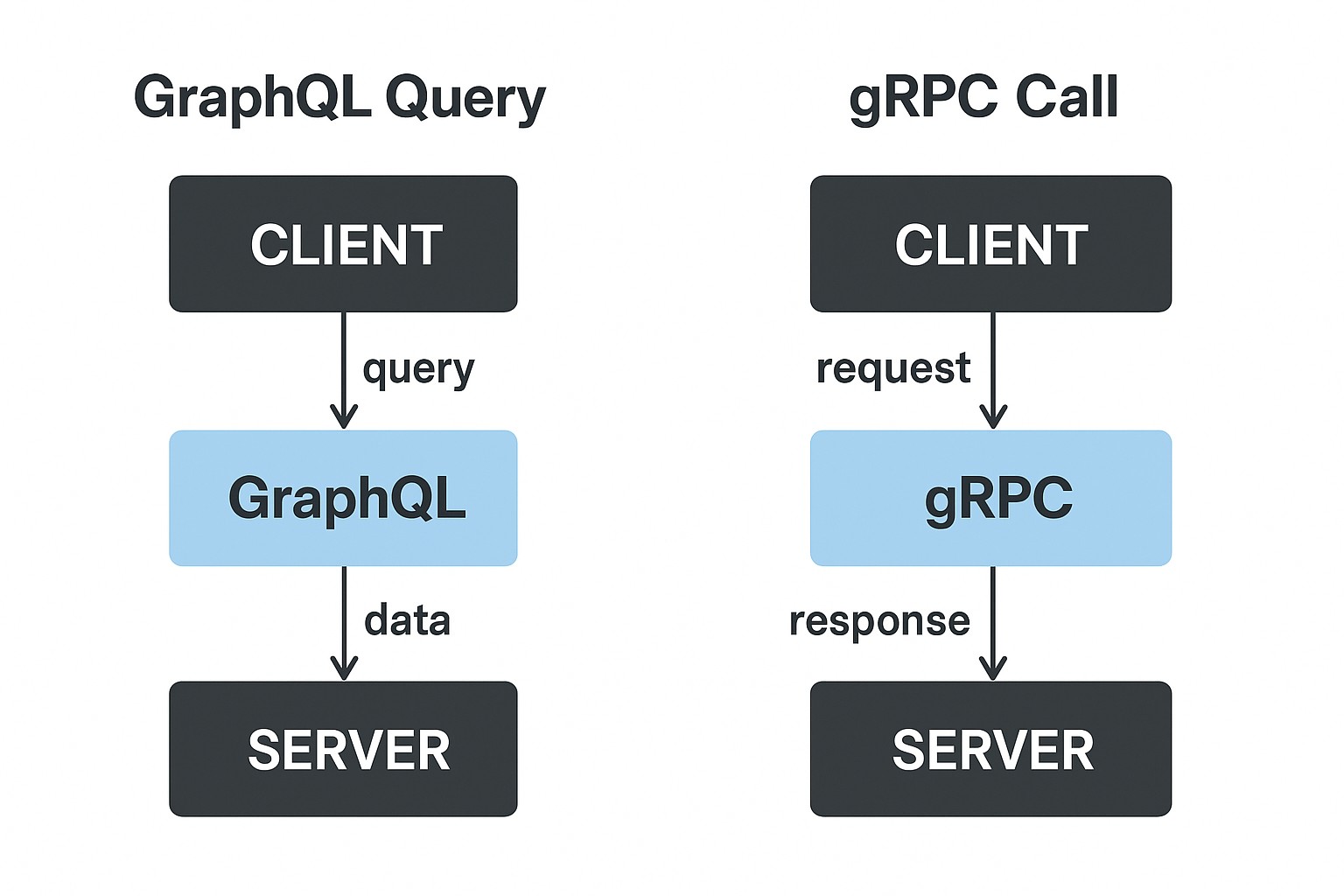
GraphQL and gRPC in the modern API landscape
GraphQL and gRPC sit at the intersection of client-driven data needs and service-to-service performance requirements. GraphQL originated to tame the challenge of data over-fetch and multiple round-trips in front-end applications, offering a flexible query language layered on top of a single endpoint. gRPC, by contrast, arises from a more service-oriented mindset, prioritizing fast, typed, binary messages exchanged between back-end components that may operate across languages and cloud boundaries. In a modern enterprise, teams often choose to deploy GraphQL at the boundary where client apps consume data, while reserving gRPC for internal service communication and high-throughput pipelines. This division aligns with the different audiences and operational realities each technology addresses.
Both technologies share a common goal: enabling teams to build scalable APIs that are secure, observable, and easy to evolve. The decision is heavily influenced by whether the primary constraint is the shape of the data delivered to clients (GraphQL) or the efficiency and reliability of inter-service calls (gRPC). Organizations that have matured API governance often adopt a hybrid approach, exposing GraphQL as the client-facing surface while using gRPC for internal microservices where performance, type safety, and streaming capabilities matter most. The choice also intersects with the broader stack, including API management, deployment models, and the skill sets available across development, operations, and security teams.
Communication style and API contracts
GraphQL exposes a single endpoint that accepts a flexible query, allowing clients to specify exactly what data they need. This capability reduces over-fetching and often improves perceived performance on bandwidth-constrained clients, while shifting some complexity to the client to compose efficient queries. The server responds with data shaped to the request, along with ancillary metadata such as pagination cursors or fragment definitions when used in a larger ecosystem.
In contrast, gRPC defines explicit service contracts via protocol buffers and generates strongly typed client stubs. Calls resemble traditional RPC, with defined methods, request messages, and response messages. This model emphasizes compile-time validation, binary efficiency, and streamlined inter-service communication. For teams building microservices or requiring reliable streaming, the RPC boundary clarifies responsibilities and leverages language-appropriate tooling for end-to-end tracing, retries, and backpressure.
- GraphQL uses a single endpoint and a dynamic query language, enabling clients to shape responses.
- gRPC uses multiple strongly defined services defined via protocol buffers, with generated client stubs and explicit RPC methods.
- Ideal contexts: GraphQL for web/mobile data surfaces; gRPC for internal microservices and streaming scenarios.
Data modeling, schema, and types
Data modeling in GraphQL centers on a schema that describes types, queries, mutations, and subscriptions. This schema acts as a contract between client and server, enabling introspection and tooling that supports autocomplete, documentation, and validated queries at development time. The flexibility of GraphQL allows clients to request nested fields and relationships in a single round-trip, which can simplify front-end development but may require careful server-side planning to avoid expensive or ambiguous queries.
gRPC relies on protocol buffers to define messages and services. The binary-encoded payloads are efficient for network transport and enable strong typing across languages. The code generation process yields client stubs and server skeletons, promoting consistency and reducing boilerplate, especially in polyglot microservice environments. However, the requirement to define all data shapes upfront means iterative changes can impact client generations and compatibility strategies.
- Schema semantics: GraphQL exposes a flexible, introspective schema; gRPC uses static proto definitions.
- Query shape vs RPC surface: GraphQL focuses on data shape; gRPC on remote procedures.
- Tooling: GraphQL introspection and IDE support vs. protoc-generated clients and servers.
Performance, caching, and reliability considerations
GraphQL performance often hinges on how well the server resolves nested fields and how efficiently resolvers can batch data sources. While the single endpoint reduces the number of round-trips for a client, complex queries can still lead to high CPU usage or slow responses if the resolvers are not optimized. Caching strategies tend to be at the field or response level, with persistent caching layers requiring careful cache invalidation semantics because the query can request arbitrary shapes.
gRPC brings binary efficiency and multiplexed streams over HTTP/2, which can yield lower latency per call and better throughput for service-to-service communication. Its strongly typed contracts enable rigorous validation and easier integration with load balancing, retries, and observability. That said, for public-facing web apps, gRPC may require translation layers (gRPC-Web) to traverse browsers, adding a layer of complexity that teams must address as part of performance and reliability planning.
- GraphQL: potential for over-fetch avoidance vs under-fetch risks depending on query design.
- gRPC: efficient binary transport and streaming, favorable for microservice resilience and backpressure management.
- Caching and observability: GraphQL favors field-level caches; gRPC benefits from service-level metrics and tracing across endpoints.
Ideal use cases and ecosystem alignment
GraphQL shines at public or partner-facing APIs where clients across platforms require flexible data retrieval and rapid UI iteration. Use GraphQL to unify data from multiple sources, optimize payloads for mobile devices, and empower frontend developers to craft the exact shapes they need without back-end changes. It is particularly effective when data retrieval patterns are diverse, evolving, and driven by user interactions rather than strictly defined service boundaries.
gRPC excels in inter-service communication, high-throughput pipelines, streaming, and languages with strong runtime support. It is a strong fit for microservices that exchange typed messages with minimal overhead and for event-driven architectures that benefit from streaming RPC and backpressure. For teams seeking end-to-end observability, gRPC’s structured contracts and tooling integrate well with tracing, monitoring, and CI/CD pipelines. When the priority is reliability and low-latency service-to-service calls across multiple languages, gRPC frequently demonstrates its value.
Migration strategies, hybrid architectures, and decision framework
Many organizations adopt hybrid patterns: keep a GraphQL gateway at the edge for client-facing surfaces, while implementing gRPC between internal services. This approach requires careful API gateway configuration, translation layers, and governance to avoid divergence. The migration path often starts with a small, well-scoped GraphQL schema around a subset of data sources and increments to broader coverage, while gradually replacing or wrapping RPC calls with GraphQL as needed. Hybrid deployments also require clear monitoring, authorization boundaries, and policy enforcement across both surfaces.
Decision frameworks for choosing between GraphQL and gRPC should quantify data-fetch efficiency, team capabilities, and the cost of operational overhead. Consider the existing language ecosystems, the need for streaming, and the desired level of type safety and contract discipline. Validate the approach with a pilot that measures latency, error rates, and developer velocity across representative user journeys. A staged rollout with rollback plans, governance checks, and performance budgets helps ensure that the final architecture aligns with business goals and technical constraints.
FAQ: How should organizations leverage GraphQL and gRPC together in practice?
In practice, many teams deploy a GraphQL gateway or API layer to serve client applications while delegating internal data retrieval and inter-service calls to gRPC. This hybrid approach enables frontend teams to benefit from flexible, self-describing queries while back-end services enjoy the efficiency, strong typing, and streaming capabilities of gRPC. The key to success is well-defined contracts, careful schema evolution policies, and clear boundaries about where each technology applies within the architecture. Governance, observability, and security controls must be aligned across both surfaces to prevent drift and ensure consistent behavior across environments.
FAQ: How do GraphQL and gRPC handle authentication and authorization differently?
GraphQL commonly relies on standard HTTP authentication mechanisms (such as OAuth 2.0 or API keys) at the gateway or API layer, with field-level access control implemented in resolvers or through middleware. Authorization decisions are often context-aware, taking into account the requested fields and user permissions. gRPC typically embeds authentication into metadata passed with each RPC call, plus separate identity and access controls at the service level. Fine-grained authorization can be implemented at the service method level using policy engines and interceptors, and cross-service tracing aids in auditing and compliance across distributed calls.
FAQ: Can GraphQL and gRPC be used together in a hybrid architecture?
Yes. A common pattern is to expose a GraphQL surface for clients while using gRPC for internal service communication. In this arrangement, GraphQL acts as a façade that aggregates data from multiple services, potentially calling into gRPC endpoints or translating them to the GraphQL resolvers where appropriate. Implementers should plan for translation layers, consistent schema evolution, and robust monitoring to prevent mismatch between the GraphQL surface and the underlying RPC services. This approach often yields a balance between frontend flexibility and backend performance.
FAQ: What tooling and operational considerations matter in production?
Operational considerations include observability, tracing, and performance monitoring across both layers. GraphQL benefits from schema-driven tooling, introspection, and automatic documentation, whereas gRPC benefits from generated clients, strong type safety, and built-in support for streaming. Security practices should cover authentication, authorization, rate limiting, and input validation across both surfaces. Finally, release management and compatibility strategies are essential: GraphQL schemas can evolve with careful deprecation policies, while gRPC proto definitions require explicit compatibility rules to avoid breaking changes across services.