Now Reading: How to Use ChatGPT for Data Visualization and Analysis
-
01
How to Use ChatGPT for Data Visualization and Analysis

Understanding the value of ChatGPT for data visualization and analysis
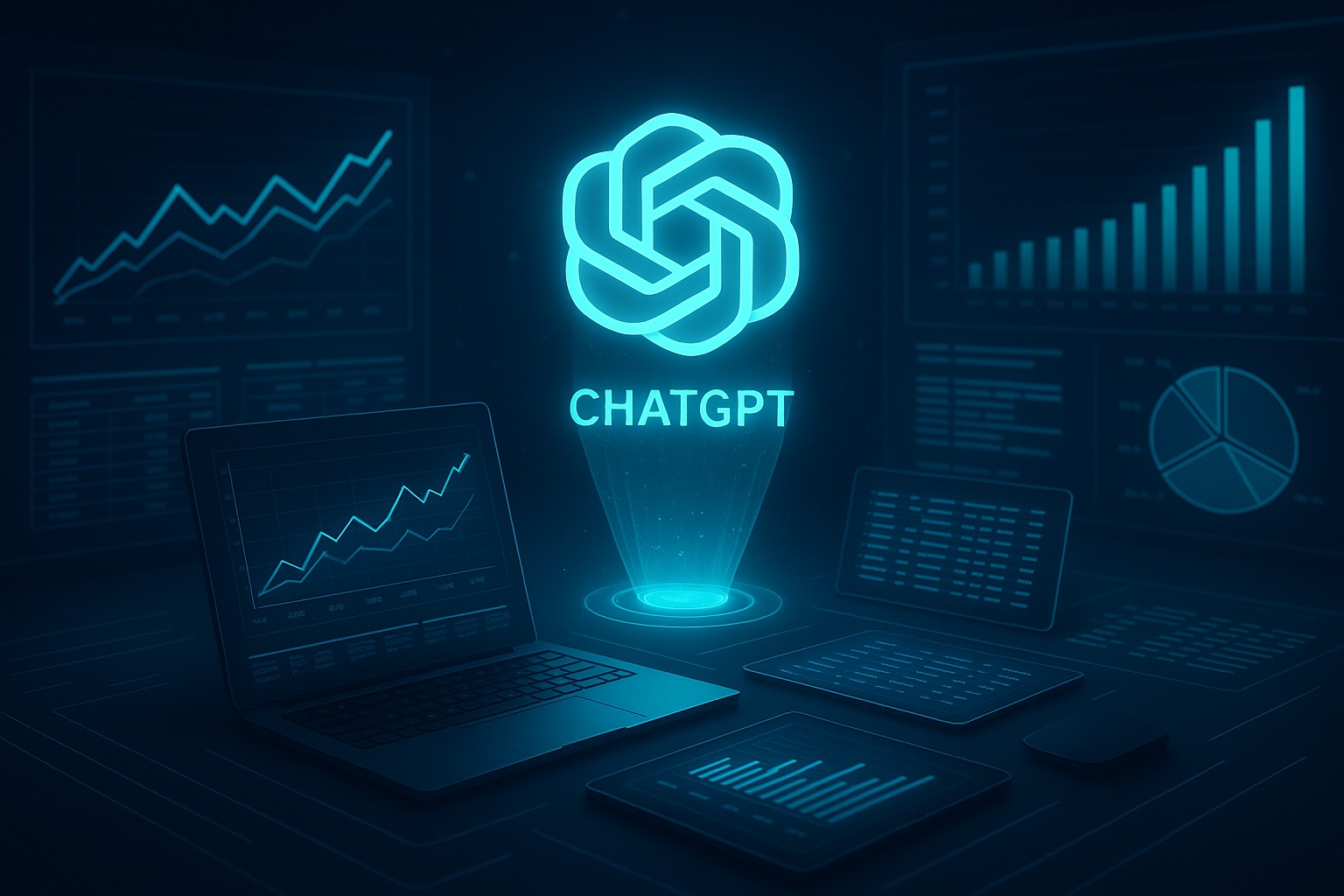
In modern analytics teams, ChatGPT-like models can accelerate the exploration process by converting natural language questions into structured prompts that guide data analysis and visualization decisions. Rather than crafting every chart request from scratch, data professionals can engage in a conversational workflow that surfaces relevant visualization options, data transformations, and narrative angles. This enables faster iteration, clearer alignment with stakeholders, and a smoother handoff between data science, business intelligence, and decision-making.
The technology excels at generating multiple visual encodings, explaining the rationale behind each option, and highlighting trade-offs between chart types, data pre-processing steps, and audience needs. It can help surface edge cases, suggest alternative aggregations, and propose storytelling hooks that make data more compelling to non-technical readers. However, there are important caveats. ChatGPT does not inherently access private data unless integrated with a data source, and it can produce plausible-sounding but incorrect claims if prompts are not anchored in the actual dataset or governance constraints. The most effective use couples AI-assisted ideation with rigorous validation by humans and reproducible data pipelines.
To use ChatGPT effectively in this context, teams should start from a simple, documented process that defines how prompts map to outputs, how those outputs are reviewed, and how results are integrated into dashboards or reports. A practical starting point is a short checklist that clarifies goals, constraints, and responsibilities before prompting. The following quick guide helps teams get oriented and stay disciplined as they scale usage across projects and datasets.
– Define the decision objective
– Specify data context and constraints
– Request concrete visualization options with rationale
– Plan for validation and traceability
In practice, this structure helps ensure that prompts lead to actionable insights, not just aesthetically pleasing charts. When used thoughtfully, ChatGPT acts as a companion for hypothesis generation, exploratory data analysis, and narrative framing, while analysts retain control over data integrity, statistical validity, and deployment into production-ready visuals.
Prompt design and templates for visualization tasks
Prompt design is the core discipline that determines how effectively an AI assistant contributes to data visualization and insight generation. Clear, specific prompts reduce ambiguity, improve consistency, and shorten the loop from question to actionable output. A well-crafted prompt describes the data context, the audience, the intended outcome, and the constraints that must be respected. It also invites the model to offer multiple options, along with brief rationale and potential caveats, so humans can select the best path.
A practical approach is to use a small set of reusable templates and tailor them for each project. When constructing prompts, consider the following dimensions: data schema (fields and data types), the time horizon, aggregation level, preferred visualization family (bar, line, heatmap, scatter, etc.), ordering and color constraints, accessibility requirements, and any governance or privacy considerations. By embedding these dimensions into prompts, analysts can receive structured, comparable outputs across datasets and projects.
Some ready-to-use prompt templates you can adapt include:
Prompt template 1: Visualization options
"Given a dataset with fields 2026, [category], [value], provide 3 chart options to compare [value] across [category] over time. For each option, include: a) the recommended chart type, b) the data slice or aggregation, c) the rationale, d) potential limitations or pitfalls, e) a suggested narrative takeaway."

Prompt template 2: Data transformation and preparation
"Describe the minimal data transformations needed to prepare the dataset for visualization. Include data cleaning steps, handling missing values, and any normalization. Return a step-by-step plan suitable for a data engineer to implement in SQL/Pandas."

Prompt template 3: Narrative framing for stakeholders
"Create a one-paragraph executive takeaway and a 3-bullet storyboard for a dashboard that tracks [metric] over [time period]. Focus on business impact, key drivers, and recommended actions. Include a single chart suggestion that best conveys the insight and a brief note on limitations."
Prompt templates can be extended with iterations. For instance, after receiving an initial set of chart options, you can ask for refinements such as adjusting color palettes for accessibility, changing the aggregation level, or tailoring the explanation to a specific audience (executive, data scientist, product manager). A minimal prompt kickoff, followed by targeted follow-ups, often yields high-quality results with a compact prompt history.
When using prompts, avoid embedding sensitive data directly in prompts. Instead, reference secure data connectors or provide sanitized field names and sample structures. Encourage the model to present outputs in a structured format (for example, a list of options with fields like type, data scope, rationale, and caveats) so downstream systems can parse and present the results consistently. Finally, establish a quick review loop that includes data validation steps and a human-facing narrative check before any visual or report is deployed.
Technical integration and tooling for scalable workflows
Integrating ChatGPT into data workflows requires a thoughtful blend of data access, prompt management, and automation. When the model can be invoked in a controlled environment, teams can generate visualization ideas, produce draft analyses, and receive narrative explanations that are easy to translate into dashboards or reports. The key is to design interfaces and guardrails that keep data access secure, outputs reproducible, and results auditable.
One core pattern is to separate the reasoning layer from the data layer. Analysts formulate prompts that describe what they need, while a trusted data service executes queries, performs transformations, and returns clean results. The model then interprets those results to suggest visuals and write accompanying explanations. This separation helps maintain data governance, reduces the risk of feeding incorrect outputs back into dashboards, and supports versioning of both prompts and data pipelines.
A pragmatic way to implement this is through a lightweight integration that combines the following elements: a data access layer (SQL or a data frame API), a prompt-generation module, and a visualization advisory component. To illustrate, a table below shows typical roles and how they map to prompts and outputs.
| Tool | Role | Example Prompt |
|---|---|---|
| Python with pandas | Data extraction and pre-processing | “Query monthly sales data, fill missing values, and prepare a dataframe with columns date, region, sales for visualization.” |
| OpenAI API | Language reasoning and prompt generation | “Given the prepared dataframe, propose 3 visualization options to compare sales by region and month, with rationale and caveats.” |
| BI dashboard platform (Power BI/Tableau) | Embedding insights into dashboards | “Return a narrative explanation and recommended chart to add to the dashboard, plus a quick checklist for interpretation.” |
The table is a compact guide to how a pipeline can flow from data retrieval to AI-assisted visualization, with clear handoffs and outputs at each stage. In practice, you may connect the prompt engine to a version-controlled repository of prompt templates and use a lightweight orchestration layer to trigger prompt generation in response to data events or user requests. Logging every prompt and its outcome supports auditability and helps refine prompts over time. Additionally, consider caching frequently requested prompts and outputs to reduce latency and API usage costs in production environments.
Security, privacy, and governance should be foundational. Enforce least-privilege data access, avoid sending raw sensitive data to external AI services, and implement redaction or tokenization where appropriate. Maintain a clear mapping between prompts and the corresponding data operations to enable reproducibility and compliance reviews. Finally, integrate quality checks such as automated data-type validations, chart sanity checks, and human-in-the-loop verifications for high-stakes analyses before visuals reach end users.
Governance, validation, and best practices
Effective use of ChatGPT in data tasks rests on disciplined governance and rigorous validation. While AI can accelerate ideation and suggest viable visualization paths, humans are responsible for data accuracy, methodological rigor, and the final narrative. Establish guardrails that define when to escalate to a data scientist, what constitutes an acceptable level of approximation, and how to document assumptions. Clear governance helps prevent the propagation of errors, reduces ambiguity in interpretation, and builds trust with stakeholders.
Validation should occur along multiple dimensions: data integrity (Are the underlying numbers correct given the source?), statistical soundness (Are the methods appropriate for the data distribution and business question?), and narrative clarity (Is the explanation consistent with the visuals and the underlying analysis?). Implement automated checks where possible, such as comparing AI-generated summaries against computed aggregates, validating chart types against data characteristics, and ensuring that recommended actions align with the quantified impact.
Best practices also include prompt hygiene and version control. Treat prompts as living assets: version prompts, track changes, and store them in a shared repository. Document the intended use case, expected outputs, and any limitations. Rotate prompts periodically to reduce drift and to incorporate lessons learned from previous projects. Use a dedicated workspace for AI-assisted analytics, with access controls and an auditable trail of decisions, inputs, and outputs. Finally, maintain a culture of cautious skepticism: use AI as a collaborator for ideation and communication, while preserving the primacy of data provenance and transparent methodology.
Best practice: Treat ChatGPT as a collaborator for ideation and storytelling, not as the sole source of truth. Always validate outputs against your data, and keep a clear record of prompts, data references, and human review steps.
Real-world workflows and case studies
Teams employing AI-assisted data visualization often begin with pilot projects that target common business questions and dashboards. These pilots focus on measurable outcomes such as reduced time to first meaningful visualization, faster iteration cycles with stakeholders, and improved alignment between decisions and data-backed insights. As teams gain confidence, they expand usage to more complex analyses, cross-functional dashboards, and automated reporting that preserves governance and traceability.
A practical workflow might unfold as follows: (1) a stakeholder request is captured in natural language, (2) a prompt is generated to outline recommended charts and data transformations, (3) the data layer executes the required queries and returns a clean dataset, (4) the AI assistant suggests visuals and writes a concise narrative, and (5) a human reviews, validates, and publishes the visuals to a dashboard with an audit trail. Throughout, logging and versioning ensure that each visualization can be traced back to specific data slices, reasons for the chosen chart type, and any caveats or assumptions.
In production settings, teams often pair these AI-assisted workflows with automated testing and deployment pipelines. For example, an analytics team may implement governance checks that flag ambiguous chart recommendations, or they may automatically generate alternate views for A/B testing, with results tracked over time. The combination of AI-assisted ideation, disciplined data handling, and robust validation produces dashboards that are not only faster to assemble but also more resilient to misinterpretation and misrepresentation.
FAQ
FAQ
What are common pitfalls when using ChatGPT for data tasks?
Common pitfalls include over-reliance on the model for data interpretation without validating against source data, accepting generic recommendations without context, and issuing prompts that attempt to bypass data governance constraints. To mitigate these risks, pair AI outputs with reproducible data queries, ensure prompts reference the actual data schema, and implement human-in-the-loop reviews for critical analyses.
How can I ensure reproducibility of insights generated by ChatGPT?
Reproducibility hinges on explicit prompts, stable data sources, and version-controlled workflows. Document the prompts used, maintain a fixed data snapshot or query parameters, and store generated outputs (charts, narratives, and decisions) in a repository with metadata describing the data version, prompt version, and reviewer notes. Use automated pipelines to reproduce results from the same inputs.
What metrics help assess the quality of ChatGPT-assisted analyses?
Key metrics include prompt-reply consistency, alignment between suggested visuals and data characteristics, time-to-insight improvements, and stakeholder satisfaction with the narrative explanations. Process metrics such as the rate of validation passes, the frequency of corrective prompts, and the auditability of decisions provide additional depth for evaluating effectiveness.
Is ChatGPT suitable for production-grade dashboards?
Yes, when integrated with robust data pipelines, governance, and validation. AI-assisted prompts can generate design invariants, narrative context, and alternative visualization options, but production dashboards should rely on authoritative data sources, reproducible transformations, and formal review processes. Treat AI outputs as decision support, not final authority, and ensure all visuals are under clear data governance controls.