Now Reading: Key Components of Effective HR Software Systems
-
01
Key Components of Effective HR Software Systems

Overview: What constitutes an effective HR software system
An effective HR software system functions as more than a collection of features. It is a modular, integrated platform designed to streamline core people processes while aligning with organizational strategy and governance requirements. In practice, this means data accuracy, reliable access, and workflows that reflect real-world HR and business needs, from hiring to offboarding and everything in between.
From a business-technical perspective, the value of a strong HR system emerges when it delivers scalable data models, robust security, and smooth interoperability with other enterprise systems. The best solutions support both transactional efficiency—reducing manual work and minimizing errors—and strategic insight, by enabling timely reporting, scenario planning, and evidence-based decision making. In short, effective HR software should enable consistent, auditable processes at scale, without sacrificing user experience for HR professionals and line managers alike.
Core HR Capabilities and Modules
At minimum, a comprehensive HR platform should cover the essential domains that drive accurate record-keeping, compliance, and workforce planning. A well-designed core will also support extension into talent, analytics, and administration without forcing disruptive migrations.
Key modules commonly found in strong HR systems include the following components, which collectively establish a solid baseline for modern workforce management:
- Core HR and Employee Records
- Talent Management and Performance
- Recruiting and Onboarding
- Time and Attendance
- Payroll and Benefits Administration
- Learning and Development
- Workforce Analytics
- Compliance and Risk Management
Automation and Workflow Management
Automation and workflow capabilities determine how efficiently the system can handle routine tasks, approvals, and cross-department processes. A modern HR suite should enable repeatable, auditable procedures that reduce cycle times and human error while preserving flexibility for exceptions and policy changes.
To maximize value, organizations look for capabilities that streamline operations without creating rigid silos. Practical considerations include how workflows are modeled, how decisions are routed, and how events trigger actions across the HR ecosystem. When implemented well, automation supports faster hiring, accurate leave management, timely payroll processing, and proactive compliance monitoring.
- Automated approvals and routing
- Conditional workflows and business rules
- Task orchestration across departments
- Event-driven notifications and reminders
Data Governance, Compliance, and Security
Data governance and security are foundational to any HR platform, given the sensitivity of personal information, payroll details, and health data. A defensible data model combines clear ownership, role-based access, and auditable changes with transparent retention and deletion policies that comply with applicable laws and internal standards.
In addition to protecting data, a strong system helps organizations demonstrate compliance through clear reporting, attestation workflows, and documented controls. The right approach balances usability with rigorous safeguards so HR teams can operate confidently while regulators can verify posture and impact.
- Role-based access controls and least privilege
- Data retention, privacy, and data residency
- Encryption at rest and in transit
- Audit trails and change logs
- Compliance reporting and attestation
Analytics, Reporting, and Insights
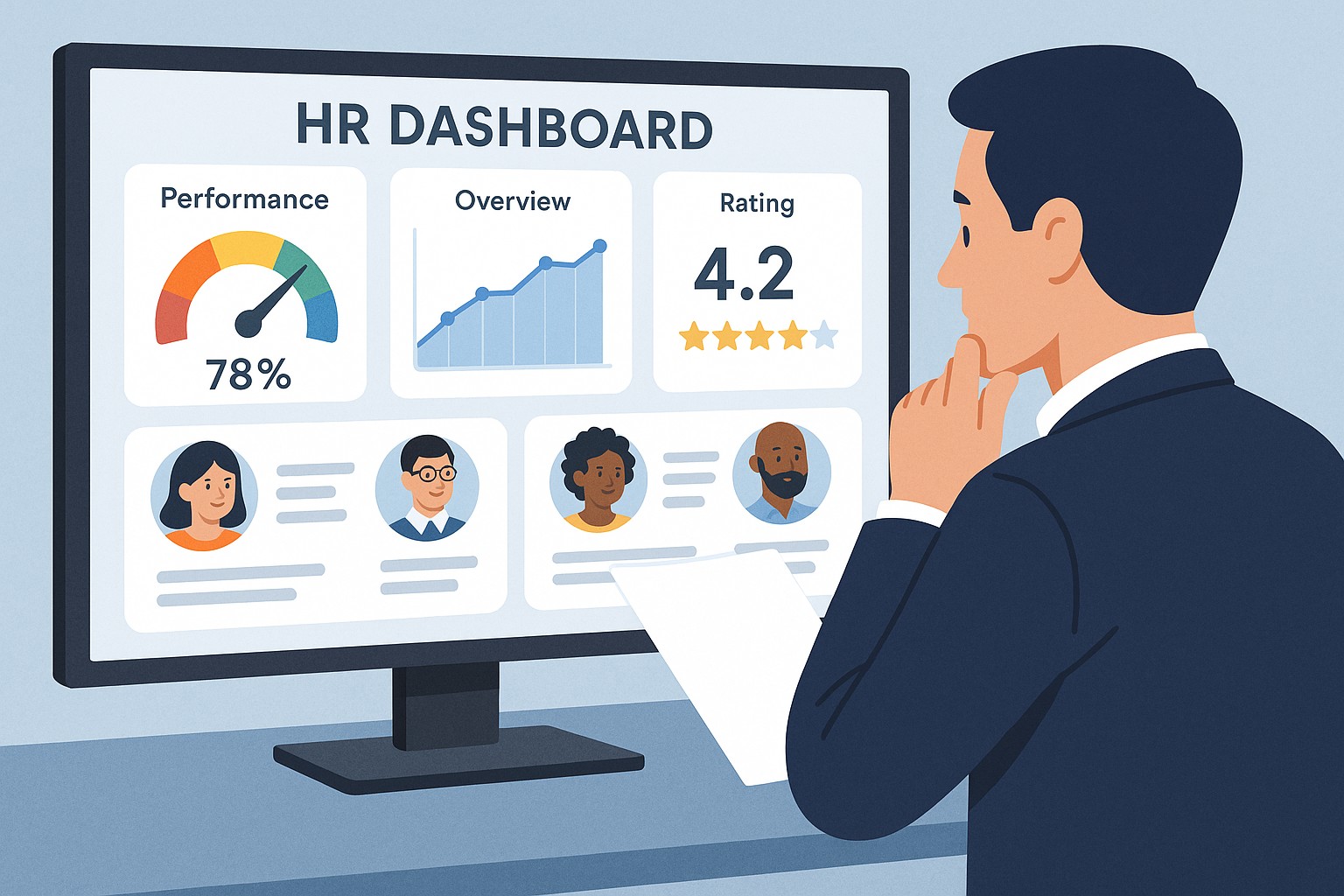
Analytics capabilities transform raw HR data into actionable intelligence. A modern HR platform should provide native dashboards, ad hoc reporting, and advanced metrics that enable HR leaders to monitor trends, forecast workforce needs, and measure the impact of people initiatives. The goal is to translate data into decisions that improve recruitment quality, retention, productivity, and employee engagement.
Beyond basic reporting, look for capabilities such as data visualization, drill-down by department or location, and the ability to benchmark against internal and external peers. Proper design ensures that insights are accessible to HR practitioners and executives without requiring specialized data science expertise.
Change Management, Adoption, and Integration
Even the best HR software can fail to deliver value if users resist adoption or if the system does not integrate smoothly with existing tools. Change management, training, and thoughtful integration planning are essential to realizing the full potential of an HR platform. A deployment plan should emphasize stakeholder engagement, clear ownership, and staged rollouts that minimize disruption while accelerating proficiency.
Strategic integration complements adoption by ensuring data integrity across the tech stack. This includes reliable APIs, pre-built connectors to common finance, payroll, and talent systems, and a clear data governance model that governs how information flows between systems, how duplicates are avoided, and how reconciliations are performed during data migration.
Scalability, Deployment Choices, and Vendor Considerations
As organizations grow, the chosen HR software must scale in both data volume and user population without compromising performance or security. Deployment models—cloud, on-premises, or hybrid—impact total cost of ownership, upgrade cadence, and disaster recovery capabilities. Equally important are vendor considerations such as product roadmap alignment, support responsiveness, and the cost of customization versus configuration.
When evaluating vendors, organizations should assess not only current functionality but also the ability to extend the platform through modules, integrations, and flexible data models. A strong partner will provide clear SLAs, migration assistance, and a sustainable upgrade path that minimizes disruption to ongoing HR operations.
FAQ
What distinguishes core HR from a full HRIS or human capital management system?
Core HR focuses on the essential employee data, personnel records, and administrative processes necessary to manage the workforce. An HRIS (Human Resources Information System) or HCM (Human Capital Management) system typically extends this foundation with advanced features for talent management, analytics, compensation, and more strategic capabilities. In practice, the boundary is a spectrum, with many vendors offering modular solutions that can scale from basic HR administration to comprehensive workforce management.
How should an organization evaluate ROI when integrating or replacing HR software?
ROI evaluation should consider both hard and soft returns. Hard returns include time saved on administrative tasks, reduced errors, and improved payroll accuracy, which translate into lower costs and faster processing. Soft returns cover improved decision-making, better compliance, higher employee engagement, and reduced turnover costs. A practical approach is to map current process durations and error rates, set target improvements, estimate the monetary impact, and track performance after implementation through defined KPIs.
What security measures are essential in HR software?
Essential security measures include robust role-based access controls with least-privilege assignments, strong authentication options (such as MFA), encryption of data at rest and in transit, and comprehensive audit trails for key actions. Additionally, regular third-party security assessments, incident response planning, data residency considerations, and clear data retention policies are critical to maintaining trust and compliance.
How should data migration be planned when moving to a new HR system?
Data migration should be approached as a multi-phase program with clear ownership, data cleansing, and reconciliation steps. Start with an inventory of data sources, define mapping rules to the new schema, and establish validation checkpoints. Independently verify data quality and perform parallel runs to compare results before final cutover. A well-planned migration minimizes downtime and preserves the integrity of critical records such as payroll histories and benefits data.
What best practices support user adoption and process alignment with a new HR platform?
Key practices include early and ongoing stakeholder engagement, role-based training tailored to different user groups, and a phased rollout that prioritizes high-impact processes. Provide clear process ownership, create easy-to-follow runbooks, and align system configurations with documented policies. Finally, establish feedback loops and continuous improvement cycles to refine workflows based on real-world usage and evolving business needs.