Now Reading: Must-Have Features in Mobile Banking Apps
-
01
Must-Have Features in Mobile Banking Apps

Security and authentication: must-have capabilities
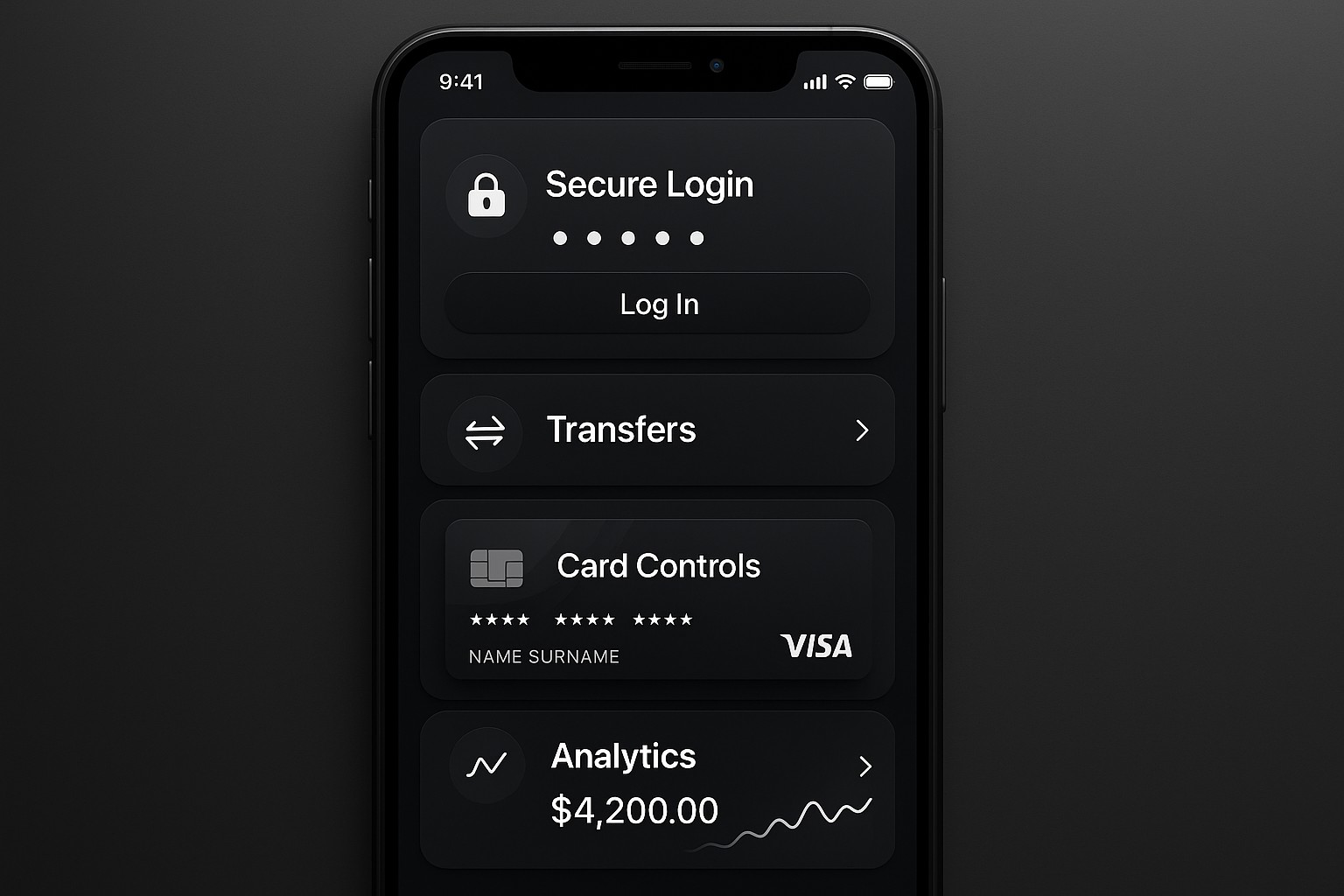
Mobile banking apps operate at the intersection of convenience and risk. End users expect quick access to financial services, yet cyber threats continue to evolve with stealthy phishing, malware, and device compromise threatening sensitive data and funds. A defensible mobile banking solution starts with a robust identity framework that can scale across everyday activity and high-value transfers, while preserving a seamless user experience for legitimate customers. The app should implement a layered security model that combines strong authentication, secure data handling, and continual risk assessment, all supported by auditable event logs and rapid remediation mechanisms. In practice, this means designing authentication flows that are flexible enough to reduce friction for trusted users and strict enough to curb abuse when risk indicators rise, without forcing users to abandon legitimate tasks.
Beyond login, the architecture must enforce secure session management, protect data both in transit and at rest, and provide resilient controls for incident response. This includes platform-native security features such as secure enclaves or trusted execution environments, ephemeral tokens for session integrity, and secret management that rotates keys on a defined cadence. A prudent design also incorporates device binding, which ties credential validity to a known, trusted device, and leverages biometric signals or passkeys as a first line of defense. When risk signals emerge—for example unusual geolocation, anomalous device behavior, or rapid sequence of sensitive actions—the system should prompt for additional verification, or temporarily restrict high-risk operations until the user completes a friction-balanced verification process.
- Biometric authentication (fingerprint/face) with secure fallback and liveness checks
- Device binding and attestation tied to secure hardware
- Multi-factor authentication (MFA) with risk-based prompts
- Per-session ephemeral tokens and strict session timeout policies
- Real-time fraud detection and adaptive risk scoring
- Strong data encryption in transit and at rest
- Granular access controls and auditable security events
- Ability to revoke sessions and credentials immediately across devices
User experience, performance, and accessibility
Users interact with the app repeatedly, often under time pressure. Therefore, the design must prioritize speed, clarity, and predictability. Onboarding should be streamlined to collect only essential information upfront while enabling progressive enhancements as trust is established. The information architecture should reflect common financial tasks—viewing balances, transferring funds, paying bills, and managing cards—with consistent, discoverable navigation. Performance budgets matter: rendering should be snappy, network calls should be optimized for mobile networks, and caching strategies should prevent unnecessary latency. Clear feedback—through unobtrusive progress indicators, concise status messages, and meaningful error guidance—helps reduce anxiety and support user confidence during critical operations.
Accessibility and internationalization are non-negotiable for broad user adoption. All interactions—from button targets to form fields—should support keyboard navigation, screen readers, and high-contrast modes. Text and control sizes must scale for users with visual impairment, and color should not be the sole carrier of meaning. Platform parity matters for users who switch devices or operate across regions, so the app should maintain consistent behavior and available features whether on Android, iOS, or web-derived experiences. Finally, the feedback loop between users, product owners, and engineering should be fast: telemetry and usability metrics must inform regular refinements, ensuring that security measures do not degrade the user journey more than necessary.
- Fast onboarding with progressive profiling to minimize friction while collecting necessary data
- Intuitive navigation, with clear primary actions and consistent patterns across screens
- Contextual help, in-app guidance, and actionable error messages
- Real-time feedback and well-designed microinteractions that confirm user actions
- Strong accessibility compliance (WCAG 2.x/3.x), keyboard support, and screen-reader friendliness
Data privacy, personalization, and developer ecosystem
Privacy-by-design is no longer optional; it is a competitive differentiator. Banks must minimize data collection, obtain explicit user consent for sensitive processing, and provide transparent explanations of how data is used. Data should be stored securely, with access restricted to principle of least privilege and monitored through audit logs. The user should retain meaningful control over data sharing, with straightforward options to review permissions, export data, or delete accounts. Compliance with applicable regulations—such as GDPR, CCPA, and local financial-privacy rules—should be built into the product backlog and architecture, not bolted on later. A privacy-aware architecture also enables secure data portability and robust incident response in the event of a breach.
Personalization can enhance engagement and relevance when done with consent and clear controls. When users opt in, the app can tailor recommendations, notifications, and interface preferences while ensuring that sensitive financial attributes remain protected. Behavioral analytics should be conducted with anonymized or pseudonymized data whenever possible, and policy-driven data sharing with partners must be governed by explicit agreements and revocation options. An ecosystem approach—exposing secure APIs, SDKs, and developer guidelines—helps third-party integrations stay aligned with security standards. Platform teams should maintain rigorous review cycles for third-party components, monitor for supply-chain risks, and provide secure, versioned interfaces to minimize backward compatibility hazards.
- Granular user consent controls and transparent privacy notices
- Data minimization, anonymization, and strong access controls
- Opt-in personalization with clear controls and auditable permissions
- Policy-driven data sharing with partner ecosystems and external services
- Secure analytics with privacy-preserving techniques and strict data governance
FAQ
What are the must-have security features for mobile banking apps?
The must-have security features include a layered identity framework with risk-based authentication, strong encryption for data in transit and at rest, and secure session management that prevents hijacking or credential leakage. Biometric authentication and fallback mechanisms should be supported alongside device binding and ephemeral tokens to reduce the attack surface. Real-time fraud detection with adaptive risk scoring, auditable event logs, and rapid revocation capabilities for compromised sessions are essential. In addition, secure key management, regular security testing, and clear, user-friendly prompts for verification when risk increases help maintain both security and usability for everyday banking tasks.
How can banks balance security with user experience?
Balancing security with user experience requires risk-based, friction-aware design. Banks should implement adaptive authentication that prompts additional verification only when risk indicators are elevated, while preserving a smooth flow for routine actions. Progressive onboarding, consistent UI patterns, and fast, informative feedback reduce user frustration. Error handling should guide users toward secure paths without creating ambiguous dead ends. Regular usability testing, telemetry-driven iteration, and clear communication about why certain security steps are necessary help align protection with customer expectations and business goals.
What role does biometric authentication play in mobile banking?
Biometric authentication provides a convenient and strong initial barrier against unauthorized access, reducing reliance on passwords while leveraging device-bound security features. It should be complemented by optional passkeys or hardware-backed tokens, as well as robust fallback options for cases where biometrics fail. Liveness checks and secure enrollment processes help mitigate spoofing risks. Importantly, biometric data must be stored and processed in a privacy-preserving manner, typically leveraging the device’s secure enclave or trusted execution environment, with user consent and the ability to disable biometric authentication if desired.
How should offline functionality be approached in a banking app?
Offline functionality should prioritize read-only access to non-sensitive information, such as previously downloaded statements, budgets, or cached balances, while ensuring that any new transactions are queued for processing when connectivity resumes. The app should clearly indicate which actions require an online connection and provide secure, auditable queuing and retries for offline-created requests. When online, the system must verify that queued operations have not been tampered with and enforce the bank’s security policies before processing. Users must be informed about offline limitations and the potential impact on transaction timing or status updates.
How can developers ensure privacy and regulatory compliance?
Developers ensure privacy and compliance by integrating privacy-by-design practices from the outset, performing data protection impact assessments, and implementing data governance controls. This includes minimizing data collection, obtaining explicit user consent, enabling data portability and deletion, and maintaining auditable records of data processing activities. Compliance should be supported by secure development practices, regular third-party security reviews, and automated checks for regulatory requirements. Regions with specific rules (such as PSD2/SCA in Europe) require appropriate authentication flows and secure APIs that comply with technical standards and customer-facing obligations.
What trends are shaping the next generation of mobile banking features?
Trending directions include the integration of AI-driven personalization for financial insights, proactive fraud detection using machine learning, and open banking ecosystems that enable secure third-party access under strict consent controls. Enhanced biometrics, passkeys, and passwordless authentication will improve both security and usability, while friction-reducing UX patterns and real-time communications will elevate customer satisfaction. Additionally, banks are exploring more sophisticated risk-based authorization, programmable financial services through secure APIs, and stronger focus on accessibility and inclusivity to reach a broader audience. All of these trends are anchored by robust privacy, transparent governance, and continuous security testing.