Now Reading: Native vs Web vs Hybrid Apps: Choosing a Mobile Strategy
-
01
Native vs Web vs Hybrid Apps: Choosing a Mobile Strategy

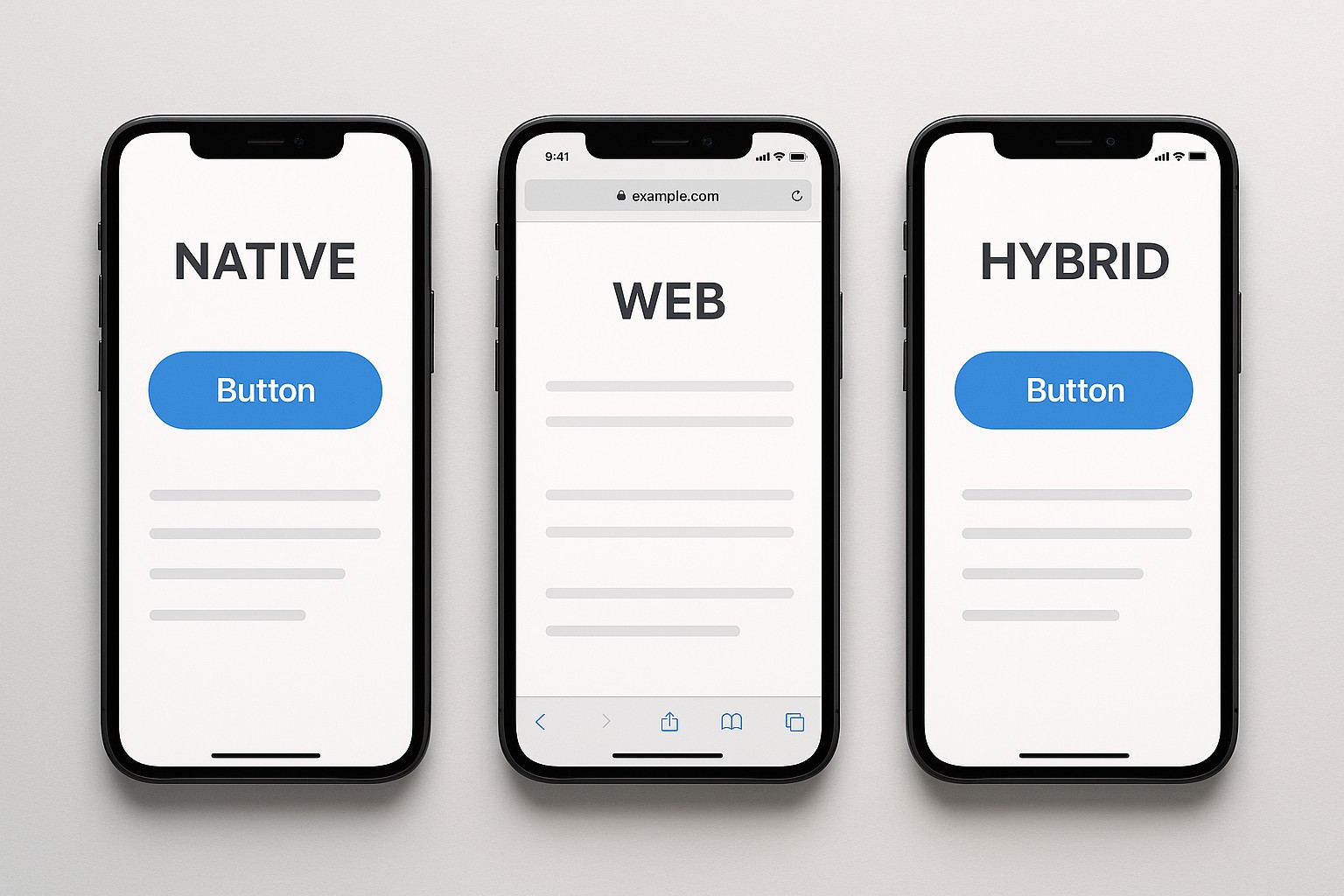
Overview: Native vs Web vs Hybrid in a Modern Mobile Strategy
In modern product development, organizations choose among native, web, and hybrid approaches to deliver experiences on mobile devices. Each option implies different trade-offs in performance, distribution, and maintenance. For decision makers, it’s essential to map user expectations, business goals, and team capabilities to the appropriate architecture.
This article synthesizes current realities: native apps achieve best performance and seamless UX; mobile web and PWAs provide broad reach and rapid iteration; hybrid approaches attempt to balance cost with access to device features, but come with performance and UX caveats. The goal is a structured framework to decide which path aligns with strategic priorities and budget constraints.
Native Apps: Performance, Development Cost, and User Experience
Native apps run with direct access to platform APIs, optimized rendering pipelines, and hardware acceleration. On iOS and Android, this enables smooth 60fps animations, responsive input handling, and low-latency sensor access. For apps that require high-end graphics, complex offline capabilities, or advanced camera and AR features, native code offers the clearest path to parity with platform conventions and mass-market expectations.
From a cost and organizational perspective, native development typically requires separate codebases for each platform. This increases initial investment, extends the time to market, and adds ongoing maintenance overhead as features are rolled out on iOS and Android in tandem. However, the payoff is a more predictable user experience, stronger app store performance, and fewer platform-specific workarounds to support edge-case devices. The following characteristics contribute to the native advantage:
- Best possible performance and responsiveness across core workflows
- Unmatched ability to leverage platform-specific UI patterns, accessibility features, and security controls
- Robust tooling for offline caching, background processing, and push notification orchestration
Web Apps and Progressive Web Apps (PWAs): Reach, Speed of Iteration, and UX Potential
Web apps and PWAs run in a mobile browser or as a lightweight shell wrapped in a native container. They can be discovered via search, updated instantly, and delivered to a broad set of devices with a single codebase. PWAs can offer offline experiences, home screen installation, and push notifications within evolving web platform APIs, but the depth of available device access remains more limited than native in many scenarios.
From a performance and cost perspective, web-based strategies excel. As teams evaluate mobile development frameworks that target the browser, the constraints of the web platform mean trade-offs must be planned around offline support, caching, and progressive enhancement. The choice of framework can influence how closely a PWA can mimic native responsiveness. When the product requires rapid iteration, broad reach, and lower upfront cost, web and PWA approaches are compelling.
- Broad compatibility with a single codebase across platforms
- Faster time-to-market and lower initial investment compared with native
- Ease of distribution, updates, and analytics integration through web tooling
Hybrid Apps: A Bridge with Trade-offs in Performance and Development Cost
Hybrid apps place a web view inside a native container, allowing a shared codebase to render UI with web technologies while still delivering some native capabilities. They typically rely on cross-platform mobile development frameworks and hybrid toolchains to deliver a shared UI layer. Real-world hybrid apps need careful optimization to avoid the performance cliffs that can appear in heavy UI tasks, large data tables, or graphics-intensive interactions.
The cost and development trajectory for hybrids typically sit between native and web approaches. The initial investment is lower than building parallel native apps, and the cadence for feature delivery can be shorter than maintaining two fully native codebases. Yet, the performance ceiling and UX parity depend on how efficiently the hybrid container handles rendering, how well the web code is optimized, and how effectively platform-specific bridge APIs are used. Important trade-offs include:
- Selection of the hybrid framework and the maturity of its ecosystem
- Quality of integration with device features such as cameras, geolocation, and offline storage
- Engineering discipline for performance tuning and memory management
- Update speed and release coordination across platforms
- Long-term maintenance and the risk of platform drift or plugin depreciation
Decision Framework for Mobile Strategy
To decide among these routes, teams should start with user expectations and mission-critical features. If the app must support advanced camera, AR, or high-fidelity animations and must feel native to the platform’s conventions, native development is typically the safest bet. If time-to-market, broad reach, and maintenance efficiency are dominant constraints, a web-based or PWA approach can deliver compelling outcomes with careful offline strategies and performance budgets.
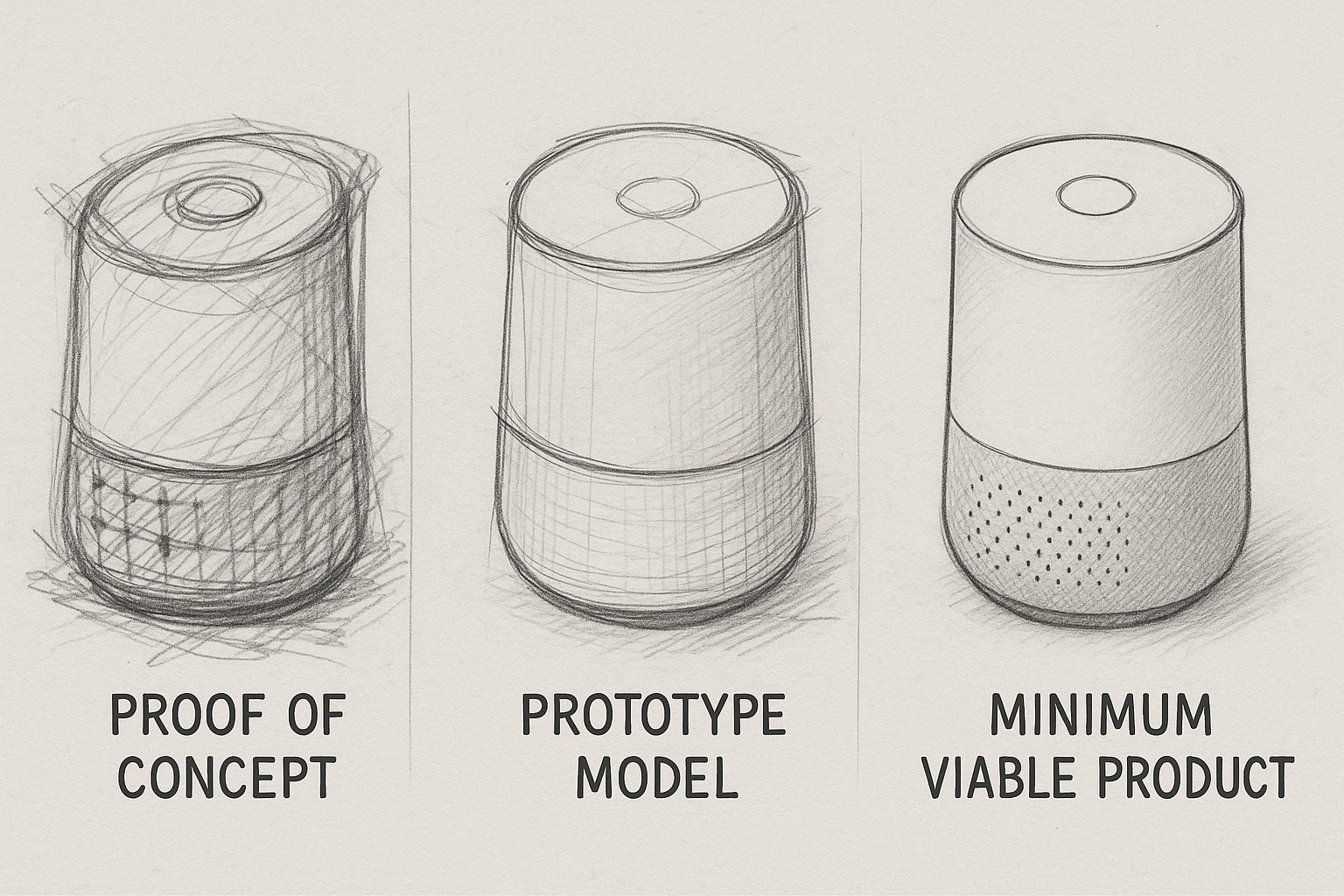
A practical approach is to map feature requirements, performance targets, and deployment constraints to a scoring rubric. Weight the importance of offline capability, push notification behavior, data synchronization, and accessibility. Use a phased plan: validate core flows with a minimal viable experience, then incrementally lift features for platform parity as needed.
Practical Guidelines for Teams and Budgeting
Build cross-donor team capabilities in parallel with the chosen architecture. If you pursue native, invest in platform-specialized roles, design systems aligned with each platform, and set a robust release cadence. If you pursue web or PWAs, emphasize performance budgets, service worker hygiene, and responsive UX patterns. For hybrids, establish a clear performance baseline, instrument frame-rate metrics, and prepare to refactor web views as you scale features.
Plan for the long term by setting a maintenance calendar, defining API compatibility guarantees, and scheduling regular audits of third-party plugins or libraries. Consider hybrid-specific risks such as plugin depreciation and container updates, and implement a migration path from hybrid to native if the product requirements shift over time. Align budgeting with expected user growth, data requirements, and security obligations.
FAQ
What factors should influence the choice between native, web, and hybrid for a new product?
The decision should start from user expectations, core feature requirements, performance targets, and team capabilities. For mission-critical native experiences with advanced device integration, native is typically preferred. For broad reach with rapid iteration, web or PWAs offer substantial leverage. Hybrid can be viable when the product needs a middle ground, but only if performance budgets are strictly managed and the bridge APIs are well supported.
How can a product team measure and compare performance across approaches?
Establish a consistent benchmark suite that covers startup time, first interaction latency, animation smoothness, memory usage, network efficiency, and offline behavior. Use real-device testing across representative hardware and capture metrics such as frames per second, time to interactive, and energy impact. Compare results against target thresholds and evaluate the trade-offs in user-perceived responsiveness, while also considering fragmentation across platforms.
When is native development justified despite higher cost?
Native development is typically justified when the product requires maxed-out performance for graphics, scientific computation, or AR/VR workloads, or when the platform conventions and accessibility requirements demand precise alignment with each ecosystem. Also, if your go-to-market strategy depends on a top-tier UX and an immersive device experience, native is often the safer long-term choice despite upfront investment.
How important are time-to-market and distribution channels in the decision?
Time-to-market and distribution channels significantly shape the decision. Web and PWAs win on speed and direct deployment, while native apps face store review cycles and multi-platform synchronization challenges. If a fast, frequent release cadence is critical and the audience discovery leverages search and direct URLs, a web-based approach may be preferable. If a curated, monetizable ecosystem and deep platform integrations matter, native is compelling.
How should maintenance and updates be handled over the product lifetime?
Maintenance strategies depend on architecture. Web apps benefit from unified updates and centralized caching controls; native apps require coordinated releases across platforms and store compliance; hybrids need ongoing bridge maintenance and plugin management. In all cases, institute automated testing, semantic versioning, and a clear deprecation path for features and dependencies to reduce risk when platform changes occur.