Now Reading: Observability vs Monitoring: Modern IT Monitoring Approaches
-
01
Observability vs Monitoring: Modern IT Monitoring Approaches

Understanding observability in modern IT ecosystems
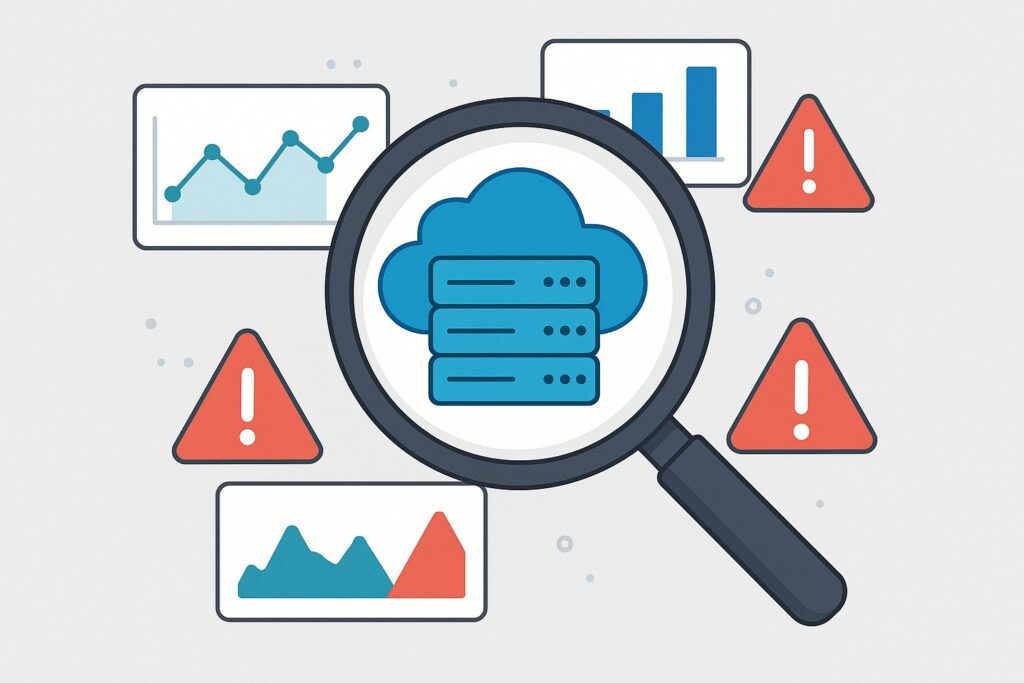
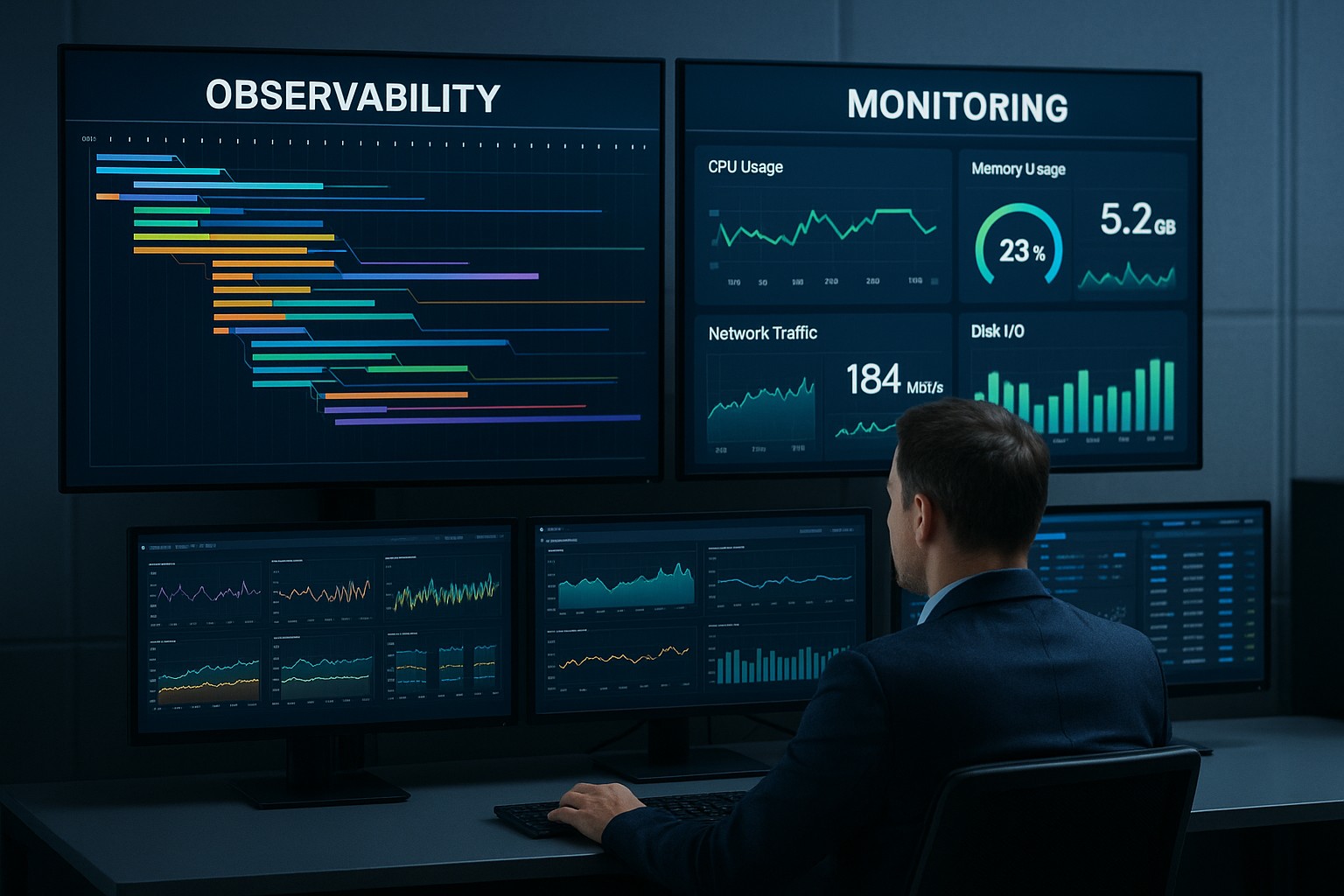
Observability is not just more data; it’s the capability to derive actionable answers from a running system. In business terms, observability translates into user-perceived reliability, faster time-to-market, and improved risk management. In modern IT environments—multi-cloud, Kubernetes-based microservices, event-driven architectures—the surface area for failure grows and so does the complexity of diagnosing issues. Observability helps product teams link customer impact to concrete technical cause, rather than relying on anecdotal signals. This shift enables organizations to move beyond reactive firefighting toward proactive reliability and insight-driven decision making.
Where traditional monitoring answers “is it up?”, observability aims to answer “why is it performing this way, and what will happen next?” It emphasizes three interlocking signals—signals that you can explore with context, correlation, and cross-cutting traces. The result is a culture of hypothesis-driven troubleshooting, where engineers can test assumptions, reproduce failures, and validate improvements against business metrics such as latency percentile, error budgets, and user satisfaction scores. By focusing on causes, not just symptoms, teams shorten MTTR and improve the predictability of releases across complex environments.
Adopting observability also accelerates recovery in high-velocity environments. It supports proactive capacity planning as teams observe traffic patterns, tail latency, and saturation points, allowing preemptive scaling. In addition, it aligns with governance and cost controls because it makes it easier to identify data that is genuinely helpful versus data that only adds noise. In multi-cloud architectures and hybrid deployments, consistent instrumentation reduces the cognitive load for engineers who work across services and boundaries, turning complex relationships into navigable graphs of dependencies.
Core data types: logs, metrics, and traces
Each data type serves a distinct purpose, and together they form a triad that supports both day-to-day operations and long-range improvement. Logs capture discrete events and decisions; metrics provide compact, aggregatable summaries; traces reveal the end-to-end journey of a request. The choice of instrumentation strategy—structured vs. unstructured logs, high-cardinality vs. curated metrics, sampling for traces—directly affects observability quality, cost, and responsiveness of alerting and dashboards.
Maximizing value from logs, metrics, and traces requires careful design. Logs should be consistent, timestamped, and enriched with correlation identifiers that enable you to link disparate events. Metrics work best when they reflect user-centric SLOs and service-level indicators, such as request rate, p95 latency, and error ratio. Traces should be granular enough to follow critical paths through the system but not so detailed that they overwhelm storage or slow queries. The three data types complement each other by providing both context and scale for diagnostics.
- Logs — rich, unstructured or semi-structured records that describe what happened, when, and where.
- Metrics — time-series measurements such as latency, error rate, and throughput, often with cardinality constraints for long-term analysis.
- Traces — distributed request paths that show the end-to-end flow across services, databases, and external systems.
From traditional monitoring to observable systems
Transitioning from monitoring to observability is as much about culture as it is about tooling. It requires teams to design instrumentations that answer real questions rather than satisfy a checkbox. For example, shifting from dashboards that report “system healthy” to dashboards that reveal “which user journeys are slower today” changes who uses the data and how decisions are made. The gains appear as faster incident response, clearer ownership, and the ability to quantify the impact of changes in business terms, such as revenue or retention, not only technical metrics.
Implementation in practice means prioritization, standardization, and traceability. Start by agreeing on critical paths, instrument the services involved, and implement a disciplined approach to signal correlation. Establish SLOs tied to customer outcomes, configure alert routing that prioritizes actionable events, and continuously refine your data model to reduce noise. In time, this approach enables cross-cutting queries—such as “what is the tail latency for all user journeys during peak hours?”—that would be hard to answer with isolated metrics alone.
- Define the critical user journeys and the services that participate in them, then instrument endpoints to emit meaningful signals.
- Standardize signal formats and correlation identifiers to enable queries that span services and teams.
- Use traces to identify bottlenecks and quantify the impact of code changes on latency and reliability.
- Establish SLOs and error budgets that reflect business priorities and guide on-call practices and capacity planning.
Practical deployment and governance considerations
At scale, observability investments must be grounded in a practical architecture that balances data quality, performance, and cost. Teams should design non-blocking data collection pipelines, choose scalable storage and query engines, and ensure that the platform supports self-service for developers while enforcing governance controls. A phased rollout—from essential services to the wider ecosystem—helps demonstrate value early and reduces risk during adoption. This foundation is particularly important in regulated industries where audit trails and privacy controls influence what signals can be collected and how long they can be retained. Effective programs also require alignment with business priorities, so reliability targets translate into measurable outcomes such as higher conversion rates or reduced churn.
Automation and governance are not optional add-ons; they are core enablers. Enforce consistent log schemas, tagging, and trace identifiers, and integrate instrumentation into CI/CD so that every release carries the appropriate visibility. Regular reviews of retention policies, access controls, and cost dashboards prevent runaway data growth and keep the platform aligned with business objectives. In practice, how you instrument, how you query, and how you share insights across teams determine whether observability delivers measurable improvements to availability and customer experience. To illustrate practical usage, consider this minimal instrumentation example that demonstrates how a service can emit a trace and a couple of key metrics during a request.
// Pseudo-code: instrumenting a request with tracing and metrics
function handleRequest(req) {
  const span = tracer.startSpan('handleRequest', { userId: req.user?.id });
  try {
    metrics.increment('requests_total');
    const result = doWork(req);
    metrics.observe('latency_ms', span.duration);
    span.setTag('endpoint', req.path);
    return result;
  } finally {
    span.end();
  }
}
Beyond that, teams should foster a culture of continuous improvement, establishing feedback loops that connect incident reviews, blameless postmortems, and platform enhancements. The goal is not to collect data for its own sake, but to convert signals into concrete actions that reduce cycle time, improve reliability, and support informed decision-making across the organization.
FAQ
Why is observability more effective than traditional monitoring in distributed systems?
Observability focuses on signals and context that reveal why a system behaves as it does, not only whether it is up or down. It enables tracing across services, correlates events with performance, and supports proactive troubleshooting when unknown issues arise, which is essential in microservices and cloud-native environments.
How should an organization start instrumenting for observability?
Start with high-value services and critical user journeys, establish consistent logging formats, begin collecting metrics that reflect user experience (latency, error rate, saturation), and enable distributed tracing across boundary services. Build a governance model to manage data retention and costs, and gradually expand instrumentation as teams gain confidence.
What role do SLOs and error budgets play in observability?
SLOs define expected performance and reliability, while error budgets quantify tolerance for failure. They guide alerting, triage, and prioritization, ensuring that engineering effort is aligned with business impact and enabling autonomous teams to balance velocity and reliability.