Now Reading: Pair Programming: Benefits and Drawbacks for Development Teams
-
01
Pair Programming: Benefits and Drawbacks for Development Teams

Introduction
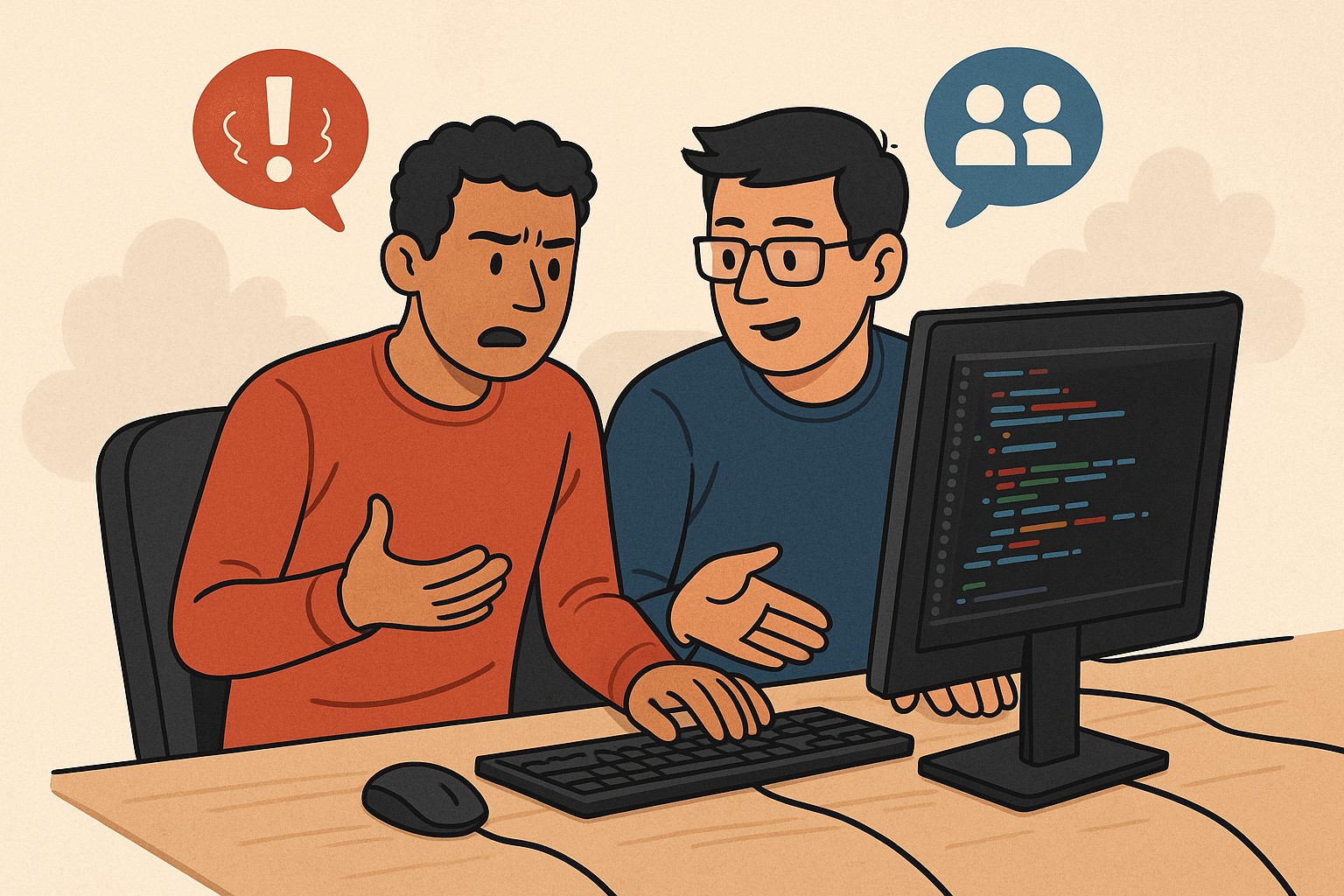
Pair programming is a collaborative development approach in which two developers share a single workstation to complete a task. One person (the driver) writes the code while the other (the navigator) reviews each line, offers suggestions, and keeps the broader context in view. Roles rotate to keep both members engaged and to balance hands-on work with strategic thinking. In practice, pair programming can help teams build more maintainable code by enforcing consistency, reducing accidental complexity, and capturing tacit knowledge about how the system behaves. The method is especially relevant in dynamic environments where requirements evolve quickly and the cost of defects is high.
For business and technical teams, the primary value lies not only in the code that gets written but in the feedback loop it creates: issues are discovered earlier, design decisions are debated in real time, and junior developers grow faster through mentoring. While not every task benefits equally, when properly organized, pair programming can shorten learning curves, align standards, and improve time-to-delivery without sacrificing quality. The approach also aligns with broader software craftsmanship principles that emphasize maintainable code, testability, and predictable governance across teams.
Benefits of Pair Programming
Organizations that adopt pair programming often see tangible improvements in code health and team capability. The practice compels continuous code review, encourages immediate error detection, and promotes a shared understanding of critical components. When two seasoned engineers pair with a newer colleague, knowledge can be transferred swiftly, and the newcomer can assimilate conventions, patterns, and testing approaches. This dynamic supports maintainable code by reducing divergences and keeping decisions aligned with established patterns through active discussion rather than isolated notes.
- Improved code quality through continuous review and early defect detection
- Faster knowledge transfer and onboarding of new team members
- Shared ownership and resilience against the bus factor
- Better design decisions through real-time critique and diverse perspectives
- Enhanced debugging and quicker problem resolution through collaborative thinking
- Mentoring and standardization of practices across the team
Drawbacks of Pair Programming
Despite its advantages, pair programming introduces trade-offs. The most immediate concern is cost: two developers working on a single task can extend time-to-delivery for individual workstreams and reduce available capacity for solo tasks. In the short term, this cost must be weighed against long-term gains in quality, maintainability, and risk reduction. Fatigue and cognitive load can also creep in if sessions are overly long or not well structured, leading to diminished returns and potential burnout if not managed carefully.
- Higher immediate labor cost per feature due to two people working together
- Potential personality clashes or compatibility issues that hinder flow
- Reduced autonomy or creative friction for certain types of work
- Fatigue from sustained collaboration without breaks or varied pairing
- Scheduling and space requirements, which can be challenging for distributed or remote teams
- Not all tasks benefit equally from pairing; some exploratory or highly solitary work may be less efficient
Practical Implementation and Best Practices
To make pair programming effective, teams should start with a clear model and then adapt based on feedback and outcomes. A common approach is the driver-navigator pattern, where one person actively writes code (driver) while the other reviews strategy and design (navigator). Roles are rotated regularly to distribute knowledge, prevent fatigue, and keep both contributors engaged. Timeboxing sessions helps maintain focus and guardrails around collaboration. A well-supported environment—whether colocated or remote—reduces friction and sustains momentum over long tasks.
- Define pairing strategy: driver/navigator roles, rotation cadence, and session length
- Set expectations, ground rules, and success criteria for each pairing session
- Pair for tasks that benefit from joint problem solving, design discussion, and knowledge transfer
- Ensure an environment that supports pairing: dual monitors, shared editors, or reliable remote collaboration tools
- Schedule breaks and alternate with solo work when deep focus is required
- Rotate pairs to spread knowledge and prevent bottlenecks while maintaining a cohesive team culture
// Example: simple driver/navigator interaction during a function refactor
function computeTotal(items) {
  // navigator suggests input validation and early return for empty input
  if (!Array.isArray(items)) throw new TypeError("items must be an array");
  if (items.length === 0) return 0;
  return items.reduce((sum, it) => sum + (typeof it.price === "number" ? it.price : 0), 0);
}
Measuring Success and When to Use
Measuring the impact of pair programming requires a balanced view that blends qualitative feedback with meaningful metrics. Organizations that pursue pair programming should track improvements in defect rates, time to identify and fix issues, and the rate at which new team members reach productive velocity. On the maintenance side, look for signals such as more consistent coding patterns, clearer documentation of decisions, and reduced rework on critical code paths. At the same time, be mindful of the human element: collaboration quality, psychological safety, and team satisfaction matter as much as objective outputs.
To avoid misaligned incentives, pair programming should be used strategically rather than dogmatically. It tends to deliver greatest value during onboarding, the handling of high-risk modules, and periods of architectural change or knowledge transfer. In steady-state production work, teams may alternate between paired and solo modes to optimize throughput while preserving the benefits of collaboration. The goal is to achieve maintainable code and reliable delivery without introducing unnecessary friction or burnout.
FAQ
When is pair programming most effective?
Pair programming tends to be most effective during onboarding, when tackling complex algorithms or high-risk code paths, and when teams demand rapid transfer of domain knowledge. In these contexts, real-time feedback accelerates learning, improves code quality, and helps establish consistent conventions that support maintainable code.
Does pairing increase project costs?
In the short term, pairing can raise per-feature labor hours. However, many teams offset that by reducing defect-fix time, improving onboarding efficiency, and delivering features with fewer regressions. Over the life of a project, the total cost of ownership can be lower due to higher quality and more predictable delivery.
How should teams structure pairing sessions?
Adopt a driver/navigator model with regular role rotation, timeboxing, and explicit goals for each session. Start with shorter sessions to build comfort, then adjust duration based on task complexity and team fatigue. Establish clear decision-making norms and documentation practices to keep decisions transparent and maintainable across the codebase.
How can distributed teams pair effectively?
Distributed teams can pair effectively using reliable collaboration tools, screen sharing, and real-time co-editing. Schedule overlapping hours when possible, and use asynchronous handoffs with well-documented decisions and context. Maintain a shared workspace with accessible notes, and rotate partners to broaden knowledge across locations.
How do you measure the success of pair programming?
Measure a mix of qualitative and quantitative signals: defect rates, time to resolve issues, onboarding time, and reviewer coverage, alongside team morale and collaboration quality. Use this data to assess progress toward maintainable code, but also solicit direct feedback from engineers to understand the human impact and adjust practices accordingly.