Now Reading: Predictive Analytics in Marketing: Boosting Campaign Success
-
01
Predictive Analytics in Marketing: Boosting Campaign Success

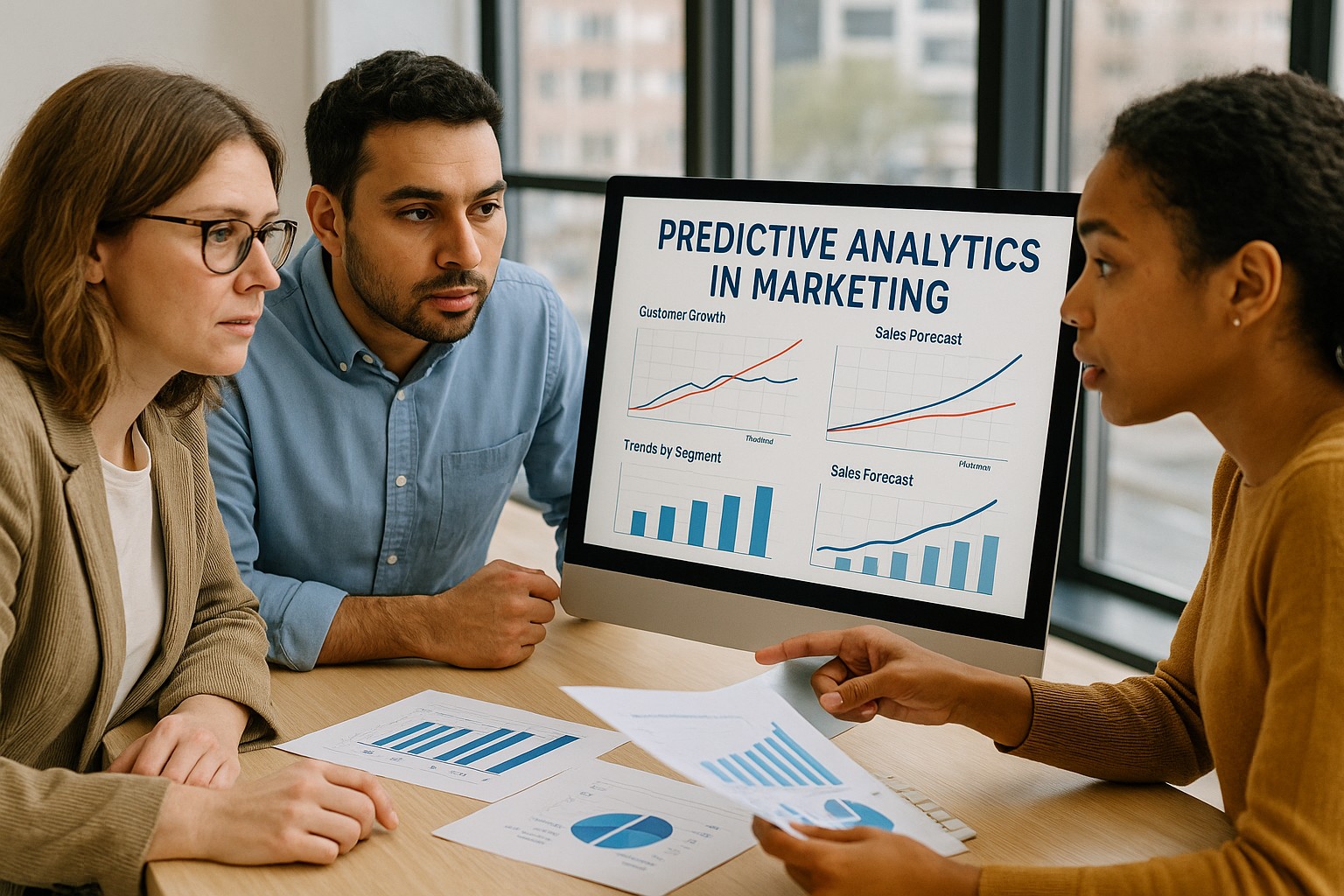
Overview of Predictive Analytics in Marketing
Predictive analytics in marketing uses historical data, statistics, machine learning, and data science to forecast future customer behavior and campaign outcomes. It translates raw interactions into probability-based insights that inform decisions about where to allocate budget, which audiences to target, and what messages to test. This approach moves marketing from reactive optimization to proactive planning, enabling teams to anticipate demand, identify at-risk customers, and tailor experiences at scale. The core idea is to quantify uncertainty: by estimating the likelihood of conversions, churn, or engagement, marketers can test hypotheses, compare scenarios, and prioritize experiments with the highest expected value.
Successful predictive marketing programs connect data governance, analytical capability, and business objectives. They require clear alignment with goals such as increasing qualified leads, boosting conversion rates, or elevating average order value. Importantly, predictive models do not replace marketers; they augment decision-making by surfacing actionable signals and automating routine risk assessments, allowing teams to focus on strategy, creative, and channel optimization. In organizations that mature their data foundations, predictive analytics becomes embedded in planning cycles, measurement frameworks, and operational dashboards.
Core Concepts and Data Foundations
At its heart, predictive analytics blends historical patterns with probabilistic reasoning. Marketers collect data from interactions across channels—email, search ads, social media, website visits, and purchase history—and transform it into features that capture customer propensity. Common approaches include regression for outcome prediction, classification for segment assignment, and time-series analysis for trend forecasting. Modern pipelines often combine these methods with machine learning techniques such as random forests, gradient boosting, and simple yet effective models like logistic regression, depending on the data volume, interpretability needs, and the business question.
Foundational data quality is critical. Accurate attribution, clean customer identifiers, and timely data feeds ensure models reflect reality rather than noise. Privacy considerations, consent management, and data governance around sensitive attributes (for example, demographics or behavioral indicators) shape what can be modeled and how results are used. The modeling process typically involves splitting data into training and validation sets, evaluating performance with metrics like AUC or lift, and conducting calibration to ensure predicted probabilities align with actual outcomes. Ongoing monitoring helps detect drift and maintain trust in the results.
Applications in Campaign Targeting and Personalization
Predictive analytics enables smarter allocation of marketing spend by identifying which segments are most likely to respond to specific offers, channels, or creative variants. When used for targeting, models can rank audiences by predicted response probability and compute expected value across channels. This empowers marketing teams to schedule tests, optimize bid strategies, and avoid wasting impressions on unlikely converters. In parallel, personalization engines use predictive signals to tailor content in real time, delivering messages that resonate with individual preferences and past behavior.
- Predictive audience segments based on propensity to engage, convert, or churn.
- Personalized email and website experiences triggered by near real-time signals.
- Content recommendations and product suggestions aligned with inferred interests.
- Channel optimization and timing strategies that maximize response windows and reduce fatigue.
These capabilities do not operate in isolation. Effective implementation requires close collaboration between data scientists, marketers, and IT to ensure data availability, measurement rigor, and governance. When integrated with creative testing and budget planning, predictive targeting and personalization can shorten the optimization cycle, improve response rates, and deliver more consistent customer journeys across touchpoints.
Lead Scoring and Customer Segmentation
Lead scoring uses historical data to estimate how likely a contact is to convert, helping sales and marketing teams prioritize outreach and tailor engagement plans. Behavioral signals—such as page visits, content downloads, email interactions, and event attendance—are combined with firmographic or product-interest data to produce a score or probability. Effective scoring systems use dynamic updates so scores reflect the most recent activity, ensuring reps focus on high-potential prospects without missing late-blooming opportunities. Segmentation, meanwhile, groups customers into cohorts with shared characteristics, enabling targeted campaigns and scalable messaging for different lifecycle stages.
- Predictive lead scoring models that balance short-term likelihood and long-term potential.
- Behavior-based segments aligned with buyer journeys and content needs.
- Lifecycle-stage mapping to tailor nurture streams and handoffs between marketing and sales.
- Churn risk indicators used to design win-back or retention campaigns.
Effective lead scoring and segmentation rely on data that captures both intent signals and demographic or firmographic context. Governance practices, model explainability, and ongoing validation are essential to ensure scores remain actionable and fair. Teams should monitor how scoring informs funnel velocity, win rates, and campaign ROI, adjusting weights and features as markets evolve. The goal is to convert insights into measurable improvements in lead quality, conversion speed, and revenue contribution.
Data Quality, Modeling Techniques, and Tools
The predictive marketing stack begins with data—collected, organized, and harmonized from disparate sources like CRM, website analytics, email platforms, and paid media. Achieving a single source of truth reduces data gaps and misattribution, which can undermine model usefulness. Data engineers and analysts play a crucial role in feature engineering, handling missing values, encoding categorical variables, and aligning event timestamps for accurate sequence modeling. The modeling toolkit ranges from transparent models that buyers and marketers can interpret to complex ensembles that maximize predictive power, with trade-offs between accuracy and explainability.
Model selection hinges on the business question and operational constraints. Logistic regression offers interpretability and fast deployment for simple scoring tasks, while tree-based methods like random forests and gradient boosting handle nonlinear relationships and interactions at scale. For time-sensitive forecasts, recurrent architectures or rolling-window approaches can capture seasonality and trend shifts. Model deployment often involves automated retraining, versioning, and monitoring dashboards that alert teams when performance degrades beyond acceptable thresholds. The combination of robust data pipelines and disciplined governance underpins sustained value from predictive insights.
Case Studies and ROI Improvements
Across industries, marketing teams have reported improvements in campaign ROI after incorporating predictive analytics into planning and execution. One retailer leveraged propensity models to optimize media mix and sequencing, achieving higher click-through rates and lower cost per acquisition by reducing spend on unlikely channels. A B2B software company used lead scoring to focus sales outreach on high-probability accounts, shortening the sales cycle and increasing win rates. In service industries, churn prediction enabled proactive retention campaigns that preserved customer lifetime value and reduced revenue churn. These cases illustrate how alignment between data science and marketing strategy translates into tangible business outcomes.
Beyond individual campaigns, predictive analytics supports portfolio-level optimization. Marketers can compare the expected value of alternative strategies—such as broad awareness launches vs. targeted retargeting—and allocate budgets to maximize incremental revenue. ROI measurement requires careful attribution modeling, including multi-touch or probabilistic models that assign credit across touchpoints. When teams establish formal performance dashboards, they can monitor lift over time, test-driven experimentation, and guardrails that prevent overfitting or misleading conclusions. The result is a repeatable discipline for improving efficiency and driving growth through data-informed decisions.
Implementation Considerations and Best Practices
Building a scalable predictive marketing program goes beyond models. It requires governance, collaboration, and a clear plan for data management, model lifecycle, and organizational roles. Start with a minimum viable blueprint: define success metrics, identify data sources, establish data quality rules, and appoint cross-functional owners who can translate insights into campaigns. A well-governed pipeline includes data provenance, versioned model artifacts, and automated monitoring that flags drift, bias, or privacy concerns before decisions are made in production. In practice, this means integrating analytics into the marketing operations cadence, not treating it as a one-off project.
- Establish data governance and consent controls to meet privacy requirements and ethical standards.
- Set up continuous monitoring, model retraining triggers, and performance dashboards for transparency.
- Foster cross-functional collaboration among data scientists, marketers, and IT to align incentives and share accountability.
- Document assumptions, feature engineering decisions, and validation results to enable audits and explainability.
Additional considerations include data instrumentation for reliable attribution, robust experiment design, and scalable deployment practices. Organizations should start with measurable pilots, incrementally expanding scope as capabilities mature. In parallel, ethics and risk management discussions should address potential biases, discrimination, and the responsible use of sensitive attributes. The aim is to balance experimentation with governance so predictive insights drive value without compromising trust or customer rights.
Ethics, Privacy, and Regulatory Considerations
As marketers become more data-driven, they must navigate privacy regulations, consent frameworks, and the ethical implications of using behavioral and demographic signals. Transparent data practices, data minimization, and clear opt-in mechanisms help maintain customer trust while enabling predictive insights. Practical steps include documenting data sources, obtaining necessary approvals for model usage, and implementing bias audits to detect and mitigate unfair outcomes. Organizations should also communicate how predictive analytics benefits customers—such as more relevant offers and streamlined experiences—to maintain a positive brand relationship.
Practical governance also involves access controls, data security measures, and separation of duties to minimize risk. Teams should consider the potential for model drift and unintended consequences, establishing review cycles and rollback plans if new data introduces harmful or inaccurate predictions. With the right policies in place, predictive marketing can deliver personalized experiences responsibly and compliantly while still achieving ambitious growth goals.
Future Trends and Opportunities
The field of predictive marketing continues to evolve with advances in data availability, algorithmic sophistication, and automation. As first-party data becomes more central, marketers can build more precise models that respect privacy and still deliver meaningful personalization. The integration of artificial intelligence with marketing platforms promises dynamic creative optimization, real-time experimentation, and autonomous campaign orchestration across channels. In addition, advances in causal inference and uplift modeling help teams understand the incremental impact of specific interventions, reducing reliance on correlation alone. The overall trajectory is toward faster decision cycles, more resilient measurement, and a heightened focus on customer value throughout the journey.
Practical implications include investing in data infrastructure that supports streaming data, scalable feature stores, and robust experimentation frameworks. Organizations that mature in their analytics practice will deploy end-to-end pipelines that monitor performance, enable rapid experimentation, and demonstrate compliance with evolving privacy standards. The opportunity lies in aligning predictive insights with business strategy to deliver consistent, measurable improvements in marketing outcomes.
Conclusion: Turning Data into Actionable Marketing Insight
Predictive analytics in marketing empowers teams to forecast outcomes, optimize spend, and tailor experiences with a disciplined, test-driven approach. By focusing on the signals that matter—conversion propensity, buyer intent, churn risk, and lifetime value—marketers can allocate resources more efficiently, shorten cycles, and improve customer satisfaction. The most successful programs are those that blend rigorous analytics with practical execution: clear goals, robust data governance, collaborative partnerships, and a culture of continuous learning. When these elements come together, predictive analytics becomes not just a technical capability but a strategic driver of growth and competitive advantage.
As markets evolve, the ability to anticipate changes and respond with targeted, timely campaigns will separate leaders from followers. Organizations that invest in data literacy, scalable data infrastructure, and governance structures will sustain momentum, unlock incremental revenue, and maintain trust with customers in an increasingly data-driven landscape.
FAQ
What is predictive analytics in marketing?
Predictive analytics in marketing uses historical data and statistical models to forecast future customer actions, such as likelihood to convert, respond to an offer, or churn. It combines data science with business context to guide decisions about targeting, messaging, timing, and channel allocation, enabling more efficient and effective campaigns.
How does predictive analytics improve ROI?
By prioritizing high-probability prospects, optimizing channel mix, and personalizing experiences at scale, predictive analytics reduces wasted spend and increases the efficiency of marketing investments. It also supports faster testing and learning cycles, allowing teams to scale what works and drop what doesn’t, thereby driving incremental revenue and margin improvements.
What data do I need to implement predictive marketing?
Key data sources include customer interactions across channels (web, email, ads, social), transaction history, product views, and CRM or attribution data. High-quality identifiers and consistent event timing are essential for accurate modeling. Depending on the use case, you may also incorporate demographic or firmographic attributes, but you should prioritize data that reflects intent and behavior while respecting privacy constraints.
How do you measure the success of predictive marketing models?
Success is typically measured through holdout validation metrics (such as AUC, lift, or calibration) during development, and through live experimentation and attribution in production. Primary business outcomes to track include improved conversion rates, increased average order value, higher engagement, shorter sales cycles, and improved return on ad spend, all benchmarked against a defined baseline.
What are common pitfalls and ethical considerations?
Common pitfalls include data leakage, overfitting, and misinterpreting correlation as causation. Ethical considerations involve fair treatment across customer segments, avoiding biased targeting, and ensuring compliance with privacy laws and consent frameworks. Establishing governance, bias audits, and transparent communication about how models influence customer experiences helps mitigate these risks.