Now Reading: Quality Assurance vs Quality Control in Software
-
01
Quality Assurance vs Quality Control in Software

Overview: QA vs QC in software development
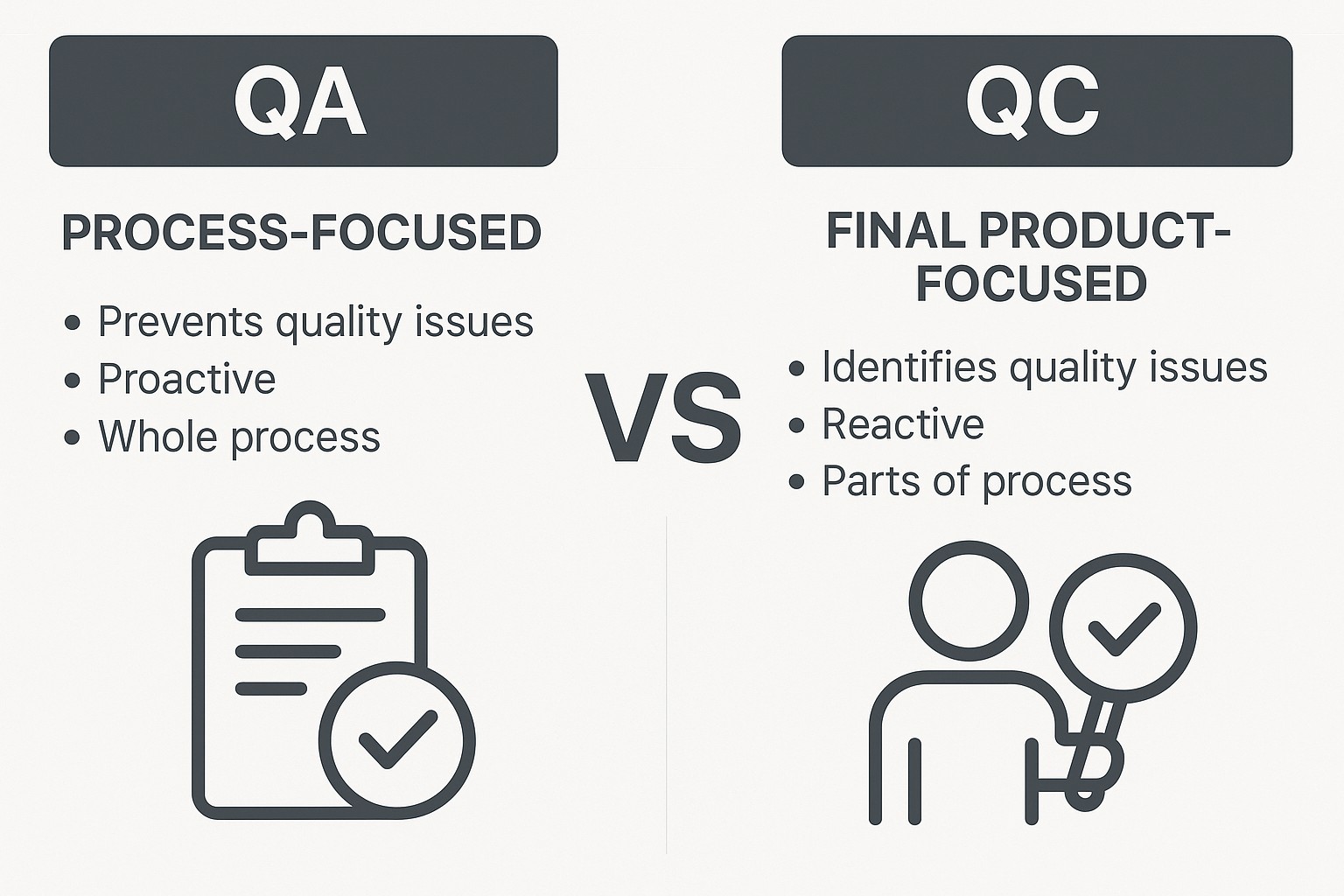
In software development, quality is not a single gate to pass but a continuum of activities that begin long before code is written and extend well after deployment. Quality Assurance (QA) and Quality Control (QC) are two complementary approaches that organizations use to manage this continuum. QA focuses on building processes that prevent defects and promote reliable delivery, while QC concentrates on identifying defects through testing and verification before the product reaches users. Understanding how these roles interact helps teams align their efforts with business goals, accelerate delivery, and reduce cost of quality.
When teams clearly distinguish QA from QC, they can design governance, metrics, and rituals that support proactive quality habits rather than reactive patchwork. In agile environments, where requirements evolve and speed matters, QA and QC together provide a balanced framework: QA reduces the likelihood of defects through good design and process discipline, and QC catches remaining issues through rigorous validation. The result is a software product that not only works as intended but is also more maintainable, scalable, and auditable.
Quality Assurance (QA): definition, goals, and practices
Quality Assurance is a set of systematic activities implemented in the processes, methods, and organizational culture that aim to prevent defects from occurring in the first place. It seeks to build quality into the product from the outset by shaping how work is planned, designed, implemented, and reviewed. The emphasis is on the process: establishing standards, fostering collaboration, and enabling teams to deliver high-quality software consistently.
In practice, QA encompasses governance, risk management, and continuous improvement. It involves defining quality objectives aligned with business outcomes, creating standard operating procedures, and encouraging teams to adopt practices such as shift-left testing, early risk assessment, and traceability from requirements to delivery. The business value of QA lies in reducing rework, improving predictability, and delivering software that meets or exceeds stakeholder expectations. Within agile testing processes, QA also supports cross-functional teams by providing a shared understanding of quality criteria and a culture of responsibility for quality across all roles.
- Proactive process improvement: QA emphasizes designing better workflows, checklists, and release criteria to prevent defects before they are created.
- Prevention over detection: the emphasis is on forward-looking controls, standards, and training rather than reactive fixes after issues emerge.
- Cross-functional quality ownership: quality is a collective responsibility, not the sole domain of testers or developers.
- Documentation and standards: consistent documentation and defined quality gates help teams onboard faster and maintain consistency across releases.
- Continuous learning and adaptation: feedback loops from every release inform process adjustments, enabling incremental improvement over time.
To operationalize QA, organizations often invest in strategies such as risk-based planning, robust release governance, and continuous integration that enforces quality checks automatically. In the context of agile teams, QA fosters a culture of collaboration, ensuring that acceptance criteria are well-defined, testable, and traceable back to user value. The outcome is not merely “no bugs,” but predictable delivery of value with quality attributes that matter to users and the business.
Quality Control (QC): verification activities, testing types, and artifacts
Quality Control is a set of activities that verify the product against its requirements and expectations. QC is about detecting defects in the product artifacts—code, designs, and integrated systems—before they reach customers. The focus is on validation and conformance: are we building the product right, and does it meet the stated requirements and quality standards? QC complements QA by providing tangible evidence that the product quality is adequate for release and use.
QC activities typically involve a structured testing regime, defect management, and verification of the product against performance, reliability, and usability criteria. Testers and engineers execute test plans, report defects, and contribute to the decision of whether a release should proceed. QC artifacts such as test cases, defect reports, and test results provide visibility into product quality, support risk-based decision making, and help teams prioritize remediation efforts. Effective QC depends on well-defined requirements, stable test environments, and reliable data for reproducing and analyzing issues.
- Verification testing (unit, integration, regression): confirms that components behave correctly in isolation and when integrated, and that changes do not break existing functionality.
- Validation testing (acceptance): assesses whether the product satisfies user needs and acceptance criteria, often involving stakeholders or end users.
- Defect tracking and triage: a disciplined process for logging, prioritizing, and resolving issues to prevent reoccurrence and ensure timely delivery.
- Test environments and data management: controlled environments and representative data sets enable reproducible testing and reliable results.
- Quality gates and sign-offs: formal checkpoints before moving to the next stage or releasing the product, ensuring alignment with quality thresholds.
In practice, QC translates into concrete testing work: writing and executing test cases, performing exploratory testing when needed, validating fixes, and maintaining evidence of quality through dashboards and reports. QC also benefits from automation, where appropriate, to accelerate feedback loops and maintain consistency across builds and releases. The aim is to provide objective confirmation that the product is fit for its intended use while remaining auditable for regulatory or governance purposes.
Interaction and alignment: How QA and QC work together across the software lifecycle
QA and QC do not operate in isolation; they are most effective when integrated into a single quality framework that spans the entire software lifecycle. The key is to align objectives, methods, and timescales so that prevention activities shape what gets built, while detection activities verify that what was built meets the expected standards. In mature organizations, QA informs QC requirements early, enabling practical testing strategies to be executed as soon as design artifacts exist.
The collaboration between QA and QC drives continuous improvement: lessons learned from defects feed back into process adjustments, requirement clarifications, and better test design. This synergy reduces cycle times, improves defect learnings, and raises overall software quality. When teams adopt a shared vocabulary around quality attributes—reliability, maintainability, security, and usability—both QA and QC contribute more effectively to business value and customer satisfaction.
- Shifting left: QA practices influence early design decisions and testability, reducing the likelihood of defects later in the lifecycle.
- Shared quality metrics: combining process quality metrics (e.g., defect density by phase) with product quality metrics (e.g., Mean Time to Detect) provides a holistic view of health.
- Clear responsibilities and handoffs: well-defined roles ensure QA and QC activities are synchronized, with transparent ownership at each stage.
- Automated checks and continuous testing: automation accelerates feedback loops and supports consistent coverage across releases.
- Risk-based prioritization: focusing QC effort on the highest risk areas ensures efficient use of testing resources while maintaining quality foundations established by QA.
Practical implementation considerations
Implementing an integrated QA and QC approach begins with a clear quality strategy that translates into concrete processes, roles, and rituals. Start by mapping requirements to acceptance criteria, defining quality gates, and establishing a lightweight governance model that fits your development process. Invest in training and enablement so teams understand how QA and QC complement each other and how their work contributes to business outcomes. Emphasize automation where it adds value, but balance it with thoughtful manual testing for exploratory and edge-case discovery. Finally, ensure feedback loops are rapid and actionable so teams can adjust plans in near real time rather than after delays.
Practical steps to embed QA and QC effectively include cultivating a culture of quality, aligning incentives with product outcomes, and sustaining a focus on customer value. This often means creating lightweight checklists for design reviews, requiring traceability from requirements to test cases, and implementing a defect management process that prioritizes root cause analysis and prevention. In organizations that operate at scale, establishing quality champions, cross-team communities of practice, and regular quality audits helps sustain momentum and guardrails that keep delivery predictable and reliable.
Measuring success and governance
Quality is measured through a combination of process and product metrics. Process metrics reveal how well QA and QC practices are implemented, such as defect leakage, test coverage, and the time to resolve defects. Product metrics illustrate the outcomes perceived by users and the business, including reliability, performance, and user satisfaction. A balanced scorecard approach that tracks both dimensions provides a clearer signal of overall quality and helps leadership make informed decisions about priorities and investments. In agile environments, integrating quality metrics into sprint reviews and release planning keeps quality a visible, measurable concern throughout the cadence of work.
Governance should be lightweight and adaptable but still provide guardrails. This means defining quality gates for releases, establishing minimum acceptable criteria, and ensuring that critical risks receive explicit attention. It also means maintaining documentation that supports audits, regulatory requirements, or customer assurance programs when applicable. The right governance posture prevents quality problems from being discovered too late while preserving the speed and flexibility that modern software delivery demands.
Common pitfalls and misconceptions
One common pitfall is treating QA as a separate, after-the-fact activity rather than an ongoing, foundational practice. Another is assuming that QC alone guarantees quality; while testing is essential, it cannot fix design flaws or missing requirements. Teams often over-rely on automation without validating that automated tests reflect real-world usage or user intent. Conversely, underinvesting in QC can leave defects undiscovered until late in the cycle, when fixes are more costly and riskier. Addressing these misconceptions requires a clear blueprint that integrates QA and QC into daily routines, with leadership modeling a quality-first mindset and providing the resources needed to sustain it.
FAQ
What is the key practical difference between QA and QC?
The practical difference is that QA is about preventing defects by improving processes and encouraging quality-aware behavior, while QC is about detecting defects through testing and verification before release. QA shapes how work is done; QC checks the product that results from that work to ensure it meets requirements and expectations.
How do QA and QC interact in an Agile team?
In Agile, QA helps define acceptance criteria, quality gates, and continuous improvement practices early in the sprint, while QC executes tests, reports defects, and verifies fixes within or across iterations. The feedback loop is accelerated by automation and continuous integration, enabling teams to adjust quickly based on quality signals from the latest work.
What metrics should I track to assess quality effectively?
Track a balanced mix of process and product metrics: defect leakage (defects found after release), defect density by phase, test coverage, mean time to detect and fix, automation pass rate, and customer-facing quality indicators such as incident frequency and severity. Align these metrics with business objectives to ensure they reflect value delivered to users.
How can I start implementing QA and QC in a mature project?
Begin with a compact quality charter that defines roles, governance gates, and key quality attributes. Create lightweight templates for requirements, test plans, and defect reports, and establish a baseline of automation where feasible. Train teams on shift-left testing, risk-based planning, and effective defect triage. Use early wins to build momentum and gradually expand the scope as the team gains confidence and capabilities.
Is automation essential for QA or QC?
Automation is a powerful enabler for both QA and QC, especially for repetitive, high-volume checks and fast feedback cycles. However, it should be implemented where it adds value and complemented by manual exploratory testing for areas where human insight is crucial. The goal is to strike a balance that accelerates throughput without compromising the depth of understanding needed to ensure quality.