Now Reading: Quantum Computing vs Encryption: Will Quantum Break Security?
-
01
Quantum Computing vs Encryption: Will Quantum Break Security?

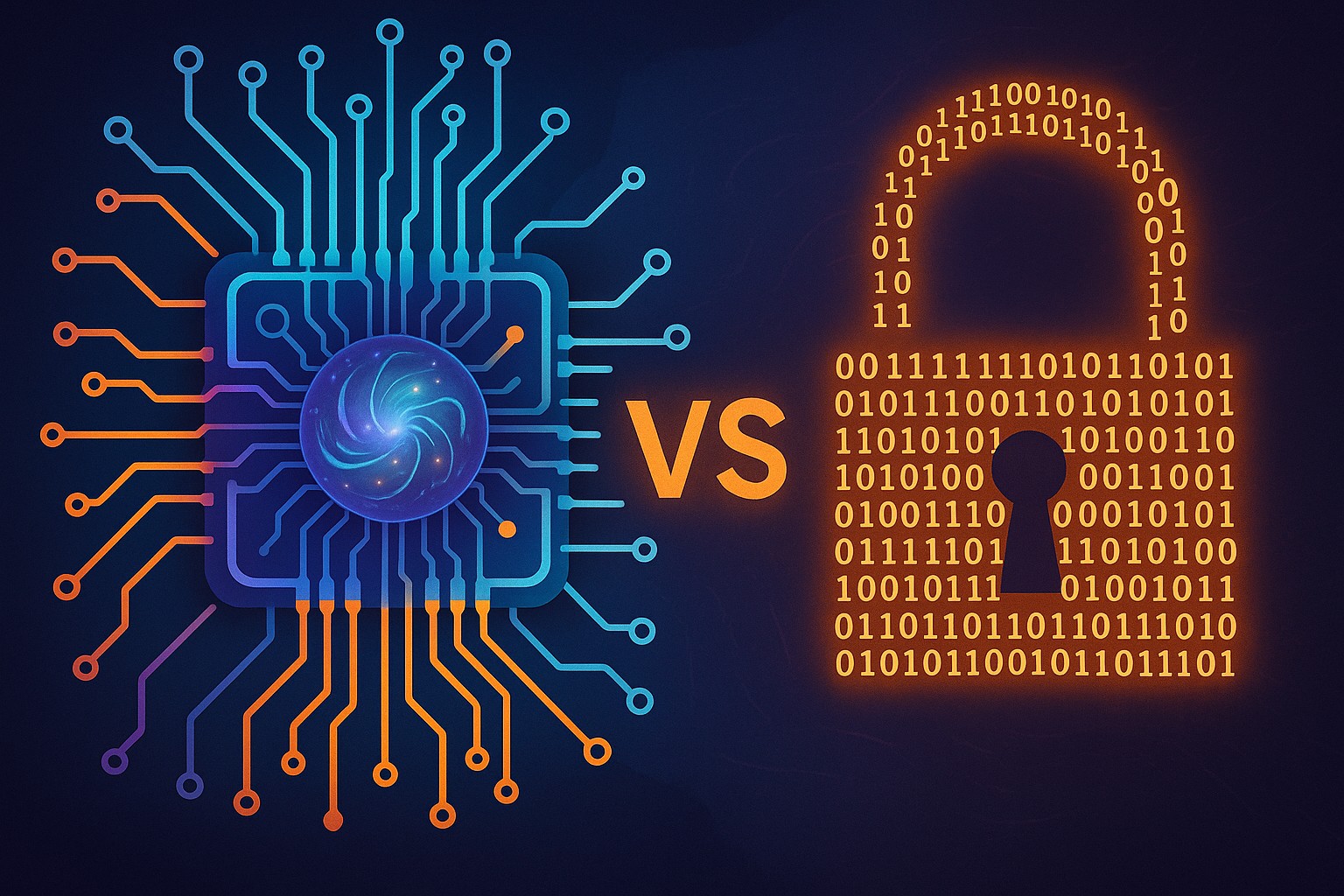
Overview: The Quantum Threat Landscape for Encryption
In the last decade, quantum computing has transitioned from theoretical curiosity to a strategic technology that could redefine data security. As organizations accumulate sensitive information for years or decades, the advent of powerful quantum processors raises urgent questions about the longevity of existing cryptographic defenses. In plain terms, quantum machines exploit mathematical structures that classical computers struggle with, enabling certain tasks to be solved much faster.
For business leaders and security professionals, this shift translates into a timeline problem: how long will current keys remain safe, and what steps should be taken now to protect systems, supply chains, and customer trust? This article examines the relationship between quantum computing and encryption, and it explains both the risk and the practical responses that organizations are evaluating today. The phrase why is quantum computing important often comes up in strategy discussions, because the implications touch on governance, risk, and technology architecture.
From a risk-management perspective, this isn’t only about cryptography; it’s about business continuity, data privacy commitments, and the ability to maintain trust with customers in a digital economy. Firms that build quantum readiness into their strategy stand to gain a competitive advantage by reducing the risk of security incidents and by avoiding sudden, disruptive migrations when urgency spikes. The conversation now is as much about budgeting, vendor strategy, and regulatory alignment as it is about algorithms and key sizes.
Current Encryption Standards and Their Quantum Threat
Today’s cryptography relies on two broad families: symmetric algorithms that protect data in transit or at rest, and asymmetric (public-key) algorithms used for key exchange and digital signatures. The security of these systems rests on mathematical problems that are hard to solve with classical computing but can be dramatically accelerated by quantum algorithms such as Shor’s and Grover’s. While symmetric keys like AES are not broken outright, Grover’s algorithm implies that doubling key lengths provides parity protection in the longer term. Meanwhile, the most widely deployed public-key methods—RSA and ECC—face a credible existential threat from Shor’s algorithm when scalable quantum hardware becomes available.
- RSA (e.g., RSA-2048, commonly used for digital certificates and secure web traffic)
- Elliptic Curve Cryptography (ECC, e.g., P-256, used for signatures and key exchange)
- AES and other symmetric ciphers (AES-128, AES-256)
- Hash algorithms underpinning signatures and integrity (SHA-256, SHA-3)
The practical takeaway is not that these algorithms fail today, but that their security properties could deteriorate as hardware improves. Enterprises must evaluate exposure based on data lifetimes, regulatory obligations, and the value of the information being protected. Because some data has long shelf life, a protective strategy that assumes quantum risks is becoming a business imperative, not just a technical concern.
Organizations should also consider the broader ecosystem: public-key infrastructure, certificate management, and cross-border data flows frequently involve multiple vendors and jurisdictions. A migration that remains isolated to a single system risks misalignment with other parts of the enterprise, creating governance gaps and complicating audit trails. As a result, strategic planning must address not only cryptographic primitives but also the operational processes that rely on them, including key rotation, incident response, and third-party risk management.
Mechanisms of Quantum Attacks: What Quantum Does to Keys
Shor’s algorithm provides a polynomial-time solution to integer factorization and discrete logarithm problems, which are the mathematical foundations of RSA, DSA, and Elliptic Curve primitives. In practical terms, a scalable quantum computer could derive private keys from public keys, enabling it to decrypt traffic, forge signatures, and impersonate entities. The effect compounds when public-key materials are reused or persist for long periods, creating a window of vulnerability that attackers can exploit as soon as quantum capability becomes available.
For symmetric cryptography, the immediate risk is less dramatic but still meaningful. Grover’s algorithm offers a quadratic speed-up for brute-forcing symmetric keys, which effectively halves the key length as a security parameter. In response, organizations should consider increasing key lengths or adopting schemes that maintain a comfortable margin even in the quantum context. The interplay between these effects is central to risk assessments, because migration decisions must balance performance, cost, and security guarantees across networks, databases, and endpoints.
Beyond the technical mechanics, the governance implications are substantial. As organizations become more reliant on digital communications, the ability to migrate safely without breaking existing services becomes a strategic capability. Management must balance the urgency of protecting sensitive information with the realities of system complexity, vendor roadmaps, and customer expectations. This means architecture reviews, security testing, and clear decision rights about when and how to switch cryptographic primitives across different domains.
Progress Toward Quantum-Resistant Cryptography
Researchers and standardization bodies are working to replace vulnerable primitives with quantum-resistant alternatives. The goal is to preserve confidentiality, integrity, and authenticity in a world where quantum computing is a realistic possibility. The process involves evaluating candidate algorithms for security proofs, performance, and interoperability, and then standardizing a subset for broad deployment. While no universal quantum-proof algorithm exists today, a family of approaches is maturing rapidly enough to inform mid-term planning and procurement decisions.
- Lattice-based cryptography, offering strong security and broad applicability for encryption and signatures
- Code-based cryptography, with historically robust security properties and efficient verification
- Hash-based cryptography, particularly for digital signatures with strong security proofs
- Multivariate-quadratic-equations cryptography, providing alternative hard problems for post-quantum use
- Supersingular isogeny-based cryptography (SIDH/SIKE), exploring smaller, specialized key exchange options
Many governments and industry groups are participating in standardization efforts, with programs that emphasize hybrid approaches—combining classical algorithms with post-quantum primitives—to reduce risk during transition periods. The best practice for now is to monitor standards developments (for example, NIST’s post-quantum cryptography project) and start small pilots that measure performance impacts, interoperability challenges, and key management requirements. This ongoing evolution suggests a landscape where quantum-resistant primitives coexist with legacy systems for a period, enabling gradual migration and risk-controlled experimentation.
As standardization conclusions crystallize, organizations should prepare for a period of cryptographic agility—where products and services can switch between algorithms through well-defined interfaces. Investments in modular crypto libraries, policy-driven key management, and vendor contracts that support multiple cryptographic backends will pay dividends, reducing the friction of large-scale migrations once final standards are adopted.
Implementation Roadmap for Businesses
Turning theory into practice requires a structured program that aligns crypto governance with technology, risk, and procurement. A well-articulated roadmap helps executives understand both the costs and the deadlines involved in transitioning to quantum-resistant cryptography. The roadmap should assume that data with long lifetimes already needs protection today and that many cryptographic assets will require updates as standards stabilize. A disciplined approach can limit business disruption while delivering stronger post-quantum security over time.
- Conduct an inventory of cryptographic assets: identify where RSA, ECC, and key-exchange protocols are used, and map data flows across applications, databases, and networks
- Select and prioritize quantum-resistant candidates: begin with algorithms that balance security proofs, performance, and interoperability across your stack
- Implement hybrid encryption pilots: combine classical and post-quantum schemes to preserve compatibility while testing performance and key management
- Engage with standards and vendors: monitor NIST, ISO, and other bodies; align procurement with emerging PQC implementations
- Develop a phased migration plan with milestones: set data-protection targets, define roll-out sequences, and establish testing and rollback procedures
Beyond technology, successful adoption hinges on governance, risk budgeting, and clear accountability. Organizations must align cryptographic policy with regulatory requirements, incident response plans, and supplier risk management. Public confidence hinges on transparency about how data is secured over its entire lifecycle, including how keys are generated, stored, rotated, and revoked in a quantum-aware environment. The business case for action is strong when risk is framed in terms of continuity, resilience, and stakeholder trust, not merely in technology cycles.
As organizations execute their roadmaps, they should also consider the impact on customer experiences and service levels. Downtime caused by crypto migrations can affect transactions, authentication flows, and data interoperability with partners. A well-designed plan minimizes disruption by staging changes during low-traffic windows, using feature flags to toggle cryptographic backends, and coordinating with downstream systems through standardized APIs. The outcome is a more resilient security posture that still enables innovation and rapid digital growth.
Governance, Risk, and Operational Considerations
Quantum readiness is as much about governance as it is about algorithms. Organizations should adopt a formal crypto governance model that documents policies, roles, and control objectives for cryptographic materials. This includes asset classification, lifecycle management, access controls, and supply chain risk assessments relevant to cryptographic components. Because quantum-resistant standards are still maturing, risk assessments need to incorporate scenario planning for data that remains sensitive over decades, as well as contingency plans for migration delays or vendor changes. A clear, board-level briefing on crypto risk can help secure budget and executive sponsorship for long-running transitions.
Operationally, teams must coordinate between security, IT, and procurement to minimize disruption. Key activities include secure key management updates, compatibility testing with existing systems, and vendor onboarding procedures that emphasize security audits and transparency. The end state—robust cryptography that remains resilient in a quantum-enabled world—depends on disciplined program management, continuous assessment, and a culture of security-first design in product development and data management.
To illustrate, consider a financial services firm migrating TLS configurations for client-facing portals, while simultaneously refreshing internal authentication mechanisms. The orchestration requires careful change management, clear rollback options, and extensive testing across desktop, mobile, and API channels. The aim is to preserve service quality while layering in quantum-resistant protections, so clients experience continuity rather than disruption and the organization avoids last-minute security gaps that could be exploited in the interim period.
FAQ
What is quantum cryptography, and how is it different from quantum-resistant cryptography?
Quantum cryptography usually refers to protocols that use quantum physical properties to achieve security guarantees, such as quantum key distribution (QKD). Quantum-resistant cryptography, by contrast, refers to classical algorithms believed secure against quantum attacks. In practice, organizations are pursuing quantum-resistant algorithms to replace vulnerable public-key primitives while understanding that QKD requires specialized hardware and dedicated channels.
When will quantum computers threaten current encryption in practice?
Forecasts vary, but many security teams consider a realistic timeframe of 5 to 15 years for scalable quantum hardware to threaten widely deployed RSA-2048 and ECC keys, depending on advances in hardware, error correction, and deployment scale. Because data protected today may need confidentiality for many years, proactive migrations are recommended even if the threat is not immediate for all environments.
What is a hybrid encryption approach?
A hybrid approach combines a conventional public-key algorithm with a post-quantum algorithm to secure a key exchange. This enables compatibility with existing systems while introducing quantum-resistant protection. Over time, systems can transition to full post-quantum schemes as standards mature and performance is optimized.
What should a small business do now to get ready?
Start with an inventory of cryptographic assets, identify systems handling long-lived data, and begin planning a phased migration aligned with vendor roadmaps and regulatory guidance. Engage stakeholders early, pilot hybrid solutions, and monitor standards bodies for PQC standardization progress. Budget for both technology and governance processes to ensure ongoing compliance and risk management.
How can we prioritize data with long lifetimes?
Data with long lifetimes—such as customer records, proprietary designs, or regulatory archives—should be the focus of early protection strategies. Use risk assessments that weigh data value, exposure, and data retention requirements, to determine where to apply stronger post-quantum protection now while maintaining compatibility for day-to-day operations.