Now Reading: SAP Customer Experience (CX) Solutions Overview
-
01
SAP Customer Experience (CX) Solutions Overview

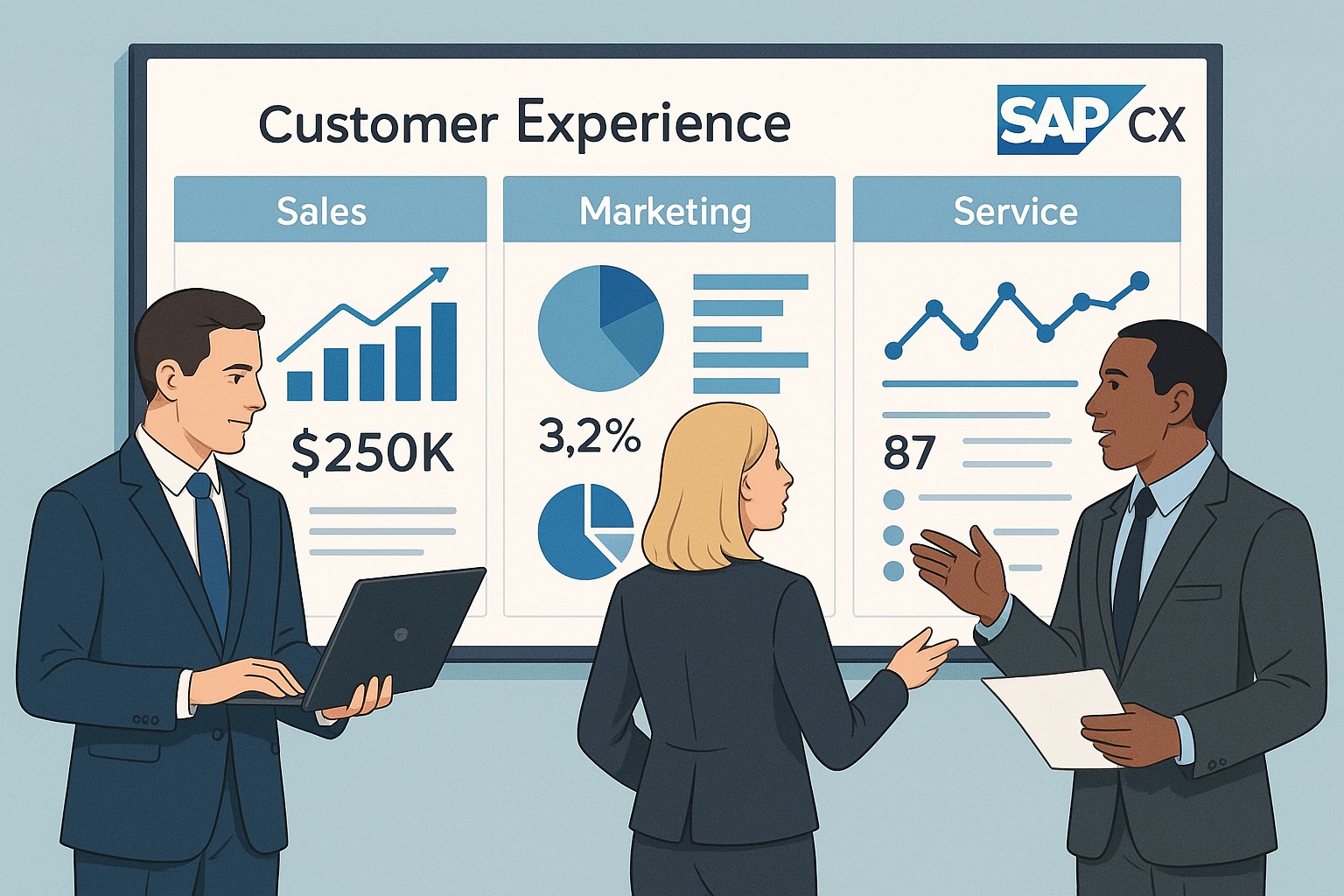
SAP CX portfolio overview
SAP Customer Experience (CX) is a cohesive, cloud-first suite designed to manage every stage of the customer journey across marketing, commerce, sales, and service, while leveraging experience data to drive continuous improvement. Formerly known as SAP C/4HANA, the CX portfolio has evolved to emphasize modularity, interoperability, and a unified data model that supports real-time decisioning and personalized interactions at scale. The architecture is purpose-built for modern enterprises that seek to connect front-office processes with back-end systems, ensuring consistency across channels and touchpoints.
At its core, SAP CX combines core customer-facing applications with a common customer data layer and experience management capabilities. The integration with SAP’s data and analytics stack enables organizations to listen to customers, learn from interactions, and act with precision. This creates a closed loop where feedback from experiences informs marketing strategies, product actions, and service improvements, while governance and privacy controls help protect customer data across all components and regions.
Core components of SAP CX
The core CX components cover marketing, commerce, sales, and service, all designed to share a single customer record and a consistent user experience across touchpoints. The suite also includes a dedicated customer data layer to unify data from disparate sources and a platform for experience management, allowing teams to measure and respond to customer sentiment in near real time. By aligning data, workflows, and UI, SAP CX enables cross-functional teams to collaborate more effectively and deliver seamless journeys from awareness to advocacy.
In practice, these components work together to orchestrate interactions across channels, automate routine tasks, and empower decision makers with actionable insights. The common data model reduces duplication and fragmentation, while APIs and adapters enable connections to non-SAP systems, allowing organizations to extend the platform without sacrificing governance or upgrade opportunities. Below is a concise list of the principal CX modules that organizations typically deploy in combination to cover the end-to-end journey.
- SAP Marketing Cloud
- SAP Sales Cloud
- SAP Commerce Cloud
- SAP Service Cloud
- SAP Customer Data Cloud
- SAP Qualtrics XM (Experience Management)
Data and intelligence across CX
A foundational capability of SAP CX is the customer data platform-like layer that unifies identities, profiles, and consent across touchpoints. This layer enables accurate identity resolution, data lineage, and privacy controls, which are essential for compliant segmentation and personalized experiences. Real-time data capture from marketing interactions, e-commerce events, sales activities, and service tickets feeds into a central, governed profile that teams can trust for targeted actions and measurement.
Beyond data unification, SAP CX embeds analytics and AI to translate raw signals into prescriptive guidance. Predictive lead scoring, propensity models, and next-best-action recommendations support marketing, sales, and service teams in prioritizing efforts and accelerating outcomes. The combination of unified data, robust analytics, and closed-loop feedback helps organizations refine campaigns, optimize service workflows, and continuously improve customer satisfaction and lifetime value.
- Identity resolution and identity graph
- Consent and privacy controls (GDPR/CCPA/compliance)
- Unified customer profile with data lineage
- Real-time event streaming and analytics
- AI-powered recommendations and forecasting
- Segmentation and audience orchestration
Integration and deployment options
Deployment and integration are designed to support cloud-first operations while ensuring compatibility with SAP ERP, SAP S/4HANA, and a broad ecosystem of third-party systems. The CX components run atop SAP Business Technology Platform (BTP) and other cloud infrastructures, with a rich set of APIs, event-driven connectors, and pre-built integrations that enable real-time data flows across the enterprise. This design supports multi-cloud strategies and helps ensure that organizations can leverage existing investments while adopting modern front-office capabilities.
Security, governance, and extensibility are integral to the deployment model. Customers can tailor workflows, data schemas, and user experiences to their industry, region, and process requirements, while maintaining a clear upgrade path and governance discipline. The platform also supports partner solutions and extensibility options that let business teams adapt the user experience and automate domain-specific processes without compromising core data integrity or security.
- Cloud-native architecture with scalable microservices
- Open APIs, event-driven integration, and pre-built connectors
- SAP Business Technology Platform (BTP) as the integration backbone
- Extensibility via app extensions and partner solutions
- Security, privacy, and compliance baked in (data residency, encryption)
- Upgrade and maintenance alignment with SAP release cycles
Realizing value through SAP CX
Businesses adopting SAP CX aim to drive higher conversion, increased customer lifetime value, and stronger cross-functional alignment. The unified data model and cross-channel orchestration enable more relevant, timely, and consistent experiences that reduce friction in the customer journey. Organizations often see improved marketing efficiency, faster time-to-value for campaigns, and a measurable decrease in cost-to-serve as service interactions become more self-guided and proactive.
Realizing value also depends on disciplined data governance and change management. The platform empowers teams to run controlled experiments, measure outcomes with consistent KPIs, and iterate on experiences based on evidence rather than anecdotes. By closing the loop between listening, learning, and acting, SAP CX helps organizations optimize product, marketing, and service strategies in alignment with business goals and customer expectations.
Frequently Asked Questions
What is SAP CX and what does it include?
SAP CX is a unified suite designed to manage the end-to-end customer journey, combining marketing, commerce, sales, service, and customer data capabilities with experience management. It includes modules such as Marketing Cloud, Sales Cloud, Commerce Cloud, Service Cloud, Customer Data Cloud, and Qualtrics XM, all built to share a common data model and integrated workflows. The objective is to deliver personalized, consistent experiences across channels while providing governance, analytics, and AI-driven insights to decision makers.
How do the SAP CX components integrate with SAP ERP and data?
The CX components integrate with SAP ERP and S/4HANA through a shared data model, APIs, and connectors that enable real-time data exchange for product information, pricing, inventory, orders, and financial data. The Customer Data Cloud unifies identity and profile data across systems, while SAP BTP provides the orchestration layer for events and analytics. This integrated approach ensures that front-office actions are aligned with back-office processes, enabling accurate reporting and faster cycle times across sales, marketing, and service operations.
Can SAP CX be deployed in the cloud? On-premise? Hybrid?
SAP CX is designed as a cloud-first solution with most capabilities delivered as software-as-a-service. In practice, organizations leverage cloud deployments for scalability, speed, and innovation. For some customers, hybrid arrangements that connect cloud CX components to on-premise ERP or data sources may be implemented, but core CX services themselves are typically run in the cloud to leverage modern APIs, updates, and security practices. The exact deployment model should be guided by regulatory requirements and existing IT strategy.
How does Qualtrics XM fit into SAP CX?
Qualtrics XM provides Experience Management data that captures customer, product, and employee experiences across moments of truth. When integrated with SAP CX, XM data feeds into segmentation, prioritization, and optimization workflows, helping teams quantify sentiment, measure satisfaction, and drive improvements based on actionable insights. The XM layer closes the experience loop by linking feedback to concrete actions within marketing, product development, and service processes.
What are typical ROI milestones when adopting SAP CX?
Typical ROI milestones include faster time-to-value for campaigns, higher conversion rates, improved cross-sell and up-sell, and reductions in cost-to-serve through streamlined service workflows. ROI is often realized through improved data quality, more precise targeting, and better orchestration across marketing, sales, and service. Successful implementations also emphasize governance, data stewardship, and organizational change management to sustain long-term value.