Now Reading: Shadow IT: Risks of Unapproved Apps in the Workplace
-
01
Shadow IT: Risks of Unapproved Apps in the Workplace

Understanding Shadow IT in the Modern Enterprise
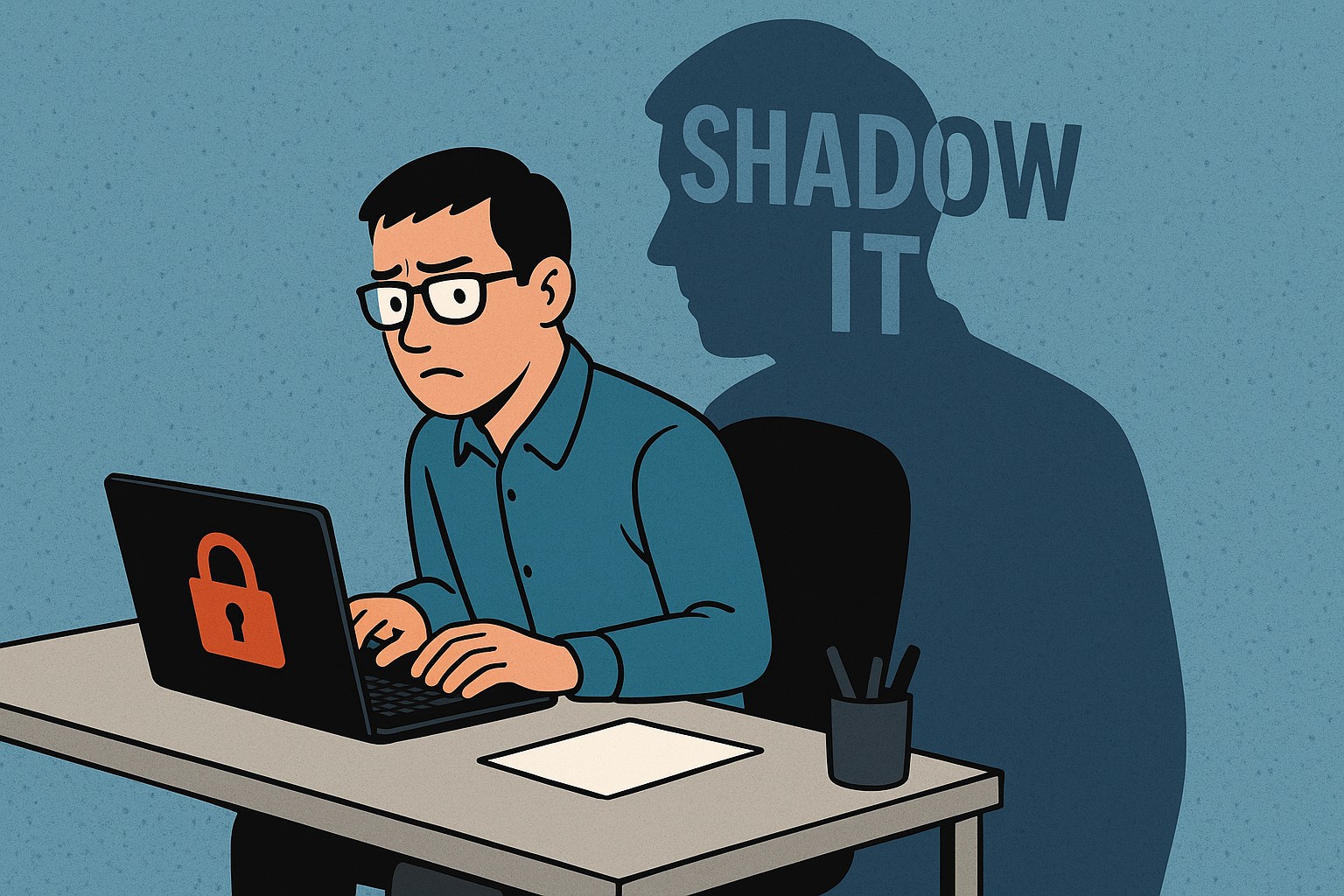
Shadow IT refers to the use of information technology tools and services without explicit IT oversight within an organization. In today’s enterprises, employees frequently turn to cloud-based apps and consumer-grade software to move work forward, especially in hybrid and remote settings. When sanctioned IT options lag behind user needs, or procurement cycles slow down, individuals or teams adopt their own solutions. This phenomenon is not inherently malicious; it often stems from a drive to be productive, to collaborate across silos, and to leverage tools that feel intuitive and flexible. However, the distribution of data across personal devices, unsanctioned collaboration spaces, and shadow apps expands the corporate attack surface and creates governance blind spots that can undermine security, compliance, and long-term strategy.
For management, shadow IT creates a paradox: it can deliver immediate value—faster file sharing, quicker prototyping, and more agile collaboration—while simultaneously introducing risk that may be invisible until a breach, a compliance finding, or a policy audit occurs. The tensions between autonomy and control are not trivial; they require a deliberate approach that recognizes business needs and aligns them with risk-based governance. As organizations grow and adopt new cloud services, the set of unapproved tools often expands, and IT departments must adapt by offering secure, well-supported alternatives and by designing processes that reduce friction rather than simply prohibiting use.
- Cloud storage and file sharing apps
- Collaboration and communication tools
- Project management and development tools
- Software as a Service business applications (CRM, marketing automation, analytics)
- Personal productivity and note-taking apps used for work data
Risks and Organizational Impact
Unapproved tools introduce data security risks that are hard to quantify in real time. When employees use consumer or unsanctioned services, data may be stored on devices or in locations where the organization has limited visibility, weak or no encryption, and inconsistent access controls. Credentials can be reused across platforms, increasing the likelihood of credential stuffing and lateral movement in the event of a breach. Without integrated data loss prevention (DLP) policies, a simple misconfiguration or a mistaken share can leak sensitive information to external audiences. The security perimeter, once clear in a traditional on-premise world, becomes porous in a multi-cloud, multi-tool environment, with data migrating between sanctioned and unsanctioned surfaces in unpredictable ways.
The compliance implications are equally significant. Many industries are subject to regulations that require auditable data handling, retention, and exposure controls. Shadow IT often bypasses standardized data retention policies, eDiscovery workflows, and data localization requirements. When unapproved apps are used to process personal data or regulated information, the organization risks penalties, regulatory scrutiny, and damaged trust with customers and partners. Governance teams must contend with incomplete inventories of software, weak supply chain control, and the potential for third-party risk to be buried in ad hoc tools used by line-of-business units.
Operational consequences extend beyond risk alone. Data silos emerge as information fragments live in isolated services, spreadsheets, or personal devices, undermining data quality and reducing the ability to derive accurate analytics. Support teams spend more time helping end users with tool-specific issues rather than addressing underlying security or service reliability. The result is higher total cost of ownership for IT, slower incident response, and a weaker capability to scale risk management as the business expands its cloud footprint.
- Access management and authentication gaps
- Data protection and governance gaps (encryption, DLP, eDiscovery)
- Visibility gaps across tools, users, and data flows
- Compliance gaps, including retention, legal holds, and cross-border data handling
Strategies for Detection, Governance, and Enablement
Effective management of shadow IT requires a balance between visibility, control, and business enablement. Organizations should start with comprehensive discovery that combines ambient network telemetry, software asset management, and cloud service monitoring to map the actual technology landscape. This discovery must be continuous, because new tools appear, change, or disappear as teams experiment and as projects evolve. A mature program also aligns with risk-based policies: not every unapproved tool is equally dangerous, and some may be rapidly remediated or migrated to approved alternatives with minimal disruption. A coordinated approach leverages the strengths of security teams, IT operations, and business units to minimize friction while hardening the posture against threats.
Governance models should emphasize enablement rather than blanket restriction. Organizations can implement risk-based approvals, approved tool catalogs, and migration paths so that teams can move from an unapproved option to an enterprise-grade solution with similar features. Training and awareness programs help reduce inadvertent risk, while clear guidelines for data handling and sharing ensure workers understand how to protect sensitive information even when using widely adopted tools. In parallel, a policy framework should detail data stewardship responsibilities, lifecycle management, and incident response expectations, so employees know what to do when they encounter or create shadow IT artifacts that present risk.
A practical, technology-enabled program centers on a unified security platform that provides end-to-end visibility, policy enforcement, and automated response. Such platforms integrate identity, device posture, data protection, and application controls to offer a single view of risk and a unified response mechanism. When the platform surfaces risks associated with specific tools or data flows, IT can quarantine or constrain risky activity, enforce data handling rules, and suggest sanctioned alternatives. Importantly, this approach treats security as a business enabler: it reduces operational risk without stifling collaboration, speeds up project delivery, and creates a repeatable, auditable path from discovery to enforcement to improvement. The end goal is a resilient environment where teams trust the tools they have access to and IT remains informed about the evolving landscape.
- Continuous discovery and inventory of tools, data flows, and usage
- Implementation of a unified security platform for visibility, control, and data protection
- Policy design with risk-based approvals, lifecycle management, and migration strategies
- Enablement through sanctioned tools, training, and migration support
What exactly is shadow IT?
Shadow IT refers to the use of information technology tools, services, or solutions within an organization without explicit approval or visibility by the IT department. It often arises when teams seek faster access, more flexible collaboration, or tools that better match their workflows. While not inherently malicious, shadow IT can introduce security, compliance, and governance risks if those tools handle corporate data or integrate with other business processes without proper oversight.
What are the biggest risks associated with unapproved apps?
The primary risks involve security (data breaches, malware introduction, credential misuse), regulatory compliance (retention, eDiscovery, cross-border data flows), operational integrity (data silos, inconsistent configurations, increased mean time to detect and respond), and reputational harm. Unapproved tools can circumvent enterprise controls such as DLP, encryption, and access management, making it harder to enforce policy or respond to incidents with confidence.
How can organizations detect shadow IT without hindering productivity?
Detection relies on a combination of technical visibility and user-centered governance. Active monitoring of network traffic, cloud service usage, and software asset management helps identify tools in use that are not in the approved catalog. Engaging with business units to understand their needs and offering sanctioned, well-supported alternatives is essential. A risk-based, staged approach to remediation—prioritizing tools with access to sensitive data or critical business processes—can reduce friction while strengthening security.
What role does a unified security platform play in managing shadow IT?
A unified security platform provides centralized visibility, policy enforcement, and automated response across identities, devices, and applications. It helps correlate risk signals from unapproved tools with data flows and user activity, enabling rapid containment and guided remediation. By linking discovery, access control, and data protection in a single pane, such platforms reduce blind spots and improve the speed and consistency of risk management across the enterprise.
How should IT balance control with enabling business teams?
The balance is achieved by treating security as a business enabler rather than a gatekeeping function. This involves aligning risk-based policies with user needs, offering a catalog of approved tools that meet common workflows, providing migration paths, and investing in training that raises security awareness without constraining innovation. When teams understand the rationale behind controls and see clear paths to approved, well-supported solutions, the organization preserves agility while maintaining governance and risk posture.