Now Reading: What is an OTT Platform? Over-the-Top Apps Explained
-
01
What is an OTT Platform? Over-the-Top Apps Explained

Definition and Scope of OTT Platforms
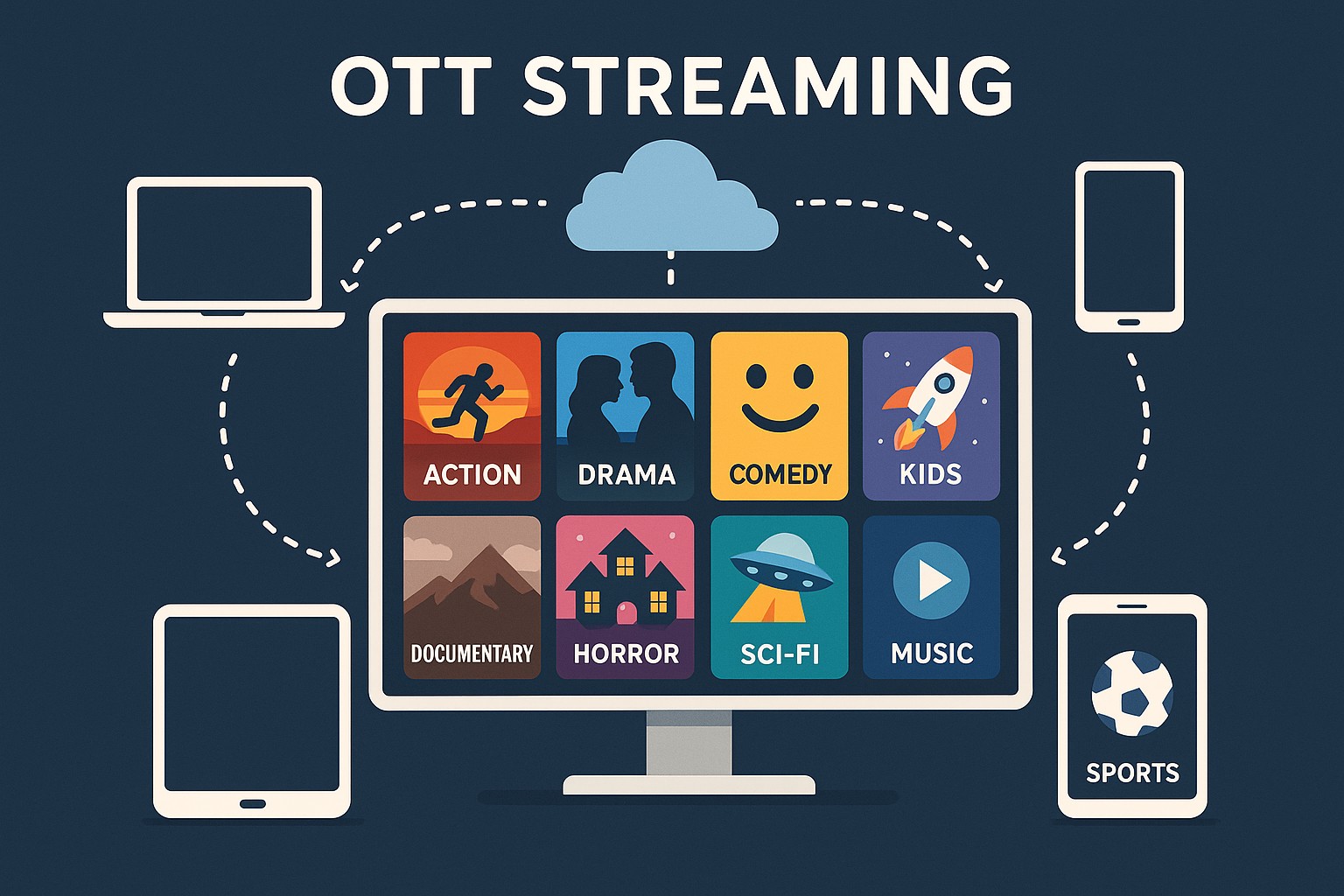
Over-the-top (OTT) platforms refer to services that deliver audio, video, and other content directly over the public internet, bypassing traditional distributors such as cable operators or satellite providers. These platforms enable a direct relationship between the content owner and the end user, supported by streaming technology, cross‑device delivery, and an ecosystem that ranges from on‑demand libraries to live events. The defining trait is that delivery operates over the open internet, leveraging ad‑tech, subscription, or transactional monetization, rather than relying solely on conventional broadcast or pay‑TV circuits. In practice, OTT platforms unify content discovery, player experiences, rights management, and monetization on a single stack that serves subscriptions, rentals, or ad‑supported viewing across devices and geographies.
The scope of OTT today extends well beyond video. While streaming video remains the backbone for many platforms, OTT also encompasses audio streaming, live sports and events, interactive media, and even connected‑device services that use internet delivery to reach end users. As a model, OTT emphasizes direct engagement with audiences, flexible licensing agreements, and rapid iteration on features such as personalized recommendations, offline downloads, and multi‑screen synchronization. For business and technology leaders, OTT platforms represent a modular, scalable approach to distributing premium content while retaining control over monetization, user data, and brand experiences across ecosystems.
- Direct‑to‑consumer distribution with built‑in monetization options
- Multi‑device support spanning mobile, web, smart TVs, and set‑top boxes
- Scalable, internet‑based delivery that adapts to demand
- Integrated rights management and licensing workflows
- Personalization and data‑driven decision making for audience engagement
How OTT Platforms Deliver Content
The delivery chain starts with content ingestion, where assets are prepared for streaming through robust encoding and packaging workflows. Once authenticated and packaged, content is distributed via content delivery networks (CDNs) that optimize latency, reliability, and adaptive bitrate streaming. On the client side, native apps or web players request the appropriate manifest and deliver video pieces according to the user’s network conditions, device capabilities, and playback history. This end‑to‑end pipeline enables real‑time adaptation, so viewers receive smooth playback even under fluctuating bandwidth.
Behind the scenes, OTT platforms orchestrate a complex set of services that include catalog management, user authentication, entitlement checks, and analytics. Security and compliance layers govern access, ensure rights are honored, and support fraud prevention. The result is a seamless experience where viewers can start a movie on a phone, continue on a tablet, and finish on a smart TV with the same account, without manual intervention by the operator.
To monetize effectively, OTT platforms must balance performance, cost, and quality of service. Content delivery decisions, caching strategies, and edge computing techniques influence startup times and buffering, which in turn impact subscriber satisfaction and churn. Operational excellence also depends on robust monitoring, incident response, and proactive capacity planning to accommodate the unpredictable spikes that accompany premieres, live events, or viral content.
In practice, OTT platforms leverage a mix of streaming protocols, such as adaptive HTTP streaming, together with robust DRM schemes and analytics that inform content strategy. The architecture is designed to be resilient, scalable, and extensible, enabling new features such as offline downloads, personalized recommendations, fast search, and dynamic ad insertion without compromising the viewing experience.
OTT Business Models and Revenue Streams
OTT platforms deploy a range of business models to monetize content and maximize audience value. Subscriptions offer predictable revenue and ongoing engagement, while advertising can monetize free or hybrid tiers. Transactional models enable pay‑per‑view access to specific titles or events, and hybrid approaches combine elements of multiple models to optimize reach and monetization. Effective OTT strategies often blend these approaches to accommodate diverse audience segments, seasonality, and regional differences in consumer behavior.
Beyond the basic models, platforms increasingly experiment with bundling, partnerships, and licensing arrangements that extend reach while managing rights costs. Data‑driven pricing and content strategies help operators tailor offers to different markets and consumption patterns, balancing customer acquisition costs with long‑term lifetime value. A thoughtful revenue mix can support a robust content library, a sustainable producer ecosystem, and continued investment in platform capabilities such as personalization, discovery, and quality of service.
- Subscription Video on Demand (SVOD) — a recurring access model for a library of content
- Advertising‑Supported Video on Demand (AVOD) — free access funded by ads
- Transactional Video on Demand (TVOD) — one‑off payments for individual titles or events
- Hybrid models — combining SVOD, AVOD, and/or TVOD to optimize reach and monetization
Technology Stack and Architecture
A modern OTT architecture starts with the client experience and the services that power discovery, personalization, and playback. Frontend components run on mobile devices, web browsers, and connected TVs, delivering a consistent user interface and responsive performance. The backend handles content management, metadata, rights, authentication, and orchestration of encoding pipelines, packaging, and delivery. A strong emphasis on scalability, reliability, and security underpins the architecture, since OTT platforms must handle millions of concurrent streams while protecting content and user data.
Operationally, OTT platforms rely on a layered technology stack: content management, encoding/packaging, storage, origin services, a distribution network, and analytics. DRM and secure delivery mechanisms protect assets, while data pipelines support real‑time telemetry, audience insights, and experimentation. Observability tools monitor performance, quality of experience, and security events, enabling rapid incident response and continuous improvement through A/B testing and optimization. The result is a resilient platform that can grow with audience demand, expand to new markets, and adapt to evolving content strategies.
- Player SDKs and client applications for iOS, Android, and web
- Content Management System (CMS) and metadata governance
- Encoding, transcoding, packaging, and manifest generation
- Content Delivery Network (CDN) and edge delivery optimization
- Analytics, telemetry, and experimentation tooling
Content Licensing, Rights Management, and Compliance
Content licensing defines what can be shown in which regions and under which terms. OTT operators must negotiate and manage distribution rights with rights holders, producers, and distributors, often across multiple territories and platforms. The licensing framework interacts with platform capabilities such as entitlement checks, geofencing, and windowing rules, ensuring that content is accessible only where permitted and according to the agreed timelines. This complexity drives the need for robust rights management systems and processes that track expirations, renewals, and revenue share arrangements.
Compliance extends beyond rights to include regulatory and policy considerations that affect both operations and user experience. Regional data privacy laws, accessibility requirements, and content classification standards influence how platforms collect, store, and use viewer data while protecting user privacy. Adherence to content rating systems and age restrictions, as well as moderation policies for live events and interactive features, helps guard against legal risk and protects brand reputation. In practice, successful OTT players align licensing, regional distribution strategies, and compliance programs to deliver consistent, compliant experiences across markets.
Security, Compliance, and Quality of Experience
Security is fundamental to OTT because content is valuable and often highly regulated. DRM, encryption, secure token authentication, and robust license enforcement form the core protections for streaming assets. Token‑based access control ensures that viewers can only access content when authorized, and watermarking or fingerprinting can deter misuse. For live and on‑demand content alike, continuous monitoring of access patterns helps detect anomalies and potential piracy attempts, enabling rapid remediation.
Quality of Experience (QoE) centers on delivering reliable, high‑quality playback at scale. This requires end‑to‑end performance monitoring, proactive capacity planning, and incident response that minimizes downtime and buffering. Service levels, automated failover, and redundancy across data centers or edge nodes help maintain availability during traffic surges or regional outages. By aligning security, governance, and performance practices, OTT platforms can preserve content integrity while sustaining a superior viewing experience for diverse audiences.
Market Landscape and Trends
The OTT market has grown rapidly, driven by consumer demand for on‑demand access and flexible viewing options. The competitive landscape features pure‑play platforms, traditional media companies expanding into streaming, and aggregators that bundle content from multiple rights holders. Fragmentation across devices, networks, and geographies has intensified the need for unified discovery, cross‑device continuity, and scalable monetization strategies. As platforms scale, they increasingly rely on data‑driven decision making to optimize content investments, recommendations, and subscriber retention.
Trends shaping the industry include the rise of live streaming as a core differentiator, the expansion of international markets, and the exploration of new formats such as interactive and shoppable video. Strategic partnerships with creators, studios, and distributors help expand the content ecosystem while controlling cost and risk. Operators are also embracing advanced analytics, experimentation, and automation to refine content discovery, pricing, and promotional strategies, all while maintaining robust security and regulatory compliance. The ongoing evolution of encoding, delivery, and audience insights will continue to redefine how OTT platforms compete and grow.
What is OTT platform differentiation and how does it affect ROI?
OTT platform differentiation hinges on the ability to deliver reliable performance, a compelling content slate, and a seamless user experience across devices, regions, and monetization models. When platforms excel in discovery, personalization, and fast delivery, retaining subscribers and reducing churn improves lifetime value, which directly influences ROI. Investments in infrastructure, licensing agility, and data‑driven decision making compound over time as audience expectations rise and competitive pressure increases.
How do OTT platforms handle international distribution and localization?
International distribution requires careful management of regional rights, language tracks, subtitles, and local payment methods. Platforms implement geolocation controls, content catalog segmentation, and localized metadata to tailor experiences to each market. Regulatory compliance, transcoding for local networks, and partnerships with regional providers all contribute to a scalable, globally accessible service that respects local preferences and obligations.
What challenges do OTT operators face with content rights and licensing?
Content rights and licensing involve complex negotiations, tiered pricing, windowing, and renewal cycles. Operators must track expirations, manage revenue sharing, and align content availability with regional distribution rules. These challenges demand robust contract management, automated entitlement systems, and close collaboration with rights holders to maximize content value while controlling costs.
How is DRM integrated into OTT delivery, and why is it important?
DRM protects premium content by enforcing license terms at the device level and preventing unauthorized copying or distribution. Integration includes encryption during packaging, license provisioning, and secure key delivery to licensed players. DRM is essential for safeguarding rights, enabling cross‑border distribution, and enabling monetization models that require strict access control.
What considerations influence OTT scalability and performance during peak events?
Peak events—live sports, premieres, or special events—stress capacity and disrupt service if not managed carefully. Operators plan capacity with elastic cloud resources, optimize CDN configurations, and deploy edge caching to reduce latency. Real‑time monitoring, automated failover, and proactive incident response help maintain a stable QoE even under extreme demand.