Now Reading: What is Autodesk Revit? (BIM Software Overview)
-
01
What is Autodesk Revit? (BIM Software Overview)

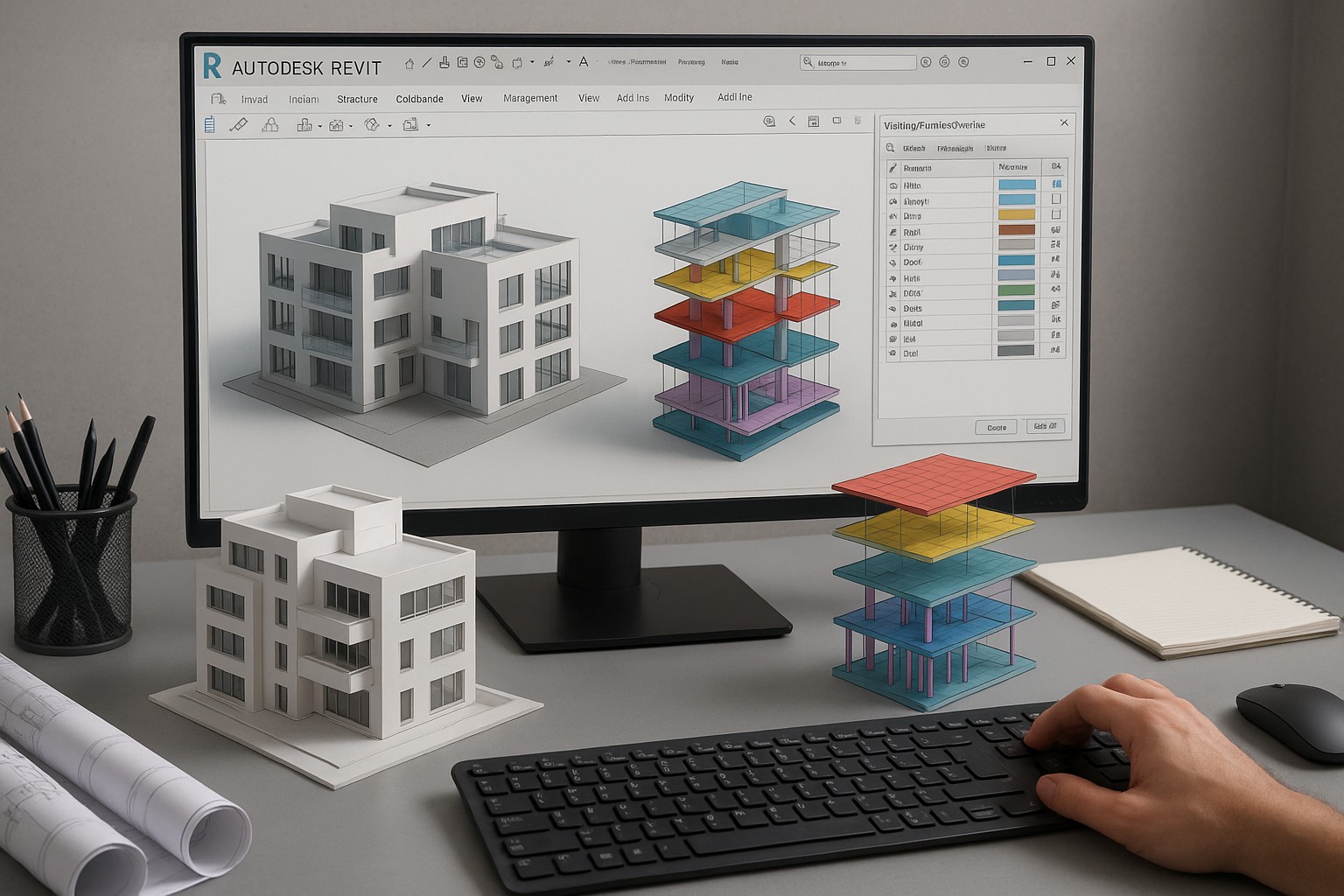
Overview: Autodesk Revit as a BIM platform
Autodesk Revit is a Building Information Modeling (BIM) platform designed to support multidisciplinary design, construction documentation, and facility management. It enables architects, structural engineers, MEP professionals, and contractors to create an intelligent, data-rich 3D model that captures not only geometry but also attributes such as material properties, performance criteria, and relationships between building systems. The core idea is to embed information directly into the model so decisions made during design reverberate through documentation, analysis, and coordination. This approach reduces error-prone handoffs and fosters a common understanding of the project among all stakeholders.
What makes Revit distinctive in practice is its parametric environment. When a parameter changes—say, a wall thickness, a beam size, or a duct route—connected elements update automatically across views, schedules, and constructability analyses. This means teams can explore design options with confidence, knowing how modifications cascade through the model. Revit supports collaboration across disciplines by providing a shared repository of intelligent components (families) and a set of workflows that align architecture, structure, and MEP from concept through construction. The result is a unified digital representation of the building that serves as a single source of truth for design, documentation, and ongoing facilities operations.
- Parametric modeling that drives consistency and reduces errors
- Multi-disciplinary collaboration in a shared model
- Automated documentation and scheduling
- Interoperability with open standards (IFC, gbXML)
- Visualization, design validation, and data-rich insights within one environment
Core capabilities and modules
Revit consolidates architectural, structural, and MEP design within a single project environment. Each discipline relies on a set of tools and libraries to create parametric elements—walls, floors, roofs, beams, ducts, and pipes—that propagate changes automatically through the model. The architecture tools emphasize form, space planning, and documentation; structural tools focus on load paths, connections, and analytical models; MEP tools handle mechanical, electrical, and plumbing systems, their routing, sizing, and coordination. This integrated approach supports coordinated design decisions, improves clash detection early in the project lifecycle, and enables more accurate quantity takeoffs as the model evolves.
Beyond the core modeling capabilities, Revit supports a broad set of workflows that tie design to performance and delivery. Users can create and manage parametric families (the building blocks of the model), define project parameters and shared parameters, generate comprehensive schedules from model data, and perform basic analyses related to space, energy use, and constructability. The software also offers coordination tools that help teams visualize interferences, review design options, and document changes in a traceable, auditable manner. Interoperability with industry standards and external tools—such as open BIM formats (IFC) and energy analysis programs—facilitates data exchange and collaboration with partners who may use different software ecosystems.
- Concept design and schematic coordination
- Design development and construction documentation
- Construction modeling and fabrication-ready assemblies
- Model-based quantity takeoffs and project scheduling (4D)
Practical workflows and collaboration
In practice, Revit supports a central model approach where multiple team members work on different parts of the project while maintaining consistency through coordinated data. Teams organize work through mechanisms such as worksets, view filters, and families, which help manage concurrent design activities and avoid conflicts. The central model can be hosted on a collaboration platform (such as Autodesk Docs or BIM 360) to enable cloud-based access, version control, and real-time review. This setup is particularly valuable for distributed teams, enabling engineers, architects, and contractors to review progress, share markups, and manage issues without lengthy email threads or standalone CAD exports.
Coordination is further enhanced by linking models from different disciplines, running clash detection, and using design reviews to capture decisions. The ability to annotate directly in the model, generate issue lists, and attach documentation to specific elements accelerates communication and reduces the need for repeated meetings. Table-driven data, parameter-driven changes, and robust view management let project teams present the same information in the most appropriate format for designers, reviewers, and field teams. In addition, integration with cloud services supports version history, access control, and audit trails that are essential for risk management and quality control.
| Feature | Benefit |
|---|---|
| Central model | Single source of truth for all disciplines |
| Worksharing | Controlled collaboration and reduced conflicts |
| Clash detection | Early coordination and fewer RFIs |
| Linking models | Coordinated design with up-to-date information |
| Cloud collaboration | Accessible, versioned design data from anywhere |
- Central model with multi-user access
- Worksets and permissions to manage concurrent work
- Discipline-specific workflows tightly integrated
- Model-based reviews with markups and issue tracking
- Structured data for faster reporting and handoffs
Implementation considerations and ROI
Adopting Revit at scale requires deliberate planning around licensing, governance, and workflow alignment. Organizations typically move from standalone CAD workflows to a centralized BIM process, establishing templates, standard families, and data schemas that reflect the firm’s design practices. Licensing models—whether per-seat subscriptions or network-based arrangements—should align with project staffing, peak demand, and IT strategy. A governance framework, including model standards, naming conventions, template libraries, and an established process for family creation, ensures consistency across offices and projects.
Training and change management are critical to realizing ROI. Firms that invest in structured onboarding, role-based training, and ongoing skill development tend to see faster adoption, fewer rework cycles, and improved accuracy in documentation. The return on investment manifests through several channels: shorter design cycles, fewer coordination errors that cause RFIs or change orders, more reliable quantity takeoffs, and better alignment between design intent and field execution. Over the lifecycle of a project, these benefits compound as teams transition from concept exploration to construction administration and, ultimately, facility management, where accurate as-built data supports operations and maintenance.
ROI is also driven by process improvements around data reuse and project templates. By standardizing families, parameters, and view configurations, a firm can accelerate project setup and reduce the time spent on repetitive tasks. A phased rollout—starting with a pilot project, then expanding to larger buildings or multiple disciplines—helps validate workflows, identify gaps in training, and calibrate governance before wider implementation. In environments with frequent design changes or complex coordination needs, the value of automated updates, clash detection, and integrated documentation becomes increasingly pronounced.
FAQ
What is Autodesk Revit primarily used for?
Autodesk Revit is primarily used for multidisciplinary Building Information Modeling (BIM) workflows that combine architectural, structural, and MEP design within a single, data-rich model. It supports design, coordination, documentation, and analysis, enabling teams to visualize, quantify, and communicate building information from concept through construction and into facility management.
Can Revit be used for multi-discipline projects?
Yes. Revit is designed to support multi-discipline projects by housing architectural, structural, and MEP elements in a shared model. This enables coordinated design, integrated documentation, and streamlined collaboration across teams, with mechanisms such as worksets, linked models, and central models to manage complexity and reduce conflicts.
What are the main benefits of adopting Revit over traditional CAD workflows?
The primary benefits include a data-rich, parametric model that automates updates across drawings and schedules, improved coordination through clash detection, and more efficient workflow from design to construction documentation. Revit also supports better visualization, faster design iteration, and easier data exchange with partners and facilities management teams.
What challenges should a firm anticipate when adopting Revit, and how can they be mitigated?
Common challenges include the learning curve for new users, the need for governance and templates to ensure consistency, and the upfront effort required to create families and standards. Mitigation strategies involve phased adoption, role-based training, establishing a governance framework, investing in template libraries, and starting with pilot projects to refine processes before broader deployment.