Now Reading: What is the Delphi Programming Language? Uses and History
-
01
What is the Delphi Programming Language? Uses and History

History and origins
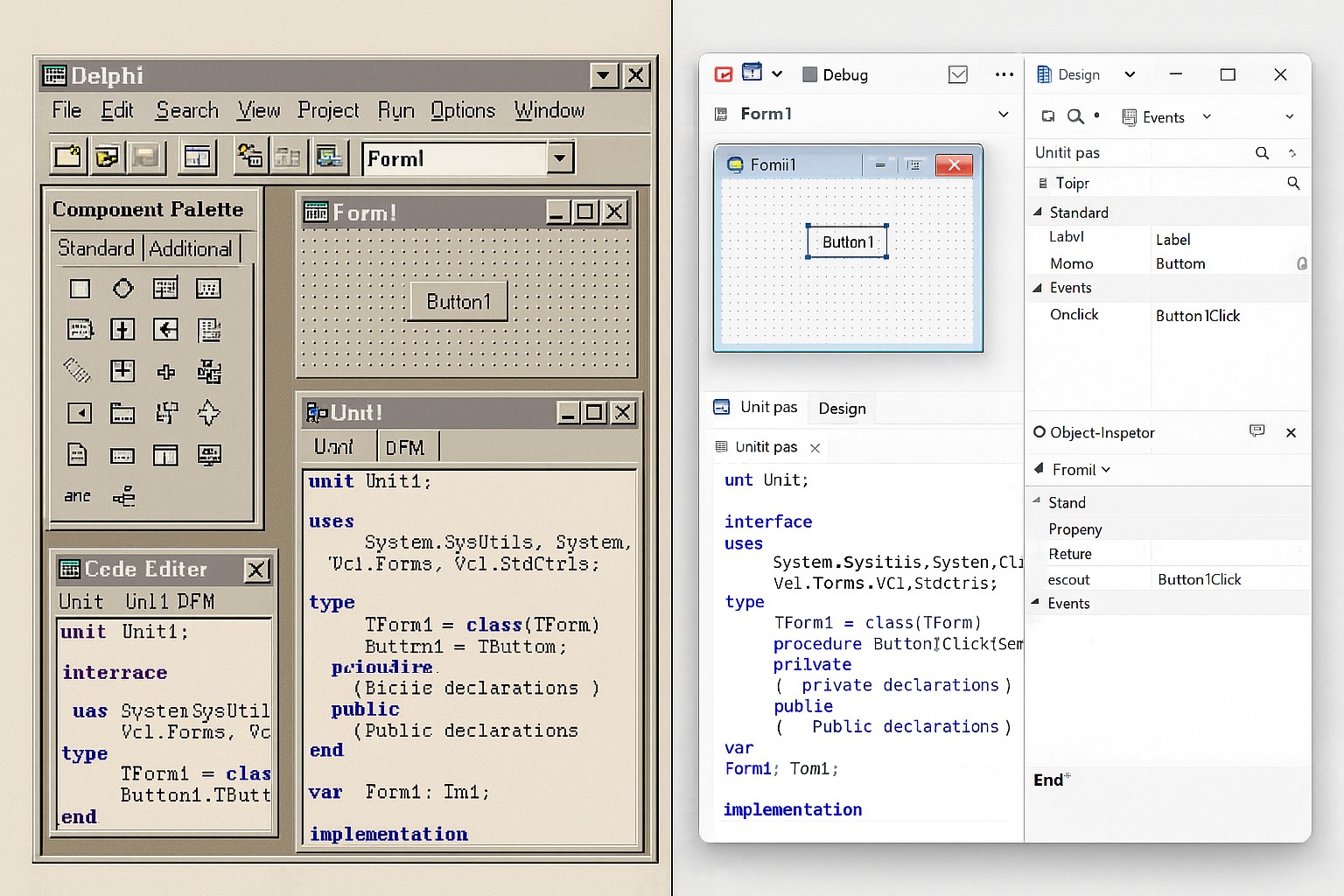
Delphi traces its lineage to Borland’s Turbo Pascal and the Object Pascal language, created to give developers a more productive environment for Windows GUI applications. It was designed to blend Pascal’s readability with object-oriented concepts and a rich component library, enabling teams to build complex software with fewer lines of boilerplate and a stronger emphasis on visual design. In its early versions, Delphi established a reputation for rapid development cycles, strong compile-time checks, and integrated debugging that appealed to business environments seeking dependable desktop tools. The approach was inherently pragmatic: provide a productive language, a robust visual designer, and a thriving ecosystem of reusable components that could be assembled into mission-critical software with predictable results.
As the platform matured, Delphi extended beyond the initial Windows focus. The IDE evolved to support more sophisticated project structures, database connectivity, and cross-language interoperability, while the runtime library expanded to handle increasingly demanding applications. Over the ensuing decades, Embarcadero and the broader community invested in performance improvements, platform adapters, and toolchain enhancements that allowed existing Delphi code to be maintained alongside newer technologies. This balance between stability for legacy systems and modernization capabilities helped Delphi remain viable in enterprise settings where long-term maintenance is common and where software lifecycles often span a decade or more.
- 1995: Delphi ships as a visual development environment with Object Pascal for Windows GUI applications.
- Late 1990s–early 2000s: successive releases strengthen the VCL, database access, and component ecosystems.
- 2010s–present: the platform expands with cross-platform capabilities (via FireMonkey) and modern tooling while preserving strong Windows support for legacy software.
Delphi language features and ecosystem
Object Pascal in Delphi provides a statically typed, verbose-friendly syntax that aids readability and long-term maintainability. The language emphasizes clear class hierarchies, strong typing, and explicit memory management decisions, which contribute to predictable performance in business-critical systems. Over time, the language gained features commonly associated with modern languages—generics, anonymous methods, and more flexible RTTI—while preserving the familiar programming model that developers rely on for safety and speed. The design philosophy continues to favor explicitness and reliability, important traits for enterprise software that may be in operation for many years without extensive rewrites.
Beyond the language core, Delphi’s runtime library and component frameworks shape how applications are constructed and delivered. The VCL delivers a rich set of Windows UI controls and utilities designed for polished desktop experiences, while FireMonkey enables cross-platform user interfaces across Windows, macOS, iOS, and Android. The ecosystem also includes high-quality database access layers, REST and JSON tooling, and a broad catalog of third-party components that accelerate development, testing, and deployment across multiple platforms. Together, these elements support a broad spectrum of business applications, from data-entry-intensive forms to data visualization dashboards and beyond.
- Object Pascal with a clear, readable syntax and strong typing
- VCL for Windows-centric GUI development; FireMonkey for cross-platform UI
- RTL libraries covering networking, file I/O, and database access
- Generics, anonymous methods, interfaces, and advanced RTTI support
- Integrated tooling within RAD Studio for debugging, profiling, and packaging
Use cases and industry adoption
In many industries, Delphi remains a core component of stable, high-performance Windows desktop applications. Enterprises in finance, healthcare, manufacturing, and government frequently maintain large Delphi codebases because the language offers predictable execution, strong UI tooling, and robust data access. The ability to support long-lived systems without a complete rewrite makes Delphi a practical choice for modernization projects that aim to preserve critical business logic while updating the user experience and integration points. Organizations often benefit from a mature, well-documented codebase and predictable maintenance cycles that align with governance and compliance requirements.
More recently, Delphi has positioned itself as a practical path for cross-platform development and modernization. Teams can extend legacy Windows apps to macOS and mobile platforms with FireMonkey, while retaining existing data layers and business rules. In addition, modern Delphi supports REST APIs, JSON, and cloud-friendly deployment strategies, enabling integrators to connect with contemporary IT environments without sacrificing the stability of established applications. This balance between modernization and continuity makes Delphi attractive for phased uplift programs, where risk mitigation and incremental delivery are prioritized.
Organizations also benefit from a mature ecosystem and predictable licensing models, which help with budgeting and risk management during modernization initiatives. By combining proven desktop performance with cross-platform capability and a broad component library, Delphi supports phased migration strategies, parallel development tracks, and long-term maintenance plans that align with enterprise governance standards. The result is a pragmatic platform for sustaining critical software assets while gradually embracing newer architectures as business needs evolve.
- Desktop business applications with rich UI and robust database integration
- Legacy maintenance and modernization projects that preserve core business logic
- Cross-platform GUI development for Windows, macOS, iOS, and Android via FireMonkey
- Enterprise dashboards, data-entry systems, and forms-based applications
Tools, IDEs, and the Delphi ecosystem
The Delphi IDE, part of the RAD Studio family, remains the central tool for developers building Delphi applications. It provides visual form designers, a code editor with syntax awareness, integrated debugging, and streamlined project management. The toolchain supports compiling to multiple targets from a single codebase, along with modern features for testing, packaging, and deployment that align with enterprise development workflows. For teams maintaining large codebases, the IDE’s stability, refactoring capabilities, and comprehensive documentation support lengthy maintenance cycles without sacrificing productivity.
Community and vendor support contribute significantly to Delphi’s ongoing relevance. A longstanding catalog of third-party components, libraries, and migration services helps organizations port, extend, or modernize their codebases. Training programs, user groups, and professional support options from Embarcadero reinforce the platform’s viability for both legacy maintenance and targeted new development, reducing risk for IT leadership. As organizations factor in total cost of ownership, the combination of mature tooling, stable performance, and a broad ecosystem remains a compelling argument for Delphi in appropriate contexts.
From a strategic perspective, teams considering Delphi should weigh licensing, total cost of ownership, and skill availability against project requirements. The combination of stable performance, a mature UI toolkit, and cross-platform options continues to make Delphi a practical choice for organizations with established Windows ecosystems or those pursuing phased modernization without a full rewrite. Thoughtful planning around migration paths, component reuse, and training can further extend the useful life of existing Delphi investments.
FAQ
When was Delphi first released?
Delphi was introduced in the mid-1990s as a rapid development environment built on the Object Pascal language, designed to streamline Windows GUI programming and form-based application design for business use.
What kinds of applications is Delphi best suited for today?
Delphi remains well-suited for desktop Windows applications with rich user interfaces, data-intensive forms, and legacy systems that require long-term maintenance. It also supports cross-platform targets via FireMonkey for mixed environments and modernization projects that preserve core business logic.
Is Delphi still relevant for new projects?
Yes. For teams that value a mature, productive development environment, Delphi offers strong UI tooling, stable performance, and a clear migration path for legacy systems, along with cross-platform capabilities that can reduce rewrite risk in multi-OS scenarios.
How does Delphi handle cross-platform development?
Delphi provides cross-platform GUI development through FireMonkey, enabling a single codebase to target Windows, macOS, iOS, and Android. Recent toolchains also improve support for cross-platform compilation, debugging, and deployment, helping teams reach multiple markets from one project.