Now Reading: Will AI Replace Software Developers? The Future of Coding
-
01
Will AI Replace Software Developers? The Future of Coding

Introduction
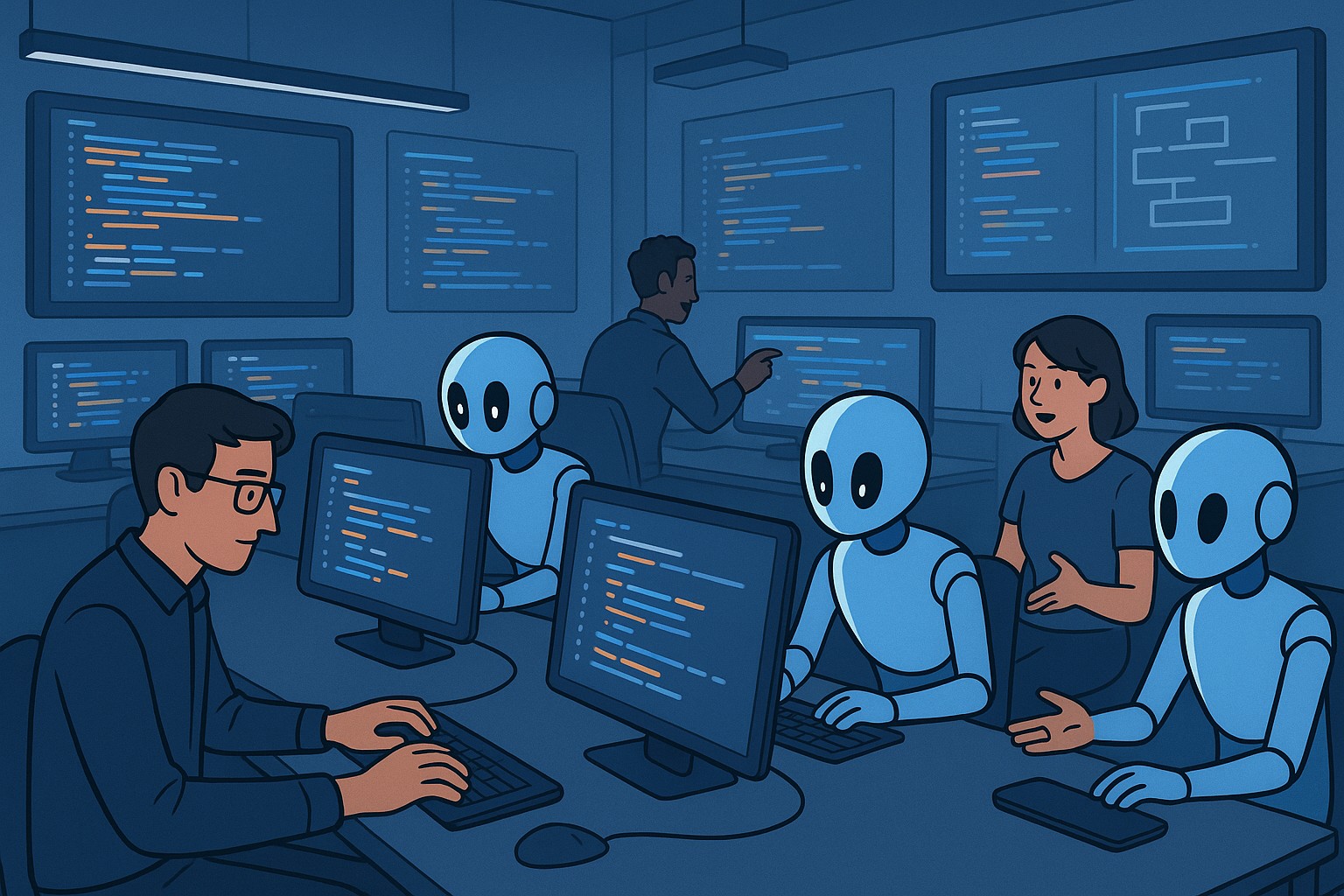
The ongoing convergence of artificial intelligence and software development is reshaping how code is written, reviewed, and delivered. AI coding assistants have grown from novelty tools into practical teammates that draft boilerplate, suggest refactors, and surface potential defects in real time. Yet the belief that machines will instantly and completely replace human developers misses a fundamental truth: AI excels at pattern recognition and automation, while humans excel at designing systems, solving novel problems, and making value-driven tradeoffs in uncertain contexts. In business terms, AI is more likely to raise the productivity floor than to lower the employment floor, shifting the nature of work rather than eliminating it altogether.
This article analyzes where AI coding tools stand today, why they tend to augment rather than replace developers, and how organizations can structure teams, governance, and skill development to extract durable value. We’ll look at the capabilities and limits of current tools, the economic and ethical implications of widespread adoption, and practical paths for individuals and teams to stay competitive in a world where AI-assisted coding is increasingly the norm.
Current State of AI Coding Assistants
Today’s AI coding assistants blend auto-completion, natural language interpretation, and context-aware code generation to accelerate everyday programming tasks. Prominent examples include code copilots and platform-specific assistants that integrate into editors, IDEs, and CI pipelines. They support multiple languages, suggest entire functions, generate tests, translate requirements into scaffolds, and document code with minimal prompting. These capabilities can dramatically reduce boilerplate work, speed up onboarding for new codebases, and catch simple logical errors that might otherwise slip through manual review.
- Real-time, context-aware code suggestions that leverage the surrounding project and tests.
- Multi-language support and cross-platform scaffolding for frontend, backend, and infrastructure work.
- Automatic boilerplate generation, refactoring hints, and documentation synthesis to keep codebases consistent.
- Assistance with testing, ranging from unit-test templates to property-based tests and test coverage analysis.
- Integrated code search, knowledge extraction, and vulnerability checks that surface potential issues early.
Despite these strengths, AI coding assistants have notable limits. They can hallucinate code snippets or misinterpret intent, produce insecure or noncompliant patterns, and struggle with long-range architectural decisions or domain-specific requirements. They also raise questions about licensing and attribution when training data may include open-source or proprietary content. As a result, while AI can automate many repetitive or error-prone tasks, it cannot substitute the human judgment required to set strategy, manage risk, and ensure product outcomes align with business goals.
Augmentation over Replacement: AI as a Productivity Amplifier
Viewed through a business lens, AI tools act as productivity amplifiers rather than wholesale replacements for developers. They can take over routine coding, formatting, error correction, and basic integration tasks, freeing engineers to focus on system design, performance optimization, and critical thinking about user needs. This shift often translates into faster iteration cycles, shorter onboarding times for new projects, and the ability to experiment with more ideas within the same time horizon.
To realize these gains, teams should embrace collaboration patterns that blend human expertise with AI output. For example, engineers can use AI to generate multiple implementation options, then assess each against nonfunctional requirements—security, reliability, scalability, and maintainability. Pair programming with an AI partner can surface alternative approaches and reduce cognitive load during complex refactors. The key is to establish guardrails, strong review practices, and a culture that treats AI-generated suggestions as starting points that require human validation rather than final answers.
Economic and Business Implications
Adopting AI coding tools changes the economics of software delivery in several dimensions. First, there is the potential for productivity gains that compress development cycles and accelerate time-to-value for new features. Second, the total cost of ownership shifts: organizations must consider subscription licenses, training data provenance, and the need for secure, auditable workflows. Third, the distribution of value across teams can change—teams with strong domain knowledge, robust testing regimes, and disciplined governance tend to extract more sustainable benefits from AI assistance than those that rely on ad hoc adoption.
Beyond pure productivity, AI influences risk management and governance. AI-generated code can introduce subtle security vulnerabilities or licensing concerns if data leakage and model provenance are not properly controlled. Organizations that implement AI thoughtfully—defining decision rights, guardrails for data handling, and explicit criteria for when human review is required—are more likely to realize stable, repeatable outcomes. In contrast, unchecked adoption can lead to inconsistent quality, regulatory exposure, and a mismatch between automation investments and strategic priorities.
Ethical and Legal Considerations
Ethical and legal questions surround AI-assisted development as a core concern for modern software organizations. Key issues include how training data is sourced, whether generated code may infringe on existing licenses, and how to respect user privacy when model responses are influenced by code or documentation from proprietary projects. Ensuring transparent provenance, respecting licensing terms, and implementing reproducible build and security practices are essential to mitigating these risks. Developers and organizations must also address biases that may creep into generated guidance, particularly in domain-critical or safety-sensitive applications.
Governance and accountability are central to responsible AI adoption. Practices such as maintaining audit trails for AI-generated changes, requiring human-in-the-loop reviews for critical modules, and establishing clear ownership of AI-driven decisions help reduce risk. Organizations should invest in tooling and processes that enable reproducibility—versioned prompts, deterministic environments, and robust testing pipelines—to ensure that AI contributions can be validated, rolled back if necessary, and understood by future teams encountering the codebase.
Practical Paths for Teams and Individuals
Successful AI integration in software delivery starts with a deliberate, phased approach. Teams should begin with small pilots targeted at well-scoped, high-volume tasks where AI can demonstrate measurable gains, then expand to broader areas once guardrails and governance mechanisms are in place. Central to this strategy is the creation of an internal capability—often a Center of Excellence or AI in Software program—that coordinates tool selection, best practices, security reviews, and ongoing upskilling. Equally important is aligning AI initiatives with business outcomes such as faster delivery, improved reliability, and better developer experience.
- Define a clear problem statement and success metrics before adopting any AI tool.
- Establish a Center of Excellence to govern tooling, standards, and security reviews.
- Put guardrails in place for data handling, licensing, and sensitive domains.
- Invest in data hygiene, secure environments, and observability to monitor AI-assisted flows.
- Continuously measure outcomes, iterate on processes, and scale pilots gradually based on evidence.
As teams scale, it’s crucial to maintain a human-centric approach: ensure developers retain autonomy over architectural decisions, provide ongoing coaching on how to interpret AI outputs, and prioritize interventions that improve long-term maintainability. The goal is not to replace human ingenuity but to enable engineers to pursue more challenging problems with greater confidence and speed.
The Skills Landscape for 2025-2030
As AI becomes a more pervasive helper in software delivery, the skill mix of effective engineers shifts toward higher-level thinking, systemic design, and cross-disciplinary collaboration. Developers who pair coding prowess with architectural vision, domain fluency, and strong governance capabilities will be best positioned to maximize AI-assisted productivity. In addition to traditional programming fundamentals, future-focused engineers will need to cultivate new competencies that enable them to design, verify, and operate AI-enabled systems responsibly.
- Prompt engineering and model interrogation to elicit reliable, safe, and deterministic outputs.
- Systems thinking and architectural judgment to design scalable, resilient, and maintainable platforms.
- Ethics, compliance, and governance expertise to manage risk in AI-driven workflows.
- Data literacy and ML/AI literacy to understand how models influence software behavior and metrics.
- Collaboration and communication across disciplines, including product, security, and operations teams.
Investing in these skills helps developers transform AI from a source of speed into a source of strategic advantage. It also supports a healthier feedback loop: engineers can critique AI outputs more effectively, provide better data for model improvements, and design systems that remain interpretable and auditable in the face of automated assistance. Organizations that prioritize continuous learning, mentorship, and cross-functional collaboration will see the most durable benefits from AI-enabled software delivery.
FAQ
Will AI replace software developers?
No. AI will not fully replace software developers. Instead, it is likely to shift the work toward higher-value activities such as system design, architecture, security, performance optimization, and validating business outcomes. AI can automate repetitive coding tasks, but human oversight, judgment, and domain knowledge remain essential for delivering reliable, maintainable software that aligns with business goals. As a result, developers who adapt by focusing on design thinking, governance, and collaboration with AI tools will remain vital to organizations.
How should organizations prepare for AI in software engineering?
Organizations should start with a clear strategy that ties AI adoption to business objectives, governance, and risk management. Key steps include defining success metrics, selecting pilots with measurable impact, establishing a Center of Excellence to standardize practices, implementing guardrails for data, licensing, and security, and investing in training to build AI literacy across teams. Regular reviews of tooling, security posture, and code quality help ensure that AI adds value without introducing new risks.
What are the main risks of AI coding assistants?
Major risks include security vulnerabilities introduced by automated code, licensing and attribution concerns around training data, data leakage or privacy issues when working with sensitive code, and the potential for overreliance that erodes critical review processes. There can also be biases in recommendations that fail to account for domain-specific constraints. Mitigating these risks requires strong governance, human-in-the-loop validation for critical areas, reproducible build processes, and thorough testing to catch defects early.
What skills should developers focus on as AI tools become more capable?
Developers should emphasize skills that are hard to automate or require deep domain knowledge. This includes systems thinking and architectural design, domain-specific expertise, ethics and governance, and the ability to interpret and validate AI outputs. Additionally, improving collaboration with cross-functional teams, learning how to craft effective prompts, and building strong observability and security practices will help developers leverage AI while maintaining high standards for quality and reliability.
How can we measure the impact of AI on software delivery?
Impact can be measured through a mix of output and outcome metrics. Typical indicators include cycle time (time from idea to production), defect density and escape rate, test coverage, onboarding time for new contributors, and the efficiency of code reviews. Employee experience and developer satisfaction with tooling, as well as ROI considerations tied to cost of tools and training, are also important. A balanced scorecard approach, combining quantitative metrics with qualitative feedback, provides a clearer view of AI’s contribution to delivery performance.