Now Reading: AWS vs Azure vs Google Cloud: Cloud Provider Comparison
-
01
AWS vs Azure vs Google Cloud: Cloud Provider Comparison

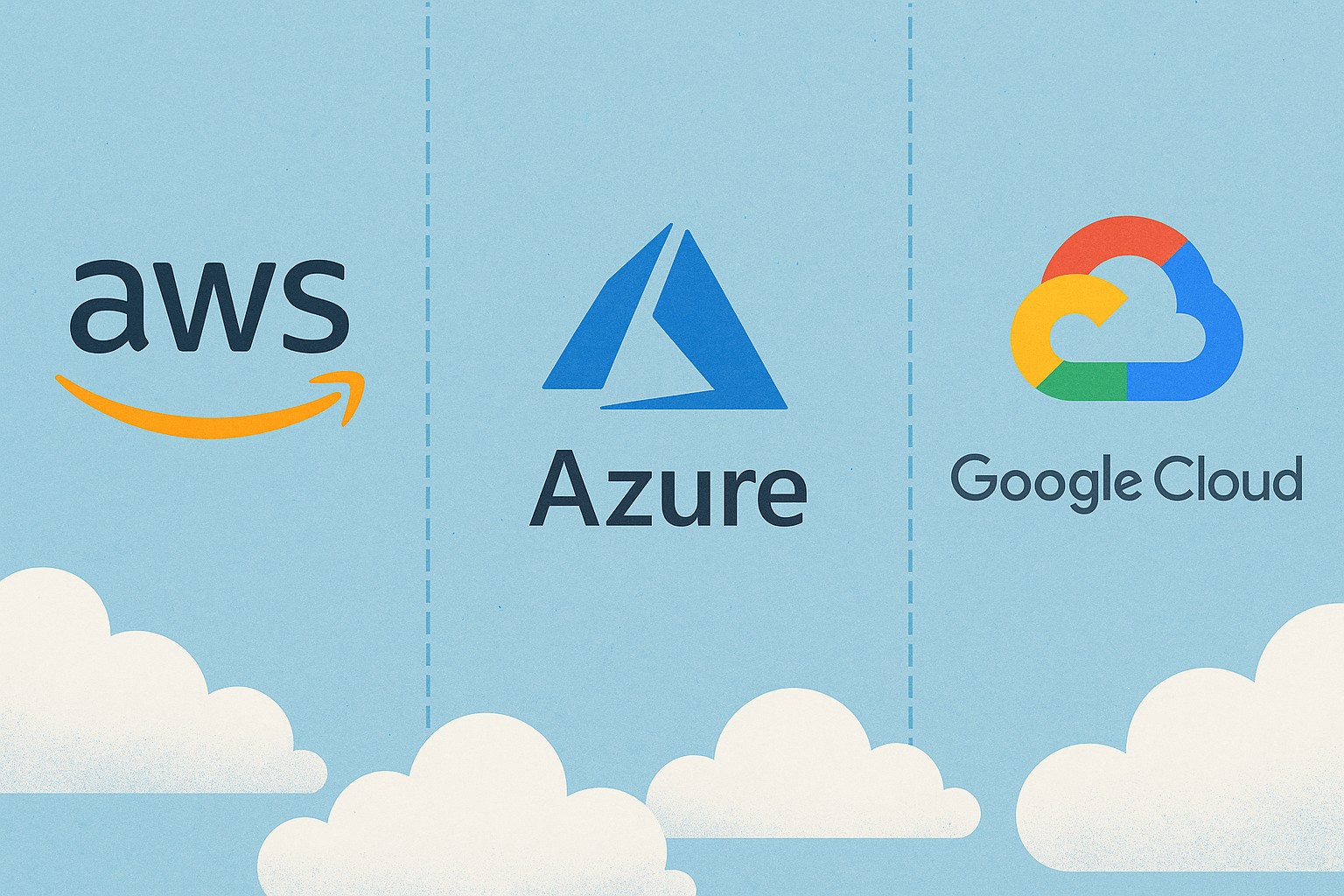
Cloud provider landscape: AWS, Azure, and Google Cloud in the enterprise context
In the modern enterprise, a cloud strategy is no longer a simple choice of a single provider but a framework for how organizations scale, innovate, and govern digital workloads. AWS, Azure, and Google Cloud each bring distinct strengths shaped by their origins, architecture, and ecosystems. AWS started the public cloud revolution and established a broad, mature catalog of services that many organizations rely on for reliability and depth. Azure has grown rapidly by leveraging Microsoft’s enterprise software footprint, delivering strong compatibility with Windows Server, Active Directory, SQL Server, and Office ecosystems, while pursuing seamless hybrid experiences. Google Cloud differentiates itself through data-centric services, cutting-edge AI and ML capabilities, and developer-friendly tooling that emphasize scalable data pipelines and modern application architectures. Together, these platforms define a market where choice can unlock different cost models, performance profiles, and strategic partnerships depending on workload and geography.
For large organizations, the real value comes from mapping workload characteristics to provider strengths, rather than chasing a single vendor’s features. AWS often wins on breadth and global reach; Azure excels when workloads rely on Microsoft stacks and hybrid constructs; Google Cloud shines for data-intensive applications and modern containerized architectures. The resulting landscape is not about declaring a winner but about designing an operating model that can orchestrate multiple clouds, manage risk, and optimize for cost, security, and speed to market. This framing supports multi-cloud strategies that reduce vendor lock-in while preserving the ability to leverage best-in-class services from each provider for specific use cases.
Core services: compute, storage, and data services across the three platforms
All three providers offer scalable compute options, resilient storage tiers, and managed data services, but the emphasis and execution differ. AWS tends to provide a vast array of instance types, expansive serverless offerings, and mature data services that cover both operational and analytical workloads. Azure emphasizes enterprise-grade integration, hybrid capabilities, and a consistent set of governance tools across its compute, storage, and database services. Google Cloud concentrates on data processing, analytics, and containerization, delivering strong performance in data warehouses, real-time analytics, and AI-enabled workloads. When selecting services, organizations should assess not only raw capability but also operational patterns, such as deployment velocity, reliability SLAs, and the ease of integrating with existing on-premises environments or SaaS ecosystems.
The following table highlights representative services across each platform and notes the tradeoffs that commonly influence architectural decisions. It is not an exhaustive catalog, but it captures the core services that most teams reference when designing cloud-native or cloud-adjacent architectures.
| Domain | AWS | Azure | Google Cloud | Notes |
|---|---|---|---|---|
| Compute | EC2 (Elastic Compute Cloud) | Azure Virtual Machines | Compute Engine | All offer broad instance families; consider spot/preemptible options for cost optimization. |
| Storage | S3 (Simple Storage Service) | Blob Storage | Cloud Storage | Durability and latency profiles vary; evaluate lifecycle policies and multi-region replication. |
| Networking | VPC, Direct Connect | Virtual Network, ExpressRoute | Virtual Private Cloud, Interconnect | Private connectivity options are central to hybrid and data sovereignty strategies. |
| Database | RDS, DynamoDB | SQL Database, Cosmos DB | Cloud SQL, Spanner | Managed databases span OLTP, OLAP, and globally distributed needs; choose consistency models accordingly. |
| Serverless | Lambda | Functions | Cloud Functions | Event-driven architectures are well-supported, with different pricing and cold-start characteristics. |
| Analytics | Redshift | Synapse Analytics | BigQuery | Big data workloads often favor the most mature managed analytics platform for the workload type. |
| Containers | EKS (with Kubernetes) | AKS (Azure Kubernetes Service) | GKE (Google Kubernetes Engine) | All three support Kubernetes at scale; consider ecosystem integrations and regional availability. |
Networking, security, and compliance considerations
Effective cloud adoption hinges on networking, identity, data protection, and compliance. Each provider offers a set of intertwined concepts, such as virtual networks, private connectivity, identity and access management, encryption, and security controls that map to common enterprise requirements. A robust strategy leverages consistent policies across providers or a well-defined multi-cloud security model to avoid drift and reduce risk. While specifics differ, the core principles remain the same: isolate sensitive resources, enforce least privilege, protect data in transit and at rest, and continuously monitor for anomalies.
In practice, enterprises often start with core identity and access management (IAM) baselines, then layer on specialized controls such as key management, network segmentation, and threat protection. Private connectivity options—such as AWS PrivateLink, Azure Private Link, and Google Cloud Private Service Connect—enable private access to managed services and internal resources, reducing exposure to the public Internet. Compliance programs and certifications (for example, SOC 2, ISO 27001, PCI DSS) are foundations for audits and governance, and many cloud workloads require region-specific controls and data residency considerations. Organizations should map regulatory requirements to the platform’s capabilities, ensuring that controls such as encryption keys, access logs, and audit trails are centrally visible and auditable across clouds.
- Identity and access management: centralized IAM policies, role-based access control, and federated authentication across services.
- Key management and encryption: customer-managed keys, envelope encryption, and integrated hardware security modules where required.
- Network security: segmentation, security groups, firewall rules, private connectivity, and threat detection.
- Governance and compliance: policy-as-code, continuous compliance checks, and standardized reporting across environments.
Pricing models, cost management, and total cost of ownership
Pricing in the hyperscale cloud is a conversation about pay-as-you-go flexibility, long-term commitments, and the total cost of ownership across the software, labor, and operational overhead required to run workloads. Each provider offers a mix of on-demand pricing, savings mechanisms, and pricing optimization tools. AWS emphasizes broad usage-based pricing with options like Reserved Instances and Savings Plans that incentivize long-term commitment. Azure positions itself with enterprise-friendly constructs like Reserved VM instances and capacity commitments alongside hybrid benefits for Windows Server and SQL Server licenses. Google Cloud highlights sustained-use discounts and committed-use contracts, along with a strong focus on predictable pricing for analytics workloads and data services. For most organizations, the most meaningful cost governance combines a workload-centric plan (which services are required), a regional strategy (data locality and bandwidth costs), and a governance policy that enforces budgets, alerts, and optimization opportunities.
To illustrate cost planning, consider a representative data-processing workload spanning compute, storage, and egress. The exact numbers vary by region, reserved-use commitments, and workload intensity, but the approach remains consistent: estimate baseline on-demand usage, identify opportunities to apply sustained-use or reserved contracts, and account for data transfer and storage lifecycle costs. The following example demonstrates a simple cost-binding logic in a pseudo-notation to guide discussions with cloud financial analysts.
cost = sum([
  compute_hours_per_month * hourly_rate(provider, instance_type, region),
  storage_gb_per_month * storage_rate(provider, storage_class, region),
  data_out_gb_per_month * egress_rate(provider, region)
])
if use_reserved_or_savings_plan:
  cost *= (1 - discount_rate(provider, plan_type))
Beyond raw pricing, successful cost management requires continuous optimization: rightsizing instances, scheduling non-production workloads, leveraging auto-scaling, and consolidating storage with lifecycle rules. Cross-cloud cost visibility tools and governance dashboards help leadership compare spend across providers and align cloud expenditures with business outcomes. A disciplined approach to cost also considers hidden expenses such as data transfer between regions, cross-cloud data replication, and the additional engineering effort required to maintain multi-cloud automation and security pipelines.
Adoption strategies and ecosystem alignment
Adopting cloud platforms effectively requires more than migrating workloads; it demands alignment with organizational capabilities, partner ecosystems, and application portfolios. Enterprises often start with a pragmatic plan that prototypes a few critical workloads, demonstrates value, and then expands to broader adoption with standardized patterns. This approach minimizes risk, accelerates learning, and yields a predictable path to modernization. A multi-cloud pattern—where each provider is used for workloads that align with its strengths—can yield superior outcomes when governance, data management, and security policies are consistent across environments.
Successful organizations also invest in the development of internal competencies, including cloud platform teams, platform engineering, and shared services for security, identity, and cost management. An ecosystem-aware strategy considers the availability of partner software, managed services, and system integrators with deep expertise across AWS, Azure, and Google Cloud. The result is a more resilient operating model that can absorb changes in market conditions, respond to regulatory shifts, and sustain a continuous improvement loop for performance, reliability, and cost efficiency.
“Cloud strategy is less about which single platform to choose and more about orchestrating capabilities across platforms to deliver outcomes with the right balance of risk, speed, and cost.”
Choosing a cloud strategy for your organization
When selecting a cloud strategy, organizations should anchor decisions in business outcomes, risk tolerance, and the current skill base of the team. A well-framed strategy compares provider strengths against workload requirements, such as latency-sensitive applications, data engineering, AI workloads, or enterprise software integration. It also considers the organization’s appetite for hybrid and multi-cloud approaches, regulatory constraints, and the availability of internal champions who can guide governance and adoption at scale. The goal is to establish a replicable pattern for design, development, deployment, and support that remains flexible as business needs evolve.
In practice, many teams adopt a phased approach: begin with a narrowly scoped pilot in one provider to establish standards; expand into adjacent services across the other platforms as capabilities mature; and institutionalize cost, security, and governance controls to reduce drift. The result is a pragmatic architecture that combines the best features of each platform with a cohesive operating model, enabling faster delivery, better risk management, and clearer alignment with strategic objectives.
- Define business outcomes and workload characteristics to determine candidate workloads for each provider.
- Assess existing on-prem investments, team skills, and provider-specific migration pathways.
- Map workloads to platform strengths and design consistent governance and security baselines.
- Plan migrations with a phased approach, including test workloads and a rollback strategy.
- Establish ongoing optimization through cost controls, performance monitoring, and continuous improvement cycles.
FAQ
What are the key differentiators among AWS, Azure, and Google Cloud?
AWS offers breadth and depth across a wide service catalog, a mature developer and partner ecosystem, and a global footprint that enables highly scalable architectures. Azure stands out for enterprise integration with Microsoft software, strong hybrid capabilities, and governance tooling that aligns with existing Windows-based environments. Google Cloud emphasizes data analytics, machine learning, container orchestration with Kubernetes, and developer productivity in data-driven workflows. The best choice depends on workload characteristics, organizational skill sets, and the desired balance between enterprise integration, data capabilities, and cloud-native tooling.
Which cloud is best for enterprise workloads tightly integrated with Microsoft products?
Azure is typically the strongest candidate for workloads that rely on Windows Server, Active Directory, SQL Server, and Office 365, due to native integrations, licensing advantages, and consistent governance models across hybrid environments. Enterprises that already invest heavily in Microsoft licenses may benefit from bundled economics and the ability to extend on-premises identities and services into the cloud with familiar management interfaces.
How should an organization approach multi-cloud vs single-cloud strategy?
A multi-cloud strategy can reduce vendor risk and enable workload-specific optimization, but it introduces complexity in governance, security, and data movement. A careful approach includes standardized security baselines, centralized identity management, consistent cost-tracking, and a clear policy for data residency and interoperability. A phased, outcome-driven plan with measurable milestones helps balance the benefits of multiple clouds against the overhead of operating across platforms.
What considerations exist for migration planning?
Migration planning should start with an inventory of workloads, dependencies, and data gravity, followed by a decision framework that weighs lift-and-shift versus modernization. Phase workloads to minimize risk, adopt platform-native patterns where beneficial, and leverage migration tools, templates, and accelerator programs from each provider. Establish a governance model for rollback, security, and ongoing optimization to sustain value after migration.
How do pricing and cost management differ across providers?
All three providers offer on-demand pricing with discounts for long-term commitments, but the details differ. AWS emphasizes Savings Plans and Reserved Instances with a broad array of region-specific rates; Azure emphasizes Reserved VM instances and licensing benefits tied to Windows and SQL Server; Google Cloud emphasizes sustained-use discounts and committed-use contracts, often with transparent, usage-based pricing tied to data-intensive workloads. Effective cost management relies on workload-level budgeting, cross-cloud visibility, and automated governance to enforce budgets and optimize resource allocation.
What compliance certifications are commonly supported?
Commonly supported frameworks across the major providers include ISO 27001, SOC 1/2/3, PCI DSS, and HIPAA/HITECH where applicable. Many regions also offer FedRAMP-authorized services or equivalents, as well as data residency controls and regional data processing safeguards. Compliance coverage often varies by service and region, so organizations should map their regulatory requirements to the provider’s regional certifications and ensure that the necessary evidence can be retrieved for audits.