Now Reading: Blockchain in Supply Chain Management
-
01
Blockchain in Supply Chain Management

Introduction
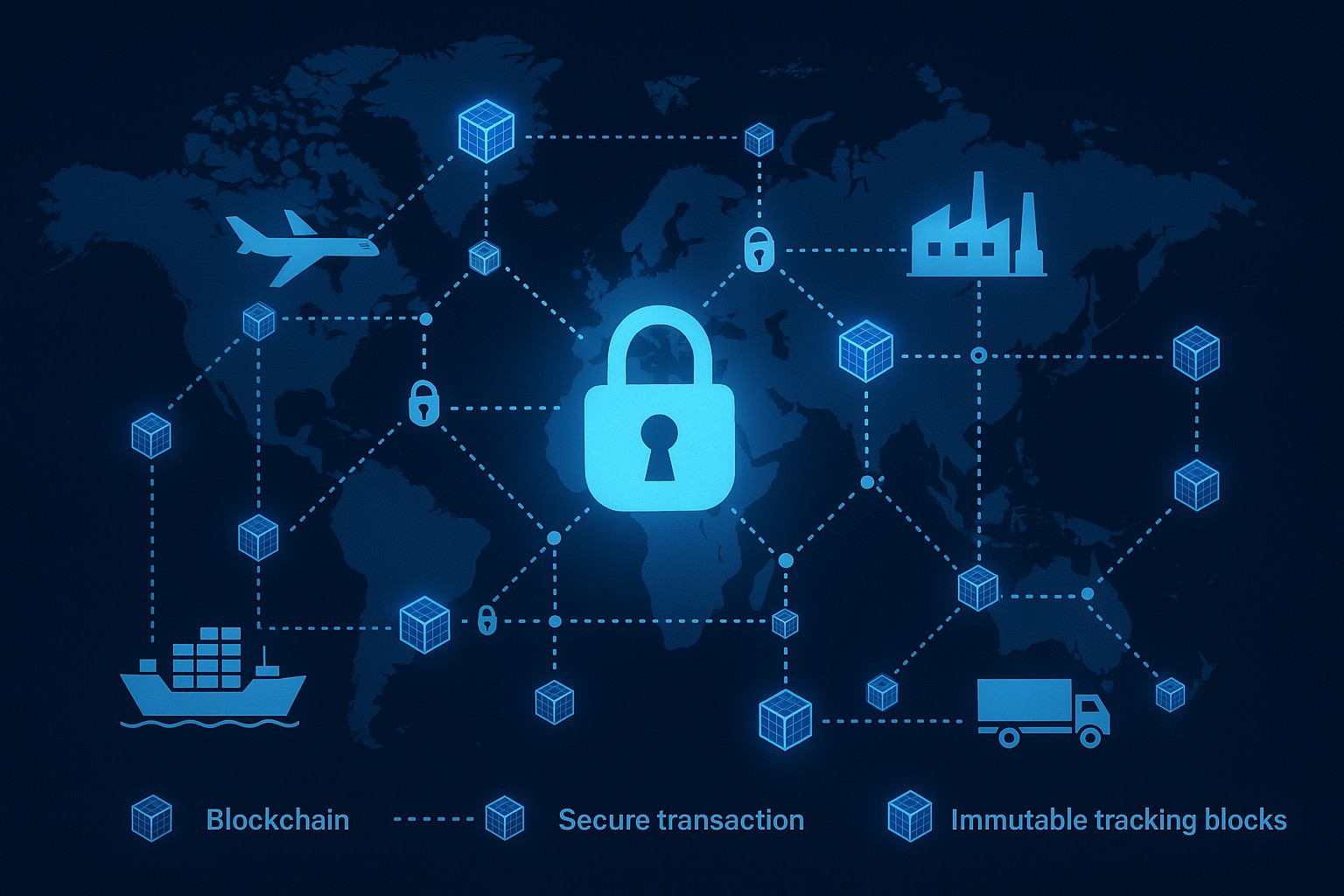
Blockchain technology enables a shared, tamper-evident ledger that multiple organizations can trust without a central authority. In supply chain management, this translates into a single source of truth for events such as production, shipment, customs clearance, and delivery. The ledger records each step with timestamped entries and cryptographic proofs, making it easier to reconstruct the lifecycle of a product even when participants operate across borders. For stakeholders ranging from farmers and manufacturers to logistics providers and retailers, this transparency directly supports better coordination and risk management.
The business value is substantial: improved transparency across partners, enhanced traceability for recalls and compliance, reduced reconciliation costs, and greater trust among suppliers, manufacturers, logistics providers, retailers, and customers. While the technology does not eliminate all friction, it aligns incentives around data integrity and automates processes through smart contracts, enabling faster decision-making and fewer manual handoffs in complex networks.
How blockchain works in supply chain management
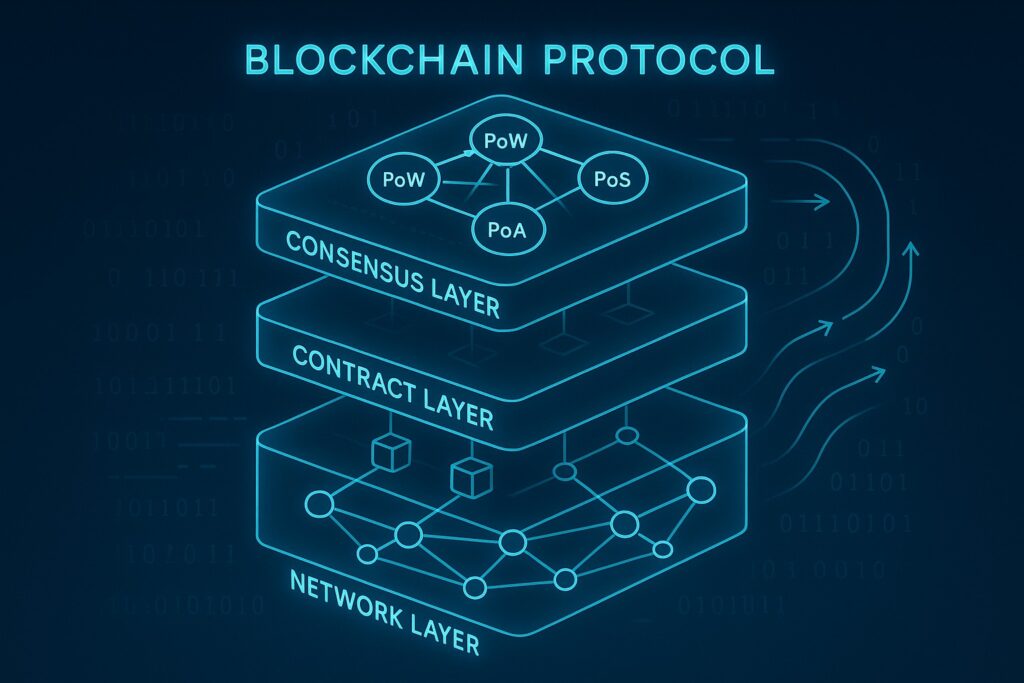
A blockchain-based SCM platform typically comprises multiple layers: a data layer that stores verifiable event records, a network and consensus layer that ensures agreement on the order of events, and an application layer that enables business processes and integration with existing enterprise systems. The data model is designed to capture provenance-related events, ownership transfers, and quality attestations, often using lightweight, append-only records that reference larger documents stored off-chain. This architecture makes it possible to verify the origin and movement of goods without exposing every detail to every participant.
Data privacy and access control are managed through permissioned networks, selective disclosure, and privacy-preserving techniques. Organizations can share essential data while keeping sensitive information restricted to authorized participants. In practice, on-chain records store essential metadata and cryptographic proofs, while larger files—such as certificates, inspection reports, and sensor data—reside off-chain and are linked via hash pointers. Smart contracts can automate routine actions, such as triggering payments upon delivery or initiating recalls when certain conditions are met. A simple transaction example illustrates the flow: once a batch of goods is produced, a contract records the producer, product identifiers, quantity, and a timestamp, then updates the downstream party on the state of the order as it moves through the chain.
{
  "txn_id": "TXN-20250101-1234",
  "from": "Supplier A",
  "to": "Manufacturer B",
  "goods": "Wood Pellets Batch 987",
  "quantity": 1000,
  "unit": "kg",
  "timestamp": "2025-01-02T09:30:00Z",
  "status": "Produced"
}
Use cases and examples
Real-world use cases cover the full lifecycle of goods, from raw material sourcing to final delivery. Blockchain enables partners to interact with a shared, auditable history, reducing disputes and accelerating operations in volatile environments such as global logistics, perishable goods, and regulated industries. By anchoring key events on a tamper-evident ledger, stakeholders gain visibility into where a product originated, where it has been, and under what conditions it was stored or processed.
- Track goods from origin to store, ensuring an auditable path and reducing the risk of mislabeling or misrouting.
- Verify provenance and authenticity for high-value or sensitive items, supporting compliance with regulatory and customer requirements.
- Combat counterfeit products by capturing immutable records of ownership, transfers, and inspection results across the network.
- Automate processes with smart contracts, triggering payments, quality checks, or recalls when predefined events occur.
Beyond individual items, organizations leverage blockchain to coordinate cold-chain management, textile traceability, automotive parts provenance, and agricultural commodities tracking. These applications often integrate sensors, IoT devices, and ERP systems to feed data into the ledger while maintaining data privacy and compliance with industry standards.
Architecture, standards, and protocol choices
In practice, an SCM blockchain solution comprises four layers: the data layer (immutable ledger of events and attestations), the network and consensus layer (governing how blocks are produced and agreed upon), the application layer (business logic, smart contracts, and APIs), and the integration layer (connections to ERP, WMS, TMS, and IoT platforms). A careful design balances performance, scalability, and privacy, while preserving the integrity of the record. Data models often rely on event-centric design, where each event captures essential attributes such as location, time, participant, and status, with references to external documents stored off-chain.
Choosing between public, private, or consortium networks significantly affects governance, access control, throughput, and data visibility. Public networks maximize decentralization but require robust privacy controls; private networks provide higher throughput and tighter policy enforcement but rely on trusted participants; consortium networks strike a balance, with governance shared among a defined set of organizations. Interoperability is enhanced through standardized data formats, APIs, and governance agreements, enabling seamless data exchange across different systems and jurisdictions. A compact comparison table below highlights some common characteristics and trade-offs.
| Aspect | Characteristics |
|---|---|
| Consensus mechanism | PBFT-like protocols, Proof of Authority, or federated consensus to suit permissioned networks |
| Privacy controls | Selective disclosure, private data collections, and off-chain storage with cryptographic proofs |
| Governance model | Defined by consortium agreements or corporate policies, with upgrade paths and policy changes |
| Interoperability | Standardized data schemas (e.g., GS1/EPCIS), APIs, and cross-chain messaging where applicable |
Implementation considerations and governance models
Effective implementation begins with a clear governance framework and a well-scoped data-sharing policy. Organizations should define who can participate, what data is shared, how access is controlled, and how changes to the network are authorized. Aligning governance with legal and regulatory requirements helps prevent disputes and ensures sustainable collaboration across partners. Technical decisions, such as the choice between public or permissioned networks and the selection of a consensus mechanism, should reflect the desired balance between transparency, privacy, and performance.
Actionable steps guide a practical rollout from pilot to scale. The following sequence provides a structured approach to governance and execution:
- Define governance and data-access controls that reflect trust boundaries and partner roles.
- Select the network type (public, consortium, or private) and the consensus mechanism appropriate for the use case.
- Design the data model and privacy controls, including what data remains off-chain and how proofs are generated.
- Plan integration with ERP, WMS, and transport management systems, plus change management to align processes with the new workflow.
Security, privacy, and standards
A robust security program for an SCM blockchain must address threat modeling, key management, access control, and incident response. Regular audits of smart contracts, secure key storage, and formal verification for critical logic help reduce risk. Privacy considerations are paramount in multi-party networks; mechanisms such as role-based access, data masking, and selective disclosure ensure that sensitive information is only exposed to authorized participants, while still providing verifiable proofs on the ledger. Compliance with data protection regulations and industry-specific standards is essential for long-term viability.
Standards and governance align with interoperability objectives. Adopting common data formats, event schemas, and API conventions facilitates integration and cross-organization workflows. Industry groups and regulatory bodies increasingly publish guidance on traceability, product identifiers, and data sharing terms that can be incorporated into network policies. By combining secure engineering practices with agreed-upon standards, organizations can realize reliable, scalable, and legally sound blockchain-enabled supply chains.
ROI, risk, and roadmap
Quantifying return on investment for blockchain in supply chains involves assessing reductions in reconciliation costs, improved recall response times, lower shrinkage, and enhanced customer trust. While initial investments cover platform selection, integration with existing systems, and organizational change management, long-term savings accrue from streamlined audits, faster issue resolution, and automated asset tracing. A careful business case also accounts for ongoing governance and maintenance costs, as well as potential disruption during transition periods.
Effective risk management requires a staged roadmap that accommodates learning curves and stakeholder alignment. Early pilots focus on a narrow scope with measurable outcomes, followed by phased scale-up that adds more partners and processes. The roadmap should incorporate standardization efforts, data-sharing agreements, and performance targets for throughput, latency, and data privacy. By maintaining a clear link between business objectives and technical milestones, organizations can manage expectations and realize tangible value over time.
FAQ
What is blockchain’s primary benefit in supply chain management?
The primary benefit is immutable, auditable provenance across a multi-party network, creating a single source of truth that reduces fraud, improves recall efficiency, and enhances trust among suppliers, manufacturers, logistics providers, and retailers.
How does data privacy work when partnerships are involved?
Data privacy is achieved through permissioned access, selective disclosure, and off-chain storage for sensitive documents, with cryptographic proofs on-chain to verify integrity without exposing private information to all participants.
What does a typical implementation timeline look like?
Timelines vary by scope, but common phases include discovery and requirements, pilot deployment, partner onboarding, broader-scale rollout, and ongoing optimization, often spanning 6 to 24 months depending on complexity and regulatory considerations.
What standards should be considered?
Standards around data formats (e.g., GS1/EPCIS), API interoperability, identity and access management, and governance agreements are important to ensure cross-organization compatibility and regulatory compliance.
Is blockchain a replacement for existing ERP systems?
No. Blockchain is best viewed as a complementary layer that enhances data integrity, transparency, and collaboration across the supply chain, while ERP and other enterprise systems continue to manage internal processes and transactional workflows.