Now Reading: Cloud Migration Best Practices: Smooth Transition Strategies
-
01
Cloud Migration Best Practices: Smooth Transition Strategies

Planning and governance
Effective cloud migration begins with clear business outcomes, executive sponsorship, and a formal governance model. Establish a dedicated migration program with a cross-functional team, a defined charter, and a living backlog that links IT activities to strategic objectives. The governance framework should spell out decision rights, budgeting approaches, risk tolerances, and escalation paths so that stakeholders across the organization can align on priorities and commitments.
A strong planning discipline reduces rework and accelerates value realization. From the outset, secure a sponsor with accountability for outcomes, assemble a steering committee, and define cadence for reviews, cost reporting, and risk assessment. Document acceptance criteria for each workload, establish migration milestones, and couple them to measurable business metrics such as time-to-market, resilience targets, and cost-to-serve. In addition, build a data-driven plan that accounts for data classification, regulatory obligations, and disaster recovery requirements. The goal is to create a reproducible, auditable process that can scale as you add workloads and cloud destinations.
- Align with business strategy and identify measurable outcomes for cloud migration.
- Inventory applications, data, and dependencies to determine migration patterns and sequencing.
- Define the target operating model, including roles, responsibilities, and governance artifacts.
- Choose a primary cloud strategy (rehost, refactor, replatform, or a hybrid approach) for each workload.
- Establish a migration backlog with prioritized waves, milestones, and exit criteria.
- Define budgeting, cost governance, and financial controls that reflect projected run and change costs in the cloud.
- Set success metrics, reporting cadence, and risk thresholds for ongoing evaluation.
Architecture and design considerations
Cloud architecture choices drive performance, reliability, and security. Start by identifying suitable patterns for compute, storage, networking, and data services, while accommodating multi-cloud or hybrid configurations if required by business needs. Consider how to separate concerns through landing zones, organizational units, and policy boundaries to enforce guardrails without constraining innovation. Design for resilience by leveraging availability zones, automated failover, and distributed data replication, while planning for cost optimization through right-sizing and scope-lenced resource usage.
Understanding data gravity and latency implications is essential when selecting cloud destinations and data placement. Align architectural choices with regulatory constraints, operational constraints, and the need for rapid disaster recovery. Define standard reference architectures for common workloads (web apps, batch processing, analytics, and data platforms) to promote reuse and consistency across teams. Document nonfunctional requirements—security, compliance, performance, and observability—so that engineers can implement capabilities early rather than as an afterthought. A disciplined approach to architecture reduces technical debt and accelerates onboarding for new teams joining the migration program.
Migration strategy and phasing
A wave-based migration strategy helps manage risk, minimize disruption, and deliver incremental value. Begin with an assessment phase to categorize workloads by complexity, criticality, data volume, and interdependencies. Use this assessment to define migration waves that balance business impact with technical feasibility, aiming to migrate low-risk workloads first to build confidence and learn from early iterations. Each wave should culminate in a validated production tenancy, a clear cutover plan, and a runbook for post-migration operations.
The execution plan should include data transfer strategies, cutover sequencing, and testing protocols to confirm functionality, performance, and security controls in the new environment. Plan for parallel runs where feasible to compare results against the on-premises baseline and to gather real-world feedback from users. Continuous refinement based on lessons learned will help you adjust sequencing, resource allocation, and downtime estimates for subsequent waves. Align migration timing with business cycles to avoid peak periods and minimize customer impact.
- Assess and categorize workloads by risk, complexity, and data sensitivity to determine sequencing.
- Prepare landing zones and reference architectures to standardize environments before migration.
- Migrate a subset of workloads in an initial pilot wave to validate processes and tooling.
- Perform coordinated data transfer, cutover plans, and rollback procedures for each wave.
- Validate functionality, performance, security controls, and cost impact before progressing to the next wave.
Security, compliance, and governance automation steps
Security and compliance must be embedded into every stage of the migration, not treated as an afterthought. Establish a security-by-design mindset that scales across multi-cloud footprints, and implement controls that are consistent, repeatable, and auditable. This includes identity management, encryption at rest and in transit, network segmentation, and robust logging and monitoring. Documentation, policy enforcement, and automated testing are essential to reduce drift and human error as environments evolve.
A practical approach is to automate multicloud security steps, enforce policy as code, and integrate security testing into CI/CD pipelines. Build security baselines into your landing zones and ensure continuous compliance with internal standards and external regulations. Deeply integrate vulnerability management, configuration drift detection, and incident response playbooks into routines that run automatically or with minimal human intervention. Automation reduces the mean time to detect and respond to incidents while improving the predictability of security outcomes across clouds.
- Implement identity and access management with least-privilege defaults across all clouds.
- Enforce encryption, key management, and certificate lifecycle consistently across environments.
- Adopt policy-as-code and guardrails that prevent noncompliant deployments.
- Automate configuration and vulnerability scanning integrated into CI/CD pipelines.
- Establish incident response playbooks, runbooks, and simulated drills to reduce dwell time.
Operational excellence and performance optimization
Productivity and reliability rise when operations are standardized, observable, and repeatable. Invest in the people, processes, and tooling that enable proactive monitoring, automated remediation, and rapid recovery. Define incident management protocols, service-level objectives, and runbooks that empower on-call engineers to make informed decisions quickly. As workloads migrate, continuously assess performance against modern cloud-native optimization patterns, such as autoscaling, caching, and data locality, while balancing cost and resilience.
A mature operating model emphasizes observability, with traces, metrics, and logs that enable end-to-end visibility across hybrid or multi-cloud environments. Adopt standardized instrumentation for all services and ensure that dashboards align with business priorities. Routinely review cost and performance data to identify waste and optimization opportunities, then translate findings into concrete actions like right-sizing instances, re-architecting bottlenecks, or moving to serverless or managed services where appropriate. The objective is to deliver reliable services at predictable costs while maintaining agility for evolving workloads.
Data management and integration
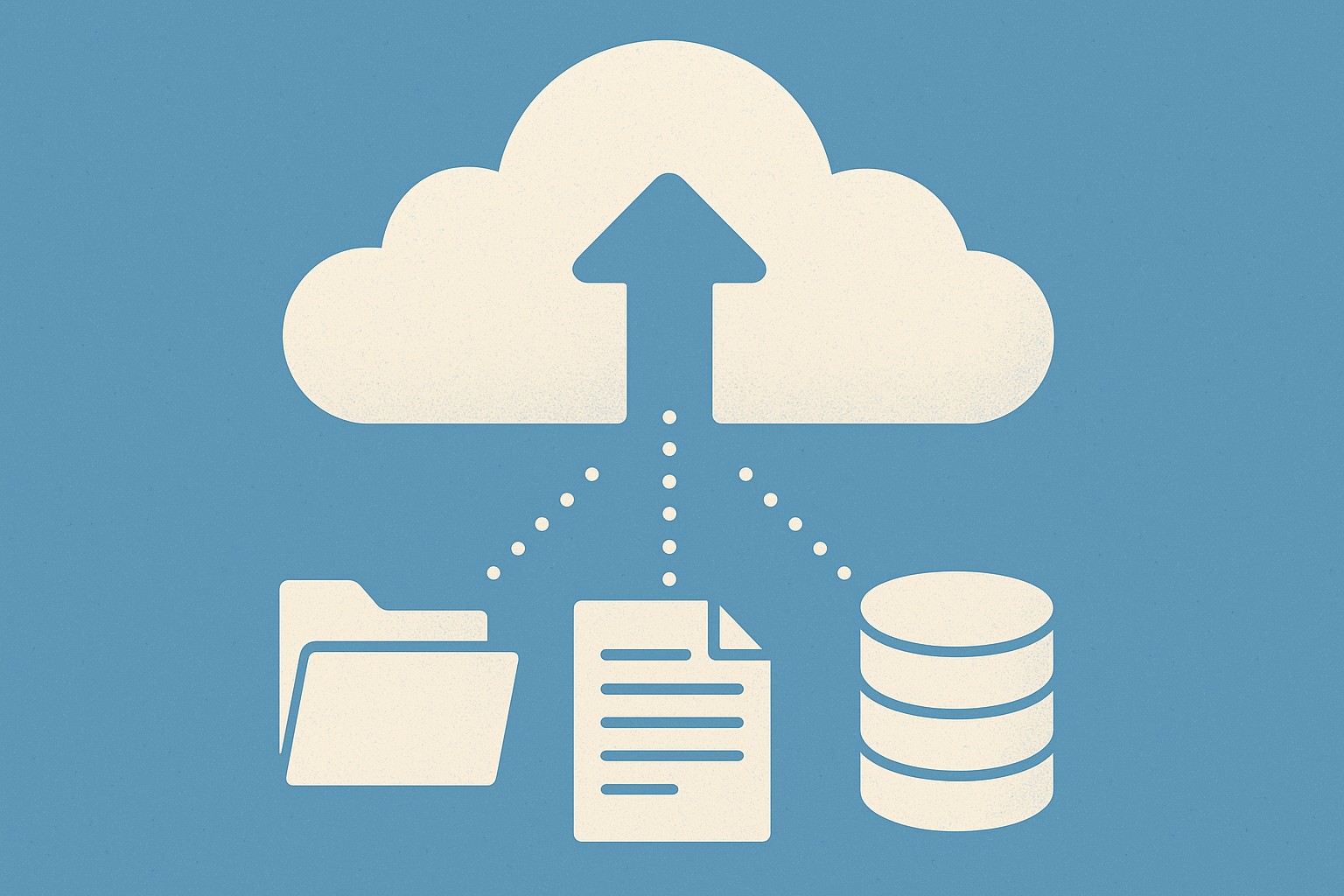
Data migration and ongoing integration require careful planning around data quality, lineage, and consistency. Establish data governance practices that define ownership, lifecycle management, privacy controls, and retention policies. When migrating data, prioritize critical datasets first, ensure referential integrity, and implement validation checks to confirm that data remains accurate and complete in the target environment. Consider strategies for data synchronization, replication, and eventual consistency that align with business requirements and regulatory constraints.
Design data pipelines with modularity and portability in mind, using standardized exchange formats, message queues, and data catalogs. During transition, maintain parallel data stores where feasible to allow users to compare results and ensure continuity of operations. Establish clear rollback and reconciliation procedures to resolve discrepancies between legacy and cloud data stores. As you scale, invest in metadata management and lineage tracing to improve data discoverability, governance, and trust across teams.
Risk management and pitfalls
Cloud migrations carry risk—technical, organizational, and financial. Proactively identify potential failure modes, quantify their impact, and implement mitigations before problems materialize. Common pitfalls include underestimating data gravity, incomplete dependency mapping, and insufficient executive sponsorship. Build risk registers with owners, trigger thresholds, and regular review cadences to keep risk exposure within tolerable bounds. Incorporate change management plans that address cultural resistance, skill gaps, and training needs, ensuring that people are prepared to operate in the new environment.
To reduce risk, implement iterative validation at each migration stage, maintain rollback options, and conduct security and compliance checks early and often. Engage business users in testing, solicit feedback on performance and usability, and adjust timelines or scope as necessary. Finally, maintain a focus on long-term sustainability—avoid single-vendor lock-in where possible, diversify tooling where it makes sense, and prepare for ongoing modernization beyond the initial migration project.
Organizational change management and training
A successful migration is as much about people as it is about technology. Prepare teams for new ways of working by delivering clear communication, role clarity, and hands-on training. Create a learning plan that covers cloud fundamentals, security practices, operational runbooks, and incident response. Encourage communities of practice, mentorship, and knowledge sharing to accelerate adoption and reduce friction during the transition. Leadership should model the new behaviors, celebrate quick wins, and maintain a transparent backlog of improvements driven by user feedback.
Invest in skill development that aligns with the target platforms and services, and provide ongoing coaching for operators, developers, and security professionals. Establish a culture of continuous improvement where teams routinely review incidents, post-mortems, and performance metrics to derive actionable insights. Emphasize cross-team collaboration and documentation to preserve institutional knowledge and ensure that capabilities persist beyond individual project cycles.
FAQ
What is the most important first step in cloud migration?
The most important first step is to establish a clear business-driven charter for the migration program, with executive sponsorship, defined success metrics, and an initial governance model. This foundation guides decisions about scope, sequencing, budgeting, and risk management, ensuring that technical efforts are aligned with strategic outcomes from day one.
How do you choose between rehost, replatform, and refactor?
Selection among rehost, replatform, and refactor depends on workload characteristics, expected benefits, and constraints. Rehost (lift-and-shift) is quick and minimizes risk but may forgo cloud-native advantages. Replatform optimizes for cloud capabilities with modest changes, while refactor delivers the greatest long-term value by redesigning for scalability and resilience. A rational approach is to categorize workloads by complexity, data requirements, and expected performance gains, then apply the most appropriate pattern for each workload within a stated timeline.
How can you ensure data security during migration?
Data security during migration is achieved through a combination of encryption, access controls, secure transfer channels, and continuous monitoring. Enforce least-privilege identities, protect data in transit with TLS, encrypt data at rest with managed keys, and use secure, auditable pipelines for data movement. Complement technical controls with governance processes, incident response readiness, and regular validation of data integrity across source and target environments.
What metrics indicate migration success?
Key indicators of migration success include time-to-value improvements, reduced downtime during cutovers, achieved service levels in the cloud, cost predictability, and improved security posture. Track metrics such as migration cadence, defect rates in the migration backlog, data accuracy post-migration, and user satisfaction with performance and reliability to assess progress and guide continuous improvement.