Now Reading: Digital Twins: How Virtual Models Transform Industries
-
01
Digital Twins: How Virtual Models Transform Industries


Definition and Scope of Digital Twins
Digital twins are living digital replicas of physical assets, processes, or systems. They ingest data from sensors, historical records, and external feeds to mirror real-world behavior. The core idea is to create a digital counterpart that can be observed, tested, and tuned without risking the actual object. As the Internet of Things (IoT) expands, devices generate streams of telemetry that feed these models in real time, enabling continuous synchronization between the physical and digital worlds. In modern industry, digital twins extend beyond a single asset to encompass entire production lines, factories, networks, or city ecosystems, providing a holistic view of performance and resilience.
Digital twins can be classified as asset twins, system twins, or process twins, depending on the scale and purpose. Asset twins track a single physical item; system twins capture the behavior of a network of components; process twins model end-to-end workflows and supply chains. The value emerges from closed-loop learning: simulations inform decisions, simulated outcomes guide changes in the real world, and new data updates the model to improve accuracy over time. This loop is reinforced by AI, analytics, and advanced visualization, which translate complex signals into actionable insights for operators, engineers, and executives who must balance reliability, cost, and speed to market.
Core Components of Digital Twin Systems
At a high level, a digital twin ecosystem combines data architecture, simulation capabilities, and user interfaces in a way that supports decision making. The data model must accommodate time-series streams, static properties, and context from enterprise systems. Real-time data ingestion, from sensors and connected devices, keeps the twin in sync with reality. The analytics and simulation layer runs scenarios, forecasts performance, and tests optimization strategies without disrupting operations. An integration layer exposes services to applications and external partners, while a visualization layer helps stakeholders explore results quickly and intuitively. Security, governance, and data quality are cross-cutting concerns that enable trust and compliance across the lifecycle.
- Data Model and Standards
- Real-Time Data Ingestion and Edge Connectivity
- Simulation, Analytics, and AI
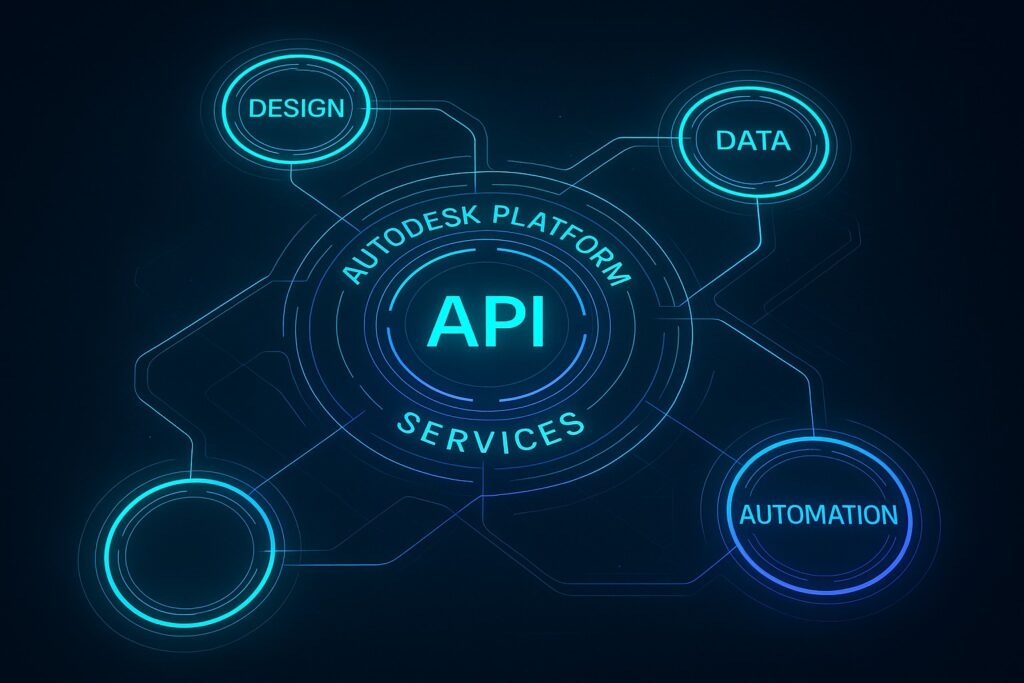
- APIs, Integration, and Interoperability
- Visualization, Dashboards, and Decision Support
- Governance, Compliance, and Security
- Data Quality, Provenance, and Lineage
In practice, building an effective twin starts with a clear objective, then selecting the right data, models, and interfaces. The architecture should support incremental capability, starting small with a pilot asset or process before expanding to broader scope. Teams typically coordinate across domain experts, data science, IT, and operations to ensure the twin aligns with real-world constraints and delivers measurable value.
How Digital Twins Transform Industries
Digital twins unlock operational excellence by enabling proactive maintenance, optimized production, and flexible planning. Real-time visibility into performance enables rapid detection of anomalies, reduces unplanned downtime, and allows operators to test changes safely in a simulated environment before committing resources. When used for design and engineering, twins enable rapid prototyping, tolerance analysis, and what-if studies that shorten development cycles and reduce risk, ultimately translating technical capability into competitive advantage. As organizations seek to digitize end-to-end value chains, the twin becomes a central tool for aligning engineering intent with business outcomes.
- Predictive maintenance and reliability
- Runtime optimization of throughput, energy use, and quality
- Scenario planning for supply chains and network resilience
- Product development acceleration and virtual commissioning
- Safety, risk modeling, and regulatory compliance
- Urban planning and smart city operations
Across industries, the same underlying capabilities translate into tangible outcomes: lower operating costs, higher asset availability, faster time-to-value for new products, and better alignment between engineering goals and business results. The emphasis is on turning data into trusted, actionable insight that can inform daily decisions and long-term strategy, while maintaining an explicit view of risk, governance, and return on investment.
Use Cases Across Sectors
In manufacturing, digital twins optimize equipment health, calibrate production lines for changing demand, and enable digital thread traceability through the lifecycle of a product. In energy, they model grid dynamics, forecast demand, and support asset optimization across wind, solar, and storage fleets. In healthcare, twins simulate patient pathways, equipment utilization, and hospital processes to improve outcomes and reduce wait times. In smart cities, they model traffic, utilities, and emergency response to improve service levels and resilience. These sector examples illustrate a common pattern: a single integrated model that connects sensor data, operational data, and business data to produce insights that matter to people who make decisions.
The maturity of a digital twin depends on data quality, the fidelity of simulations, the speed of data flows, and the governance frameworks that ensure safe, ethical, and scalable use. As organizations adopt more sophisticated models, they increasingly rely on a layered approach that blends physics-based simulations with data-driven analytics, enabling both explainability and adaptability in decision-making processes across the enterprise.
Implementing Digital Twin Programs: Best Practices
A pragmatic approach starts with defining a focused objective and identifying a critical asset, process, or system where a digital twin can deliver early value. Establish a cross-functional team with clear roles, from data engineers to domain experts, and secure sponsorship that aligns with strategic goals. Prioritize data availability, model validity, and the ability to measure impact in business terms, such as reduced downtime, improved yield, or faster time-to-market.
- Define objectives and success metrics
- Map data sources and establish data governance
- Build a minimal viable twin for a pilot use case
- Validate the model against real-world outcomes and iterate
- Scale with architecture, governance, and change management
As you scale, keep focus on data quality, model maintenance, and the human factors that drive adoption. Invest in reusable components, robust APIs, and a culture of experimentation. Partnerships with equipment vendors, software providers, and system integrators can accelerate delivery while maintaining control over security and compliance. The payoff comes not only from operational gains but from the ability to extend digital twins into new processes and product lines, unlocking new opportunities for value creation across the organization.
Data, Security, and Governance Considerations
With data flowing from diverse sources, strong governance and security practices are essential. This includes access controls, encryption, and a defensible data catalog that records where data originated and how it is used. Data lineage helps determine trustworthiness and supports regulatory reporting. Right-size data retention, proper anonymization where required, and clear ownership to assign accountability for decisions that rely on the twin.
A governance framework should define standards for model risk, versioning, and validation, as well as procedures for incident response and auditability. Organizations should align with industry-specific requirements, such as manufacturing standards, healthcare privacy rules, and critical infrastructure regulations. Ongoing monitoring ensures that the digital twin remains accurate as equipment ages, processes evolve, and external conditions shift.
The Future of Digital Twins: Trends and IoT Advancements
The future of digital twins is closely tied to advances in AI, edge computing, and immersive visualization. As models become more capable, they will run closer to the source of data, reducing latency and enabling faster decision cycles. Interoperability standards and digital threads will allow twins to share context across multiple domains, creating more complete digital representations of operations and ecosystems. This convergence will empower operators to orchestrate complex activities with higher precision and lower frictions between planning and execution.
IoT advancements and 5G/6G connectivity will expand the scope of what can be measured and forecasted, while synthetic data and simulation acceleration will help teams test scenarios that were previously impractical. The integration of augmented reality, collaborative robots, and autonomous systems will place digital twins at the center of daily execution and strategic planning, linking the physical world with its digital counterpart in real time and enabling proactive, data-informed leadership across industries.
FAQ
What is a digital twin, and how does it differ from a simulation?
A digital twin is a living digital replica that continuously updates with real-world data from sensors, operations, and external feeds, enabling ongoing validation and optimization. A simulation, by contrast, is a static model used to explore hypothetical scenarios; it does not inherently stay in sync with the actual asset over time unless integrated with live data streams and a feedback loop.
What data sources power digital twins?
Digital twins rely on a mix of real-time sensor streams, historical operational data, maintenance records, configuration data, supply chain information, and contextual feeds from enterprise systems. The most effective twins combine high-velocity telemetry with high-quality metadata, enabling accurate state estimation and reliable forecasts.
What are common challenges when scaling digital twins?
Common challenges include data silos and interoperability gaps, data quality issues, model drift as assets age, integration with legacy systems, and managing the cost of computing and storage. Successful scale requires clear governance, reusable components, strong partnerships, and a plan for maintaining model fidelity over time.
How do digital twins drive ROI?
ROI is typically realized through reductions in downtime, improved yield, optimized energy use, faster time-to-market for new products, and better risk management. The twin enables data-driven decision making, which lowers uncertainty and speeds up execution across design, production, and maintenance processes.
What is the role of AI in digital twin forecasting?
AI enhances digital twin forecasting by learning patterns from diverse data streams, detecting subtle anomalies, and refining predictive models over time. Machine learning and physics-informed models work together to improve accuracy, enable adaptive control, and support prescriptive guidance for operations and maintenance decisions.