Now Reading: Midjourney AI: Generating Stunning Images with Deep Learning
-
01
Midjourney AI: Generating Stunning Images with Deep Learning

Overview: Midjourney and its deep learning foundation
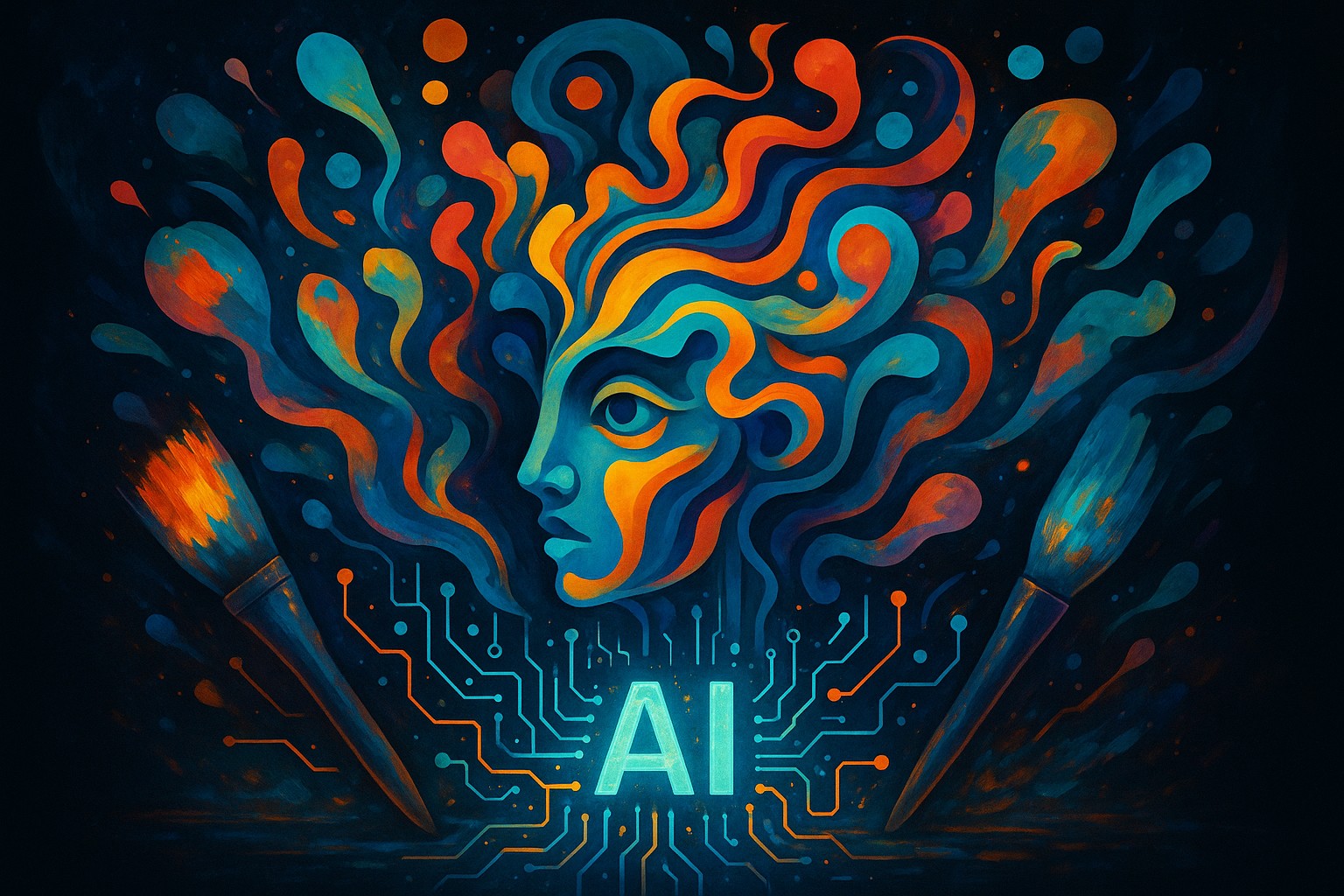
Midjourney AI is a cloud-based image generation platform designed to convert text prompts into high-quality visuals that align with business objectives. Built on advanced diffusion-based generative models, it represents a practical application of contemporary deep learning research in creative production. For teams exploring scalable concept art, product visuals, and marketing imagery, Midjourney translates abstract ideas into tangible assets with a workflow that emphasizes speed, repeatability, and controlled creativity. The system’s emphasis on iterative refinement helps stakeholders align the output with brand language, audience expectations, and campaign timing, bridging the gap between artistic exploration and commercial deliverables.
At its core, Midjourney positions itself as a leading example of midjourney ai art and midjourney ai image generation approaches that combine flexible prompting with guided style controls. The platform is widely accessed through Discord, which lowers the barrier to entry for cross-functional teams while providing a user-friendly trace of prompts and results. For business leaders evaluating AI-assisted art workflows, it is important to understand not only how the tool generates images, but also how outputs can be managed, licensed, and integrated into downstream processes such as product design, social media, and advertising pipelines.
- Join the Midjourney Discord server or access the enterprise channel provided by your plan.
- Enter an /imagine prompt that clearly describes subject, composition, color palette, and any required constraints (aspect ratio, lighting, and mood).
- Review the generated variants, select favorites for upscaling, and iterate with refined prompts to tighten composition and stylistic alignment.
- Upscale the chosen images and incorporate the final visuals into marketing assets, product prototypes, or client-ready decks, then archive the results with associated prompts for reproducibility.
- Maintain a living prompt library and performance log to support ongoing optimization and governance in line with brand guidelines.
Core capabilities and outputs
Midjourney supports a broad set of capabilities tailored to enterprise needs, including high-resolution outputs, consistent styling across iterations, and flexible prompt constructs that enable fine-grained control over composition and aesthetics. The system is designed to generate images that can be used directly in campaigns or serve as concepts for further refinement in traditional design tools. While the exact technical implementation details are proprietary, users experience predictable behavior when specifying style references, lighting scenarios, and subject matter, which helps teams stay aligned on the creative direction across multiple assets.
In practice, the platform balances creative freedom with governance controls. Outputs are suitable for commercial use under defined terms, and many organizations rely on built-in workflow features to track provenance, credit usage, and licensing status. For teams focused on “midjourney ai art” and “midjourney ai image generation,” the value lies in rapid ideation paired with the ability to preserve a consistent visual vocabulary across a portfolio of assets. The following capabilities are central to that value proposition:
- High-resolution upscaling and multiple variation generation to explore alternatives quickly
- Prompt-based style guidance and seed control for reproducibility and brand consistency
- Support for multiple aspect ratios and layout constraints to fit diverse media formats
- Integrated optimization for color, lighting, and composition aligned with business goals
- Asset management-friendly outputs with metadata and prompt history for auditability
- Workflow-friendly collaboration features that support team review and sign-off
For organizations seeking repeatable results, it is common to pair Midjourney outputs with post-processing in design tools or automated pipelines. A simple prompt template can be used to standardize requests, while subsequent reviews ensure that brand standards are met before assets enter production channels. As a practical matter, teams often begin with a few core prompts that establish baseline styles and then expand into iterative prompts to refine texture, depth, and narrative cues.
Workflow, capabilities, and governance
Midjourney’s workflow emphasizes prompt engineering, iterative refinement, and asset governance. Users typically begin with a clear creative brief, then translate that brief into text prompts that specify subject matter, composition, color palette, lighting, and stylistic references. The platform’s iteration loop supports rapid exploration of variations and refinements, enabling teams to converge on an asset that meets both aesthetic and functional requirements. For marketers and product teams, this approach accelerates concept validation and reduces reliance on manual drafting time, allowing faster feedback cycles and tighter alignment with campaign calendars.
Core capabilities include structured prompts, controlled variation, and scalable production of multiple assets from a single concept. To support business needs, teams frequently integrate Midjourney outputs with design systems, brand guidelines, and internal asset libraries. The result is a more predictable creative output that can be tracked, reviewed, and reused across channels. This section highlights practical aspects of the workflow that matter most for commercial use: prompt templates, version control, and collaboration patterns that ensure accountability and consistency across teams.
- Prompt templates that encode brand voice, mood, and visual language
- Versioned prompts and results for auditability and reusability
- Review workflows with clear sign-off checkpoints and documentation
- Style reference libraries to maintain consistency across campaigns
- Quality control steps to verify output suitability for production environments
- Security and governance considerations for sensitive or proprietary assets
// Example: prompt template for a product hero image
Imagine a sleek, modern product hero shot in a cool blue palette, 16:9 aspect ratio, high depth of field, minimal branding, ultra-real lighting.
// You can customize subjects, lighting, or style references per project
Practical integration and best practices
Business teams integrating Midjourney into their creative workflow should pair prompt design with governance and asset management. A disciplined approach to prompt engineering reduces the need for excessive revision cycles and helps ensure that outputs stay aligned with brand strategy. When prompts are crafted with explicit constraints—such as aspect ratio, background treatment, and color harmony—results tend to require fewer edits in downstream tools, speeding time-to-market for campaigns and concepts. The goal is to establish repeatable patterns that scale across teams and projects while preserving the flexibility needed to respond to changing market conditions.
To maximize ROI, organizations adopt a three-pronged approach: (1) engineer prompts that capture business objectives; (2) implement a lightweight governance layer that tracks usage, licensing, and asset provenance; and (3) embed outputs into existing design and product workflows through templates and asset pipelines. The following checklist offers practical steps for teams adopting Midjourney in a professional setting:
- Define clear objectives for each image, including audience, medium, and success metrics.
- Specify style references and constraints to guide the model toward consistent branding.
- Maintain a prompt library with versioning to enable reproducibility across projects.
- Use seed or control parameters when available to preserve visual continuity in series.
- Archive outputs and prompts with licensing notes and usage rights for future audits.
Pricing, performance, and governance
Understanding pricing and performance is essential for long-term planning, especially for teams that rely on image generation as part of a production pipeline. Midjourney typically adopts a credit-based or tiered subscription model, with higher tiers offering more concurrent tasks, faster queue times, and larger credit pools. Business-facing plans commonly include enterprise-grade controls, enhanced admin capabilities, and stricter service-level expectations. While the exact terms may evolve, the core principle is to provide predictable access to compute resources while balancing usage with cost control.
Performance considerations—such as queue latency, image generation speed, and the ability to handle concurrent prompts—are important inputs for project planning. Organizations often align purchase decisions with campaign calendars, peak production windows, and the expected volume of assets. In addition, governance practices around licensing, attribution, and asset rights help ensure that generated content can be deployed across channels with confidence. The following table provides a concise snapshot of typical tier distinctions and what they imply for business users:
| Starter | 30 credits / month | Individual testing and small concepts; slower queue, basic access |
| Pro | 500 credits / month | Small teams; priority queue, faster turnaround, moderate collaboration |
| Business / Enterprise | Custom credits | High-volume use, SLA options, admin controls, advanced security |
For teams seeking deeper automation, enterprise arrangements may include dedicated environments, enhanced data governance, and vetted workflows that integrate with existing asset management systems. In all cases, a disciplined approach to pricing, performance planning, and governance helps ensure that Midjourney delivers measurable value without compromising security or brand integrity.
Case studies, impact, and practical outcomes
Across industries—from consumer electronics to fashion and automotive design—Midjourney has enabled faster ideation cycles, reduced dependency on initial manual sketches, and empowered non-design experts to participate in visual storytelling. The ability to generate multiple concept variants rapidly supports early-stage decision-making and helps teams converge on viable directions earlier in the product development cycle. Businesses also leverage generated visuals as placeholders during prototyping, or as real assets after review and refinement by human designers. In practice, this capability translates into shorter lead times for campaigns, more iterative testing of creative concepts, and the ability to scale production without sacrificing quality.
Creative leaders frequently emphasize the balance between automation and human judgment. Midjourney is most effective when used as a collaborative tool—one that democratizes ideation while ensuring that final outputs meet brand standards, ethical considerations, and legal rights. A cautious, governance-aware approach is essential for protecting IP, avoiding misrepresentation, and ensuring that generated imagery aligns with corporate values. Together, these patterns help organizations realize tangible business benefits while maintaining creative integrity.
“Midjourney enabled our marketing team to generate high-quality visual concepts in days rather than weeks, accelerating our A/B testing program and driving faster iteration cycles without sacrificing brand consistency.”
FAQ
What is Midjourney AI used for?
Midjourney AI is used to generate concept art, product visuals, marketing imagery, and other creative assets from text prompts. It supports rapid ideation, visual exploration, and iteration at scale, helping teams explore多 styles, moods, and layouts before committing to final designs. The outputs are often used in campaigns, prototypes, and internal storytelling, with licensing terms that govern commercial use in aligned contexts.
How does Midjourney’s image generation differ from other tools?
Compared to general-purpose image editors or purely manual workflows, Midjourney emphasizes prompt-driven generation, rapid variation, and consistent styling across iterations. It leverages diffusion-based models trained on large image-text datasets, with a focus on turning descriptive prompts into coherent, high-quality visuals. The platform prioritizes collaborative workflows within a Discord-based interface, which can streamline cross-functional feedback and reduce iteration time for teams working on branding and creative assets.
Can Midjourney be used for commercial projects? What about licensing and rights?
Yes, Midjourney supports commercial use under defined terms, typically tied to specific plans and licensing agreements. It is important for organizations to track licensing status for each asset, including attribution, usage scope, and any redistribution constraints. Enterprises often supplement generated content with internal approvals and watermark controls during internal reviews, ensuring assets meet legal and brand compliance before production deployment.
What are best practices for prompt engineering with Midjourney?
Best practices include defining clear objectives and audience, specifying style references, and constraining prompts with precise aspect ratios and lighting cues. Maintaining a versioned prompt library and documenting results helps with reproducibility, while iterative prompting—starting with broad prompts and refining based on feedback—reduces revision cycles. Tracking assets alongside their prompts supports long-term brand governance and enables scalable reuse across campaigns.
Is there an API or automation path for batch processing?
As of the latest guidance, Midjourney is primarily accessed through Discord for individual and team-based workflows. There is no widely public API for direct programmatic batch processing, though enterprise arrangements may offer integrations and automation capabilities through approved channels. Teams seeking automation often employ workflow tooling that interacts with the Discord interface or uses approved enterprise features to embed outputs into larger asset pipelines, while adhering to licensing and governance requirements.