Now Reading: NFT Token Standards: ERC-721 vs ERC-1155 Comparison
-
01
NFT Token Standards: ERC-721 vs ERC-1155 Comparison

Overview
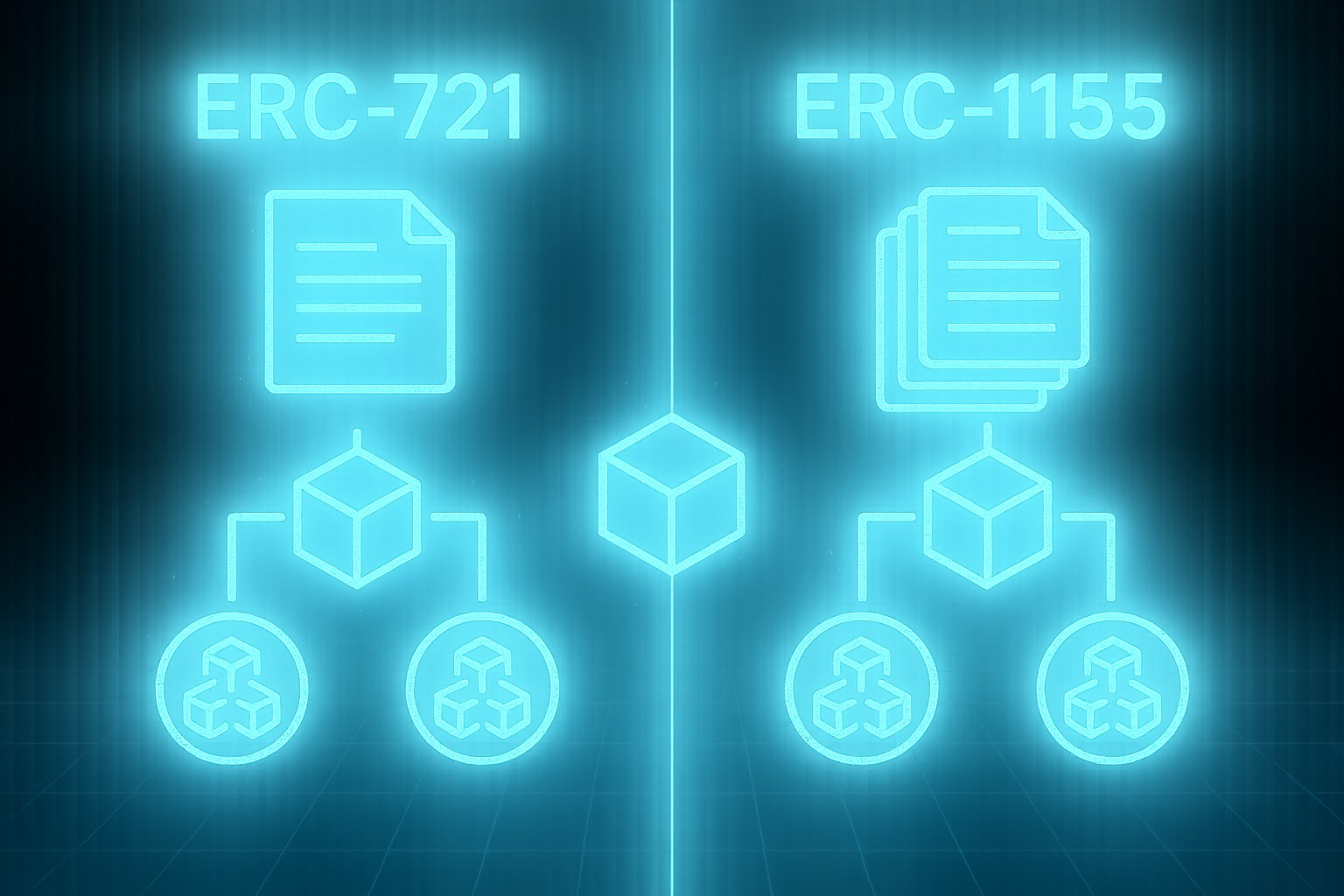
NFTs rely on on-chain standards to define how tokens behave, how they are transferred, and how their data is stored and retrieved. Among these standards, ERC-721 and ERC-1155 have become the two most prominent in the Ethereum ecosystem, each bringing a distinct approach to token modeling, scalability, and interoperability. ERC-721 codifies non-fungible tokens as unique assets with their own identity, provenance, and ownership trails. ERC-1155, by contrast, introduces a multi-token standard that can represent both fungible and non-fungible assets within a single contract, enabling more flexible management of diverse asset types.
From a business perspective, choosing between ERC-721 and ERC-1155 affects how you mint, transfer, and monetize digital assets, as well as how you handle catalog management, marketplace integrations, and user experience. The decision often hinges on the asset mix (unique versus semi-fungible), the expected minting and distribution patterns, and the level of operational efficiency you require at scale. While ERC-721 remains a natural fit for distinct collectibles with clear provenance, ERC-1155 provides a framework for mass-minting, batch operations, and mixed-type asset catalogs that can reduce on-chain overhead and simplify asset management in complex ecosystems.
Core Differences at a Glance
- Token modeling: ERC-721 creates unique token IDs representing individual assets, each with its own ownership. ERC-1155 uses token IDs to represent multiple units of the same asset class, allowing both fungible and non-fungible items to live under one contract.
- Batch operations: ERC-1155 natively supports batch transfers (and batch balance checks), enabling more efficient handling of multiple items in a single transaction. ERC-721 is primarily designed for single-token transfers, with individual calls per token.
- Metadata and URI handling: ERC-721 typically exposes tokenURI(tokenId) to fetch per-token metadata, while ERC-1155 uses a URI with ID substitution to resolve metadata for each id, enabling a more compact metadata strategy in many scenarios.
- Approval and access control: Both standards support operator approvals via setApprovalForAll, but ERC-1155’s batch nature generally encourages scalable approval models for multi-item catalogs.
- Minting, supply, and inventory: ERC-721 tracks individual token provenance and supply per token ID, whereas ERC-1155 tracks balances by (id, account) and can mint multiple ids in a single call, supporting both single and multi-asset creation patterns.
- Ecosystem and tooling: Both standards enjoy broad marketplace support and tooling, but ERC-1155’s versatility often aligns with gaming, virtual goods, and large catalogs that require efficient asset management at scale.
Technical Architecture and Standards Details
| Aspect | ERC-721 | ERC-1155 |
|---|---|---|
| Primary token model | Unique token IDs (tokenId) represent individual, non-fungible assets with distinct provenance. | Token IDs map to an asset class with an associated balance per account, enabling both fungible and non-fungible items. |
| Representative functions | balanceOf(owner, tokenId), ownerOf(tokenId), transferFrom, safeTransferFrom, approve, setApprovalForAll, getApproved, isApprovedForAll | balanceOf(account, id), balanceOfBatch, safeTransferFrom, safeBatchTransferFrom, setApprovalForAll, isApprovedForAll |
| Metadata model | tokenURI(tokenId) typically returns a unique metadata URI per token. | URI(uri, id) provides metadata for each id with the possibility of dynamic substitution to fetch per-id data. |
| Events | Transfer, Approval, ApprovalForAll | |
| Events (ERC-1155) | — | TransferSingle, TransferBatch, ApprovalForAll, URI |
Use Cases and Business Implications
- Digital collectibles and art pieces with strong provenance: ERC-721 excels when each asset has a unique history, scarcity, and distinct attributes. Galleries, museums, and artists often prefer 721 for its straightforward provenance tracking and intuitive wallet display of individual items.
- Gaming and virtual goods with mixed asset types: ERC-1155 enables a single contract to represent currencies (fungible) and items (non-fungible) within a unified catalog. This is particularly advantageous for games with many items, such as weapons, skins, and consumables, where batch transfers and batch balance checks reduce on-chain interactions.
- Fractionalized ownership and scalable catalogs: ERC-1155’s multi-token approach is well-suited for complex asset sets such as virtual lands, bundles, or limited editions that benefit from consolidated management and efficient minting in large volumes.
Gas, Efficiency, and Optimization
Gas efficiency is a core consideration for any NFT deployment, especially at scale. ERC-1155’s design supports lower on-chain costs in many common scenarios, while ERC-721 remains straightforward for assets that require per-token provenance and display. Organizations should weigh the expected transaction patterns, such as batch transfers or mass minting, against the governance and metadata requirements of their asset catalog.
- Batch transfers reduce the number of transactions required to move multiple assets, lowering cumulative gas costs in marketplaces and wallet operations.
- Single-call minting of multiple token IDs or units (in ERC-1155) can significantly reduce deployment and minting costs when dealing with large catalogs.
- Batch balance queries and setApprovalForAll optimizations can simplify asset management for operators who handle thousands of items across many users.
- Metadata storage strategy, such as off-chain storage with IPFS or centralized servers, can minimize on-chain data footprint while preserving integrity via hashes and standards.
- Marketplace and wallet interoperability often favor ERC-1155 for multi-asset catalogs, but ERC-721 remains the preferred choice for high-value, individually curated tokens with immutable provenance.
Security, Compliance, and Interoperability
Security considerations differ with the token model. ERC-721’s per-token provenance can simplify auditing and tracking of individual assets, which is valuable for art, collectibles, and high-value items. ERC-1155’s consolidated approach requires careful handling of IDs, balances, and batch operations to prevent cross-id mix-ups and ensure that batch transfers cannot inadvertently contaminate a user’s asset set. Both standards benefit from robust access control, careful approval workflows, and adherence to best practices in contract upgradeability, input validation, and event auditing. Interoperability with wallets, marketplaces, and backend systems continues to improve as tooling matures for both standards, though 1155’s versatility often yields broader integration opportunities in catalogs with mixed asset types.
In practice, many platforms implement a hybrid strategy: use ERC-721 for uniquely valuable items, and ERC-1155 for the bulk catalog, currencies, and semi-fungible assets to maximize efficiency without sacrificing user experience.
Migration and Ecosystem Adoption
Adoption dynamics favor ERC-1155 in environments requiring high-volume asset management and gaming economies, where batch operations and multi-token support deliver tangible cost reductions. ERC-721 remains dominant in sectors where traceability, unique ownership, and clear, immutable provenance are the centerpiece of value. Claims about migration strategies often focus on modular contracts that coexist: legacy ERC-721 assets can coexist with ERC-1155 catalogs through gateway contracts, metadata standardization, and clear on-chain indexing. Marketplaces continue to evolve to support both standards, with many providing unified dashboards, search capabilities, and cross-standard wallet integrations to minimize friction for end users.
Conclusion
ERC-721 and ERC-1155 each offer compelling capabilities for modern digital asset ecosystems. The choice between them should be grounded in asset characteristics, operational priorities, and long-term scale considerations. When assets are inherently unique with rich provenance, ERC-721 provides a transparent, straightforward path to ownership and display. When asset catalogs are large, diverse, and require efficient batch operations, ERC-1155 delivers scalability without compromising flexibility. Businesses that balance both models—utilizing ERC-721 for standout collectibles and ERC-1155 for broader catalogs—often achieve an optimal combination of user experience, cost efficiency, and future-proofing for expanding use cases.
As the NFT landscape evolves, governance, tooling, and standards continue to mature. Organizations should monitor marketplace support, wallet interoperability, and community-driven extensions to ensure their token strategy remains aligned with ecosystem developments and user expectations.
FAQ
What are ERC-721 and ERC-1155 in simple terms?
ERC-721 defines non-fungible tokens where each tokenId represents a unique asset with its own ownership and metadata, while ERC-1155 introduces a multi-token standard that can represent both fungible and non-fungible items within a single contract, enabling batching and efficient management of many assets.
When should I choose ERC-721 versus ERC-1155 for a project?
Choose ERC-721 when your catalog consists of truly unique items with distinct provenance and indivisible ownership, such as original artwork or rare collectibles. Choose ERC-1155 when you need to manage large catalogs with both fungible and non-fungible items, require batch transfers, or want to minimize on-chain gas for mass minting and distribution.
How do gas costs compare between the two standards in typical scenarios?
ERC-1155 often offers gas savings in scenarios with batch transfers, multi-token minting, and bulk operations, since many assets can be managed in fewer transactions. ERC-721 can be simpler per operation but may incur higher costs when minting or transferring many tokens individually. The actual costs depend on contract design, storage layout, and how interactions are implemented in a given application.
How does metadata work differently between ERC-721 and ERC-1155?
ERC-721 typically uses tokenURI(tokenId) to fetch metadata for each token, usually pointing to a distinct metadata file. ERC-1155 uses a URI pattern with ID substitution (URI) that resolves to per-id data, allowing a single contract to provide metadata for many token IDs, which can simplify management for large catalogs.
How do wallets and marketplaces support both standards?
Most major wallets and marketplaces now support both ERC-721 and ERC-1155, with user interfaces often treating ERC-1155 assets as batches or bundles in a single listing. Marketplaces provide separate listing and filtering options for each standard, while wallets expose per-token or per-id views and bulk operations when appropriate, enabling seamless cross-standard experiences for users and creators.