Now Reading: Platform Engineering vs DevOps: Are They Different?
-
01
Platform Engineering vs DevOps: Are They Different?

Platform engineering: what it is and the core idea
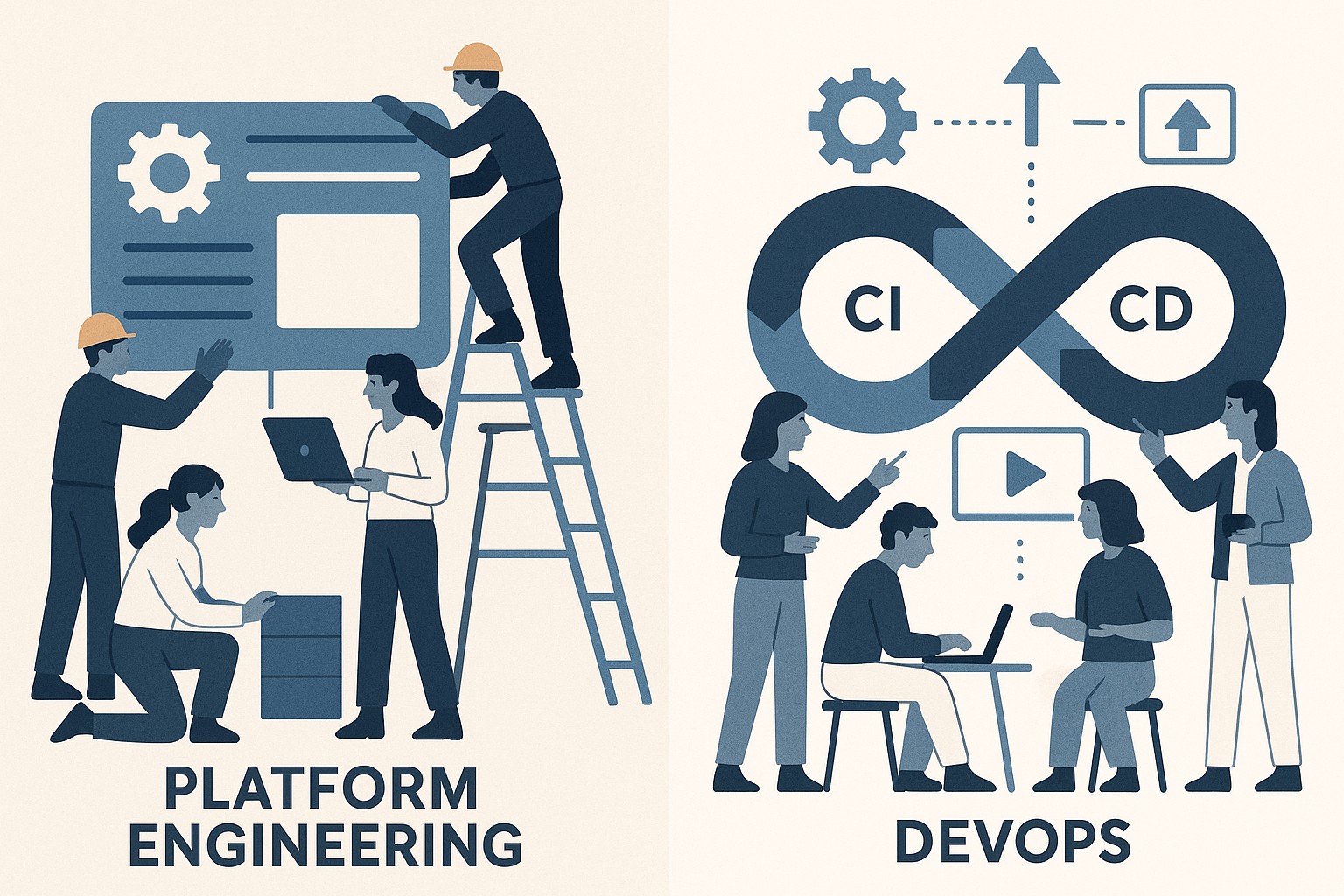
Platform engineering is the discipline of designing, building, and operating internal platforms that enable product teams to deliver software with speed and reliability. It treats platforms as a product with developers as customers and with business-like objectives: reduce cycle time, improve quality, and minimize toil. The approach sits at the intersection of software engineering, infrastructure, and product management, aiming to consolidate repeated patterns into reusable, scalable services rather than duplicating effort across teams.
In practice, platform engineering seeks to move away from ad hoc automation and one-off scripts toward a stable, self-serve environment where teams can compose pipelines, runtimes, and guardrails from a catalog of platform services. The goal is not to replace developers’ work but to remove friction, so engineers can focus on delivering customer value rather than wrestling with infrastructure, tooling decisions, or compliance handoffs. As organizations attempt to scale DevOps practices across many teams, platform engineering provides the backbone that maintains consistency without sacrificing agility.
- Self-serve platform catalog that exposes standardized services
- Composable toolchains and infrastructure abstractions
- Platform as a product with defined owners and SLAs
- Policy as code and programmable guardrails for security and compliance
- Observability, reliability, and cost-awareness built into the platform
DevOps: culture, practices, and objectives
DevOps is primarily a cultural and organizational approach that aligns development and operations to deliver software more quickly and reliably. It emphasizes collaboration, automation, and feedback loops across the entire delivery pipeline. Rather than a single set of tools, DevOps is about creating the conditions in which teams can continuously improve their processes, from planning and coding to testing, deployment, and operations.
Core practices include automation of CI/CD pipelines, infrastructure as code, automated testing, continuous monitoring, and rapid incident response. The emphasis is on breaking down silos, enabling fast feedback, and preserving reliability as velocity increases. In many organizations, DevOps serves as the foundation that enables platform engineering to deliver scalable, repeatable outcomes while ensuring that governance and security are not afterthoughts but integral parts of the delivery lifecycle.
When implemented well, DevOps practices extend beyond software delivery to product and business outcomes, reinforcing a mindset of shared responsibility, continuous improvement, and measurable results. In this sense, DevOps acts as the cultural amplifier that enables platform capabilities to be adopted consistently across multiple teams and domains.
Key differences in scope, artifacts, and tools
| Aspect | Platform Engineering | DevOps |
|---|---|---|
| Scope and ownership | Builds and maintains internal platforms, toolchains, and self-serve services used by multiple product teams. | Fosters cross-functional collaboration between development and operations to automate and improve delivery across teams. |
| Primary artifacts | Platform APIs, self-service portals, templates, runtimes, policy-as-code, and governance artifacts. | Automation scripts, pipelines, deployment strategies, and monitoring dashboards that span the lifecycle. |
| Tooling focus | Standardization, reusability, security-by-default, and scalable abstractions for developers. | Automation, integration, feedback loops, and continuous improvement across the delivery pipeline. |
| Governance and compliance | Embedded guardrails, policy enforcement, and cost controls baked into platform services. | Policy and compliance are integrated into processes but often rely on broader organizational governance. |
| Delivery velocity and feedback | Accelerates developer flow by providing dependable, repeatable platform services and reducing cognitive load. | Speeds up delivery through automated pipelines and fast feedback loops, with a focus on reliability at scale. |
How platform engineering changes the developer experience
Platform engineering transforms the day-to-day experience for developers by lowering cognitive load and providing stable, well-documented interfaces to complex systems. Developers interact with well-defined platform services instead of wrestling with infrastructure details, which reduces context switching and accelerates decision-making. By offering self-serve capabilities, standardized environments, and consistent deployment patterns, teams can ship features more quickly while maintaining quality and security.
As platforms mature, the developer experience becomes more predictable and resilient. Environments are reproducible, pipelines are repeatable, and security controls are embedded by default. This shift also raises the bar for how teams collaborate: product engineering relies on platform owners to deliver reliable building blocks, while platform teams gather feedback to improve services and reduce toil. The outcome is a more scalable delivery model where developers can focus on product outcomes rather than tooling constraints.
- Self-serve catalogs and well-documented APIs for common tasks
- Consistent runtimes, configurations, and environment parity across stages
- Platform teams operating with product-minded discipline, including SLAs and roadmaps
- Security and compliance baked into platform defaults rather than added later
Organization, governance, and measurement
Organizations adopting platform engineering typically structure teams to own the platform as a product, while product teams continue to own the software they deliver. Governance is implemented through policy-as-code, standards, and a clear service catalog. This arrangement helps balance speed with risk management, enabling rapid experimentation without compromising security or cost control. Clear accountability and communities of practice around platform services are essential for sustained adoption.
Measuring success in a platform-first organization requires a mix of platform health metrics and developer-centric outcomes. Useful metrics include platform uptime, time-to-provision for new environments, and the rate of platform service adoption. At the same time, organizations should monitor toil reduction, incident frequency related to platform changes, and developer satisfaction. Together, these indicators provide a holistic view of how the platform supports scaling DevOps practices across the enterprise.
- Time-to-provision for new environments and services
- Platform service adoption rate and catalog utilization
- Toil reduction and automation coverage across teams
- Platform reliability metrics (SLOs, MTTR related to platform changes)
The future of platform engineering and DevOps alignment
Looking ahead, platform engineering and DevOps will increasingly converge as organizations seek to scale both the cultural and technical dimensions of software delivery. The most successful models treat platform engineering as the operational backbone that enables DevOps to scale across hundreds or thousands of teams. This means investing in robust platform governance, measuring platform health with meaningful metrics, and continuously refining the product mindset applied to internal platforms. As automation matures, the platform becomes a strategic capability that reduces risk, accelerates velocity, and delivers a consistent developer experience across the organization.
In practice, alignment is achieved by maintaining a shared backlog, clear ownership boundaries, and regular feedback cycles between platform teams and product teams. Emphasis on security, compliance, and cost governance should be woven into the platform’s design, not added as an afterthought. By treating internal platforms as first-class products, organizations can scale DevOps principles with confidence and sustain competitive delivery capabilities in dynamic markets.
FAQ
What is the main difference between platform engineering and DevOps?
The main difference is scope and focus: platform engineering builds and maintains internal platforms and toolchains to enable developers, acting as a product organization with self-service capabilities and governance baked in. DevOps, by contrast, is a cultural and process-oriented approach that aims to unify development and operations, automate delivery, and foster collaboration across teams to improve speed and reliability. In short, platform engineering provides the reusable infrastructure and services, while DevOps fosters the practices and mindset that make use of those services effective at scale.
How should organizations start adopting platform engineering without disrupting existing DevOps practices?
Start with a clear platform strategy that identifies a minimal viable platform, anchored by a catalog of services aligned to common developer needs. Establish platform ownership, service-level agreements, and policy-as-code from the outset. Run pilot teams to gather feedback, measure toil reduction, and demonstrate value before scaling. Ensure that platform teams collaborate closely with product and security teams so that platform decisions support both velocity and governance rather than creating new bottlenecks.
What are common pitfalls when scaling platform engineering across teams?
Common pitfalls include over-architecting the platform and stifling developer autonomy, neglecting to treat the platform as a product with clear owners and outcomes, and underinvesting in developer outreach and documentation. Another risk is misaligned incentives—if platform teams are judged solely on their own metrics rather than on developer success, adoption may stagnate. Finally, failing to iterate on guardrails in response to real-world usage can create friction and defeat the purpose of self-service capabilities.
Can platform engineering replace DevOps?
No. Platform engineering cannot replace DevOps, because DevOps embodies the cultural and organizational practices that enable rapid, reliable software delivery. Platform engineering provides the technical foundation—platforms, APIs, and services—but it relies on DevOps practices to ensure those capabilities are adopted, governed, and continuously improved across teams. The two disciplines are complementary: platform engineering scales the plumbing, DevOps scales the people and processes that use it.