Now Reading: React vs Angular: Which Framework to Choose?
-
01
React vs Angular: Which Framework to Choose?

Overview and Strategic Context
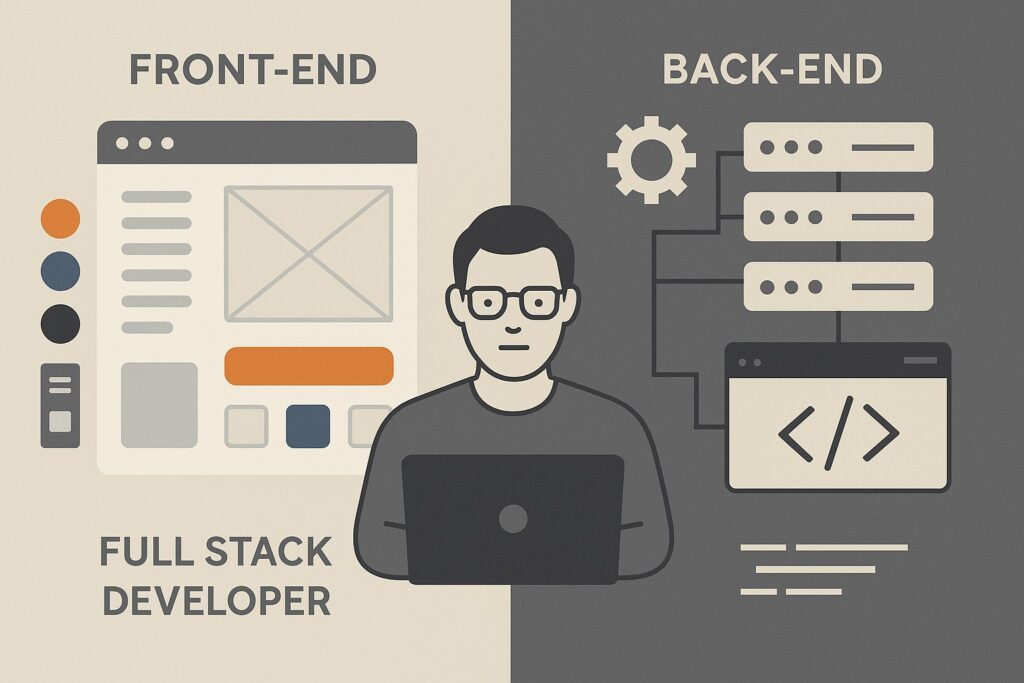
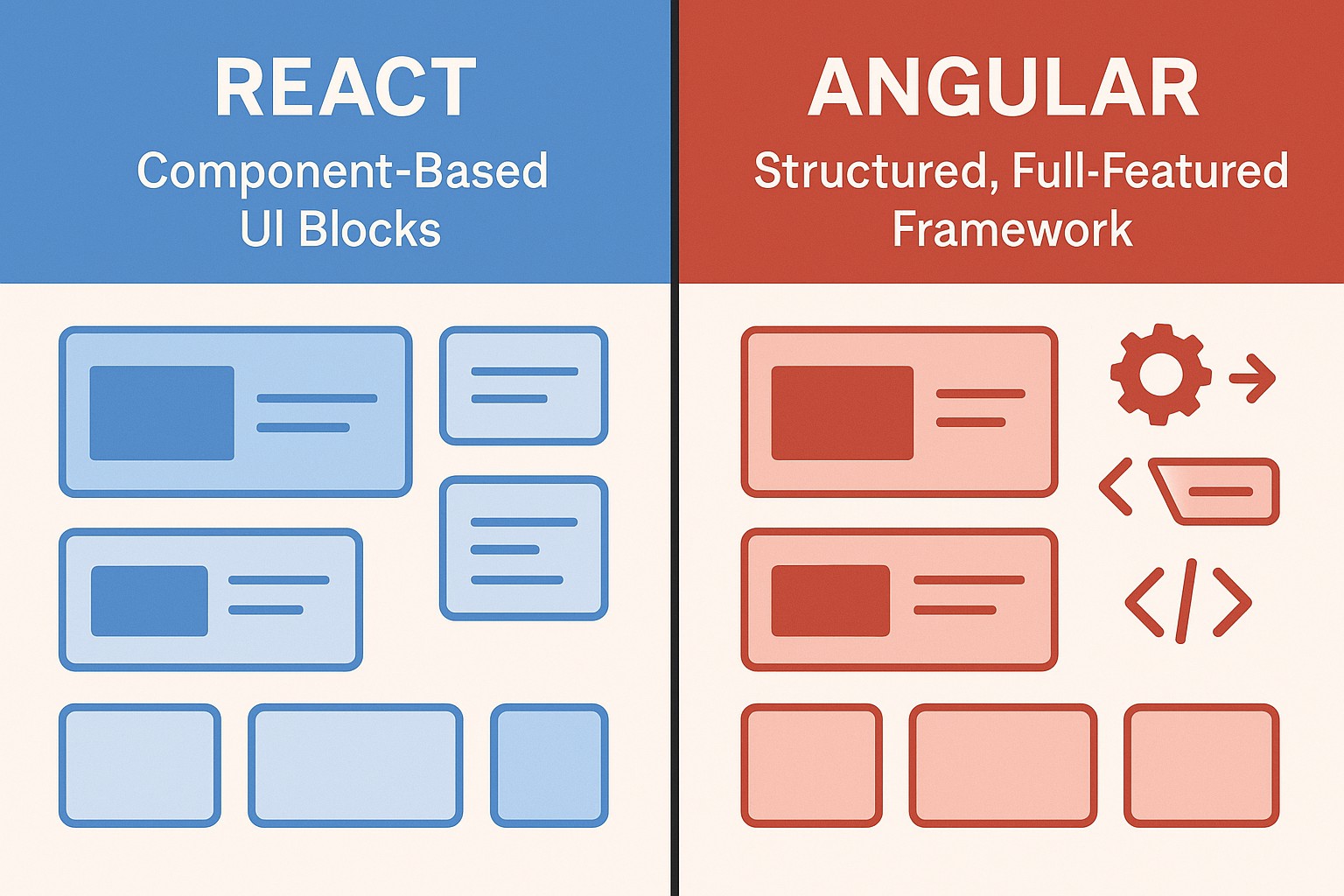
In web development, React and Angular stand as two influential paths for building modern front ends. React offers a flexible approach that focuses on UI composition, while Angular provides a full-fledged framework with opinionated structure and integrated tooling. For organizations evaluating technology strategy, the choice often aligns with project scope, team capabilities, and long-term maintenance expectations.
The decision is not merely about picking a library versus a framework; it is about aligning with how teams design, test, and evolve software. This section frames the comparison and sets up the criteria used throughout the article. To help stakeholders reason through options, the following high-level snapshot highlights key differentiators in architecture, velocity, and governance.
- React is primarily a UI library that delegates many architecture decisions to the developer ecosystem.
- Angular is a complete framework with built-in features such as dependency injection, routing, forms handling, and testing utilities.
- Architectural orientation: React emphasizes component composition and a virtual DOM, while Angular emphasizes opinionated modules, services, and a comprehensive change-detection system.
- Tooling and ecosystem: React benefits from Create React App and a broad ecosystem of compatible libraries; Angular provides a cohesive CLI and integrated solutions.
- Maintenance and scaling: Large enterprise apps often benefit from Angular’s structured approach, whereas React scales through modularization and potential micro-frontends when chosen.
Core Architecture and Design Philosophy
React centers on components and declarative rendering. It treats the UI as a state-driven view that re-renders when data changes, leveraging a virtual DOM to minimize updates. The core library leaves concerns such as data fetching, routing, and form management to the developer’s chosen libraries, offering maximum flexibility. This modular stance is powerful for teams that want to tailor their stack but demands disciplined architecture and consistent conventions across the codebase.
Angular, by contrast, packages a full framework approach. It integrates TypeScript, a robust module system, dependency injection, a comprehensive router, template syntax, and a suite of built-in testing utilities. This cohesion reduces the need for external decisions in the early stages and encourages a uniform approach across the project. The design philosophy favors long-term predictability and enterprise-grade workflows, which can accelerate onboarding for teams that value structured development practices.
Learning Curve and Developer Experience
The initial ramp for React centers on understanding component-based thinking and the surrounding ecosystem. A developer can start with a simple UI and progressively integrate state management, routing, and server communication. The learning curve is generally moderate, but success hinges on choosing stable, well-supported libraries and maintaining consistent coding patterns across the project.
Angular presents a more opinionated entry path. The framework provides a solid baseline with TypeScript, a comprehensive CLI, and integrated testing strategies. While this reduces decision fatigue for teams, it also introduces more concepts to master from day one: decorators, modules, templates, and Angular-specific lifecycle hooks. For organizations seeking rapid alignment on practices, Angular offers a coherent, albeit steeper, learning curve that pays off with predictability over time.
Performance and Scalability Considerations
Performance in React is driven by rendering strategies and the management of state. Since React uses a virtual DOM, updates can be batched efficiently. The performance story improves as teams leverage memoization, selective rendering, and code-splitting. However, heavy reliance on external libraries for routing, data fetching, and state management means performance is only as good as the combination chosen by the team.
Angular performance hinges on the framework’s change detection mechanism and the ability to manage heavy templates with ahead-of-time compilation. Modern Angular uses differential loading, zone.js optimizations, and Ivy rendering to optimize bundle size and startup time. For large-scale apps with complex forms and dynamic content, Angular’s built-in features can deliver predictable performance without excessive boilerplate, especially when guided by platform best practices.
Ecosystem, Libraries, and Community Support
Both ecosystems boast strong communities and a wealth of resources, but they differ in focus and maturity. React thrives on a vast ecosystem of UI components, state management patterns, and platform-agnostic tooling. Angular offers a cohesive, officially supported stack including Angular Material for UI components, a robust CLI, and enterprise-grade conventions that emphasize maintainability and consistency across teams.
When evaluating UI options, many teams consider angular material vs bootstrap as a practical comparison for styling and components. In practice, Angular Material provides consistent behavior with Angular apps, while Bootstrap or Tailwind CSS can be layered on top of React projects with flexible theming. The choice often reflects organizational standards, accessibility goals, and the desired level of built-in uniformity across squads.
Project Scenarios: When to Choose React vs Angular
Decision-making for framework selection should align with project goals, team composition, and long-term maintenance plans. For startups and fast-moving teams aiming to ship a compelling MVP quickly, React’s lightweight footprint and modular ecosystem can reduce time-to-market. For multinational enterprises with strict governance, standardized processes, and extensive form-heavy UIs, Angular’s integrated tooling can ensure consistency and reduce divergence across squads.
To support a structured decision, consider the following checklist of criteria. This list is designed to be practical and decision-oriented rather than theoretical. Use it to map project requirements to framework strengths and risk factors, and to guide conversations with stakeholders about trade-offs.
- Team skill set: do developers prefer TypeScript-first tooling and DI patterns (Angular) or a flexible, library-first approach (React)?
- Project size and complexity: will the app evolve into a large enterprise system with many forms, routes, and data layers (Angular tends to scale well in this context)?
- Time-to-market: is there a need for rapid MVP delivery with minimal architectural overhead (React often wins here with a rich ecosystem)?
- Long-term maintenance: are there established internal standards, governance, and testing conventions that favor an opinionated framework?
- SEO and initial load considerations: does the app require strong server-side rendering or static pre-rendering strategies (Angular Universal, Next.js variants for React can help)?
Implementation Details: Project Setup and Coding Styles
Getting started with React typically involves choosing a scaffolding option, installing a bundler, and defining a project structure that suits the team. The flexibility is a strength when the team wants to optimize for specific performance or architecture goals. A simple React component as a starting point demonstrates the declarative approach and JSX syntax, while still leaving room to select the appropriate state management and routing solutions.
Angular projects emphasize structure from the outset. The framework advocates a modular organization with feature modules, services, and strict typing. A typical setup aligns with the Angular CLI conventions, enabling consistent scaffolding, testing, and build tooling. Below is a basic example of a React component to illustrate the style difference, followed by a quick look at how a similar unit could be expressed in Angular, to highlight the contrast in boilerplate and approach.
// React (TypeScript)
type Props = { name: string };
export function Greeting({ name }: Props) {
  return <div>Hello, {name}</div>;
}
In the Angular world, a simple component would commonly involve a TypeScript class, a decorator, and an HTML template, reinforcing the separation of concerns. This example is for orientation and not a complete Angular snippet, but it showcases the difference in the development posture between the two ecosystems.
Migration and Long-Term Maintenance
Migration plans are a key part of any technology decision. React migrations tend to be incremental, driven by evolving component patterns, state management choices, and library upgrades. Teams can adopt micro-frontends or gradual refactors to minimize risk while maintaining feature delivery. The flexibility of React means that teams can adapt architectures as the product matures, but this adaptability also requires disciplined governance, testing, and documentation.
Angular provides a more integrated path for long-term maintenance, particularly in large organizations with established governance. The framework supports consistent API surfaces, strict typing, and a unified set of tooling for testing, linting, and deployment. Migrating from older Angular versions to newer ones tends to be structured, with official guidelines and a clearly defined upgrade process, which can reduce risk for enterprise deployments but may require more upfront planning.
Security, Testing, and Compliance
Security and quality assurance are integral to both ecosystems. React tests are typically centered on component behavior, interaction with external services, and ensuring state integrity across UI changes. Teams often serialize tests with Jest, React Testing Library, and end-to-end testing frameworks that fit their stack. Because React leaves many concerns to external libraries, a strong testing strategy is essential to maintain consistency across the product.
Angular provides built-in testing utilities as part of its framework, including TestBed and a suite of testing helpers. This cohesion can streamline test creation and ensure coverage for core framework features. Security concerns—such as input validation, sanitization, and proper handling of authentication tokens—are addressed through careful component design, secure API interactions, and adherence to established security practices across the codebase.
Which framework has a smaller initial learning curve?
In general, React offers a gentler entry point for teams focused on UI and progressive enhancement, while Angular requires mastering a broader, opinionated toolset. The difference often shows up in onboarding time, the breadth of concepts to absorb early, and the level of governance teams want to impose from day one.
How do React and Angular handle testing differently?
React relies on external testing libraries such as Jest and React Testing Library, with end-to-end tests typically using Cypress or similar tools. Angular includes built-in testing utilities and a TestBed for component and service testing, which can streamline some testing patterns but also enforces a more uniform approach across the codebase.
What about TypeScript usage in both frameworks?
Angular ships with TypeScript by default and uses typings to enforce structure across the application. React supports TypeScript but treats it as an option; teams can migrate gradually or adopt plain JavaScript. The choice influences tooling, compile-time checks, and long-term maintainability across the team.
Which framework is better for MVPs or rapid development?
React often excels for rapid MVPs due to its minimal bootstrap, flexible wiring of libraries, and strong community-supported patterns. Angular can also support fast delivery when governance and standardized practices align with the project, but the upfront investment in learning and configuring the framework is typically higher.
How does the choice affect long-term maintenance and team scaling?
Angular’s opinionated architecture can simplify maintenance for large teams by providing a consistent baseline and shared tooling. React’s flexibility offers adaptability for evolution but requires disciplined governance, code reviews, and automation to maintain coherence as teams scale.