Now Reading: 4PL Software: Optimizing Supply Chain Logistics
-
01
4PL Software: Optimizing Supply Chain Logistics

What is 4PL software?
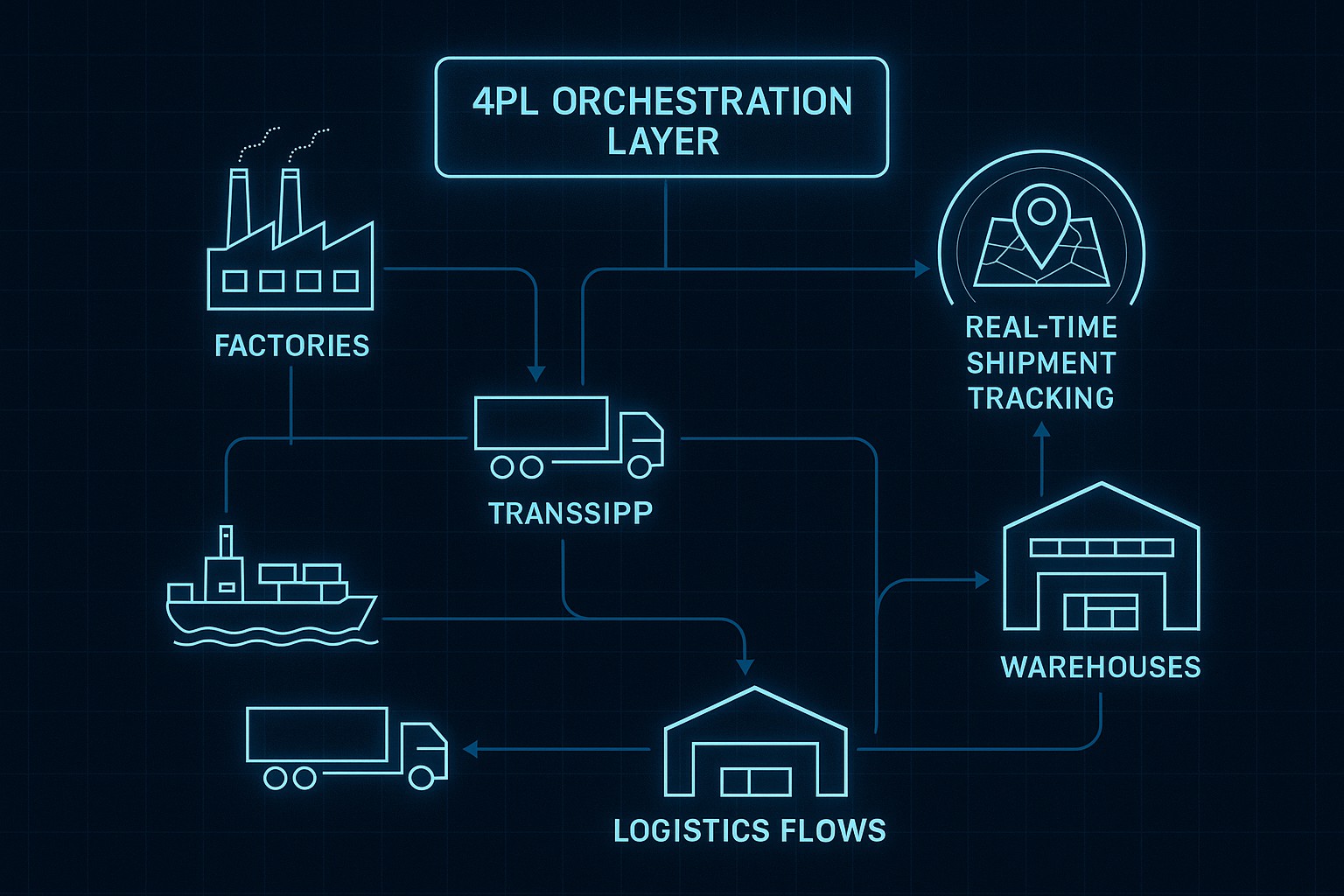
Fourth-Party Logistics (4PL) software acts as a control tower that coordinates multiple logistics service providers, IT systems, and resources to deliver end-to-end supply chain outcomes. It integrates strategy, planning, and execution across the network, not just individual legs of transport. By centralizing visibility and decision-making, 4PL platforms align logistics activities with corporate objectives such as on-time delivery, inventory efficiency, and cost containment. The software is designed to support complex networks with multi-tier supplier relationships and dispersed distribution centers, enabling a holistic view of performance and risk.
In practice, organizations deploy 4PL software to consolidate data from carriers, warehouses, and transportation modes, providing real-time visibility and proactive decision-making. The platform serves as a single source of truth for planning, execution, and performance management, while sparing teams from juggling disconnected systems. With governance, workflows, and analytics built in, 4PL software helps clients optimize capacity, reduce hand-offs, and respond quickly to disruptions.
- End-to-end network orchestration across multiple tiers and geographies
- Real-time visibility and event management across the supply chain
- Collaborative planning with suppliers, carriers, and customers
- Dynamic capacity sourcing and resource pooling
- Performance analytics, benchmarking, and continuous improvement
Core capabilities of 4PL software
The core capabilities of 4PL software lie in harmonizing planning, execution, and analytics into a single, scalable platform. Organizations leverage these functions to move from reactive firefighting to proactive management, even when networks span multiple carriers, geographies, and regulatory environments. The framework also supports governance by enacting standardized processes, controls, and approvals that can be audited and improved over time.
Key features include end-to-end order orchestration, real-time inventory visibility, and integrated carrier management. In addition, advanced analytics enable scenario modeling, KPI tracking, and automated exception handling, helping logistics teams stay aligned with service-level agreements and customer expectations. The result is a more resilient supply chain that can adapt to demand variability and external shocks without sacrificing cost efficiency.
- Order management and orchestration across multiple channels
- Inventory visibility and forecasting across warehouses and transit
- Carrier management, rate negotiation, and contract compliance
- Transportation planning, route optimization, and load building
- Dock scheduling, yard management, and appointment visibility
- Compliance, documentation, and audit trails
Data integration and visibility
Effective 4PL software depends on clean, timely data from a broad ecosystem of sources. The platform ingests data from carriers, suppliers, warehouse systems, ERP instances, and Internet of Things (IoT) devices, then transforms it into a consistent format for analysis and action. Data quality, metadata management, and data lineage are essential to ensure trust across planning and execution cycles. By stitching together disparate feeds, the software creates a coherent view that supports both tactical decisions and strategic planning.
To achieve real-time insight, 4PL software relies on a mix of integration patterns, including APIs, EDI, batch exports, and event-driven messaging. This approach enables dashboards, alerts, and automated workflows that trigger corrective actions when performance drifts. Strong data governance, access controls, and role-based views help ensure that the right stakeholders see the right information at the right time, reducing latency in decision-making.
- EDI/X12 and XML feeds from suppliers and carriers
- API-based integrations with ERP, WMS, TMS, and CRM systems
- IoT and telematics data from vehicles, warehouses, and shipments
- ERP and financial data for cost attribution and invoicing
- Event streams and messaging for real-time alerts
Benefits and ROI
Organizations that adopt 4PL software typically realize improvements across service levels, efficiency, and cost containment. The ability to view the entire network from a single cockpit enables faster exception resolution, more accurate forecasting, and better capacity utilization. As a result, customers experience higher on-time delivery, reduced expedited freight, and lower working capital tied up in transit and inventory.
Beyond tangible savings, the technology drives strategic benefits such as increased supply chain resilience, clearer accountability among partners, and the ability to simulate changes before committing to commitments. While ROI is highly context-specific, most firms measure gains in reduced operational waste, improved inventory turns, and stronger alignment with customer expectations, all of which compound over time as processes mature.
Deployment models and architecture
4PL software can be deployed in several architectural models, including cloud-based SaaS, on-premises installations, or hybrid configurations. Cloud options typically offer faster time to value, automatic updates, and scalable capacity to support peak seasons. On-premises deployments emphasize control, customization, and data sovereignty, which may be important for regulated industries. Hybrid approaches blend these benefits, enabling sensitive data to reside behind the firewall while leveraging cloud-based analytics and collaboration tools.
In practice, most large networks adopt multi-tenant or modular cloud architectures that allow new carriers, warehouses, and regions to be connected with minimal friction. This flexibility supports continuous improvement cycles, faster onboarding of partners, and the ability to sunset legacy systems gradually without interrupting service. Regardless of the model, governance, security, and data stewardship remain critical design considerations.
Implementation considerations
A successful implementation starts with a clear business case, executive sponsorship, and a detailed roadmap that aligns with inventory, transportation, and service objectives. Teams should begin with data assessment, cleansing, and mapping to ensure consistent inputs for the new platform. From there, process redesign and change management activities help users adopt new workflows and embrace standardized operating procedures.
Key activities include defining KPIs, establishing data migration and cutover plans, and ensuring integration with legacy systems such as ERP, WMS, and TMS. A phased rollout—often starting with a pilot in a focused elevator of the network—reduces risk and builds learner feedback into subsequent waves. Post-implementation, ongoing governance and continuous improvement programs sustain benefits over time.
Security, compliance, and risk management
Security must be designed into every layer of a 4PL solution. This includes strong identity and access management, encryption in transit and at rest, regular security testing, and comprehensive monitoring for anomalous activity. An audit trail that records user actions, data changes, and workflow decisions supports accountability and regulatory inquiries. Providers should also offer reliable disaster recovery and backup capabilities to maintain continuity during incidents.
Regulatory and contractual requirements vary by region and industry. Data sovereignty, privacy laws, and supply chain traceability obligations may govern what data can be stored where and who can access it. Establishing clear governance around partner access, data sharing, and incident response helps organizations mitigate risk while preserving agility in global networks.
Industry use cases
Retail and e-commerce networks rely on 4PL software to synchronize demand signals with distribution networks and last-mile providers. By harmonizing forecast accuracy, replenishment planning, and carrier capacity, retailers can reduce stockouts and improve delivery performance across channels. Manufacturers also use 4PL platforms to optimize inbound logistics, support vendor-managed inventory, and coordinate cross-docking across multiple plants and service centers.
Logistics service providers leverage the software to provide scalable, consistent service across dozens of customers with diverse requirements. The platform enables collaborative planning, standardized documentation, and transparent performance reporting, which strengthens trust and reduces the complexity of multi-client networks. In highly regulated sectors such as healthcare and automotive, 4PL tools help ensure compliance, traceability, and timely recalls when necessary.
Future trends in 4PL software
Looking ahead, artificial intelligence and machine learning will be embedded more deeply to support autonomous decision-making, dynamic routing, and proactive risk assessment. Predictive analytics will anticipate disruptions before they occur, while digital twins of supply networks will enable what-if simulations at scale. Blockchain-based provenance and immutable records can improve traceability and trust among partners in complex ecosystems.
In addition to technical innovations, 4PL platforms are evolving toward sustainability analytics, carbon accounting, and resilience metrics that quantify the environmental and social impact of logistics choices. As customers demand greater transparency and compliance, software providers will integrate more granular data governance, user-centric dashboards, and collaborative workflows that align multiple stakeholders around shared goals.
How does 4PL software differ from 3PL platforms?
A 4PL platform serves as a governance and orchestration layer that sits above multiple logistics providers and IT systems, offering end-to-end visibility, standardized processes, and performance management across the network. In contrast, a 3PL platform typically focuses on execution and optimization within a single service provider or function. The 4PL approach emphasizes network-wide collaboration, cross-carrier planning, and strategic decision support to drive outcomes beyond the scope of any single partner.
What kind of ROI can be expected from implementing 4PL software?
ROI from 4PL software is typically realized through lower transportation and handling costs, improved inventory turns, higher fill rates, and fewer disruptions. Organizations also gain softer but valuable benefits, such as greater supply chain resilience, faster response times to change, and stronger alignment with customer expectations. Realizing these gains requires a clear KPI framework, disciplined data governance, and staged optimization.
How long does a typical implementation take?
Implementation timelines vary by scope, data readiness, and system complexity, but many mid-market deployments run from three to nine months. Larger, multi-region programs may extend beyond a year. A phased approach—starting with a pilot, then expanding to additional regions and functions—helps manage risk, incorporates user feedback, and accelerates realization of value.
What security considerations should be prioritized?
Priority should be given to identity and access management, encryption (at rest and in transit), regular vulnerability assessments, and robust incident response capabilities. Audit trails, data governance, and compliance with relevant standards (for example, ISO 27001 or SOC 2) provide assurance to stakeholders and regulators while supporting accountability across partner networks.
How can a business integrate 4PL software with existing systems?
Integration typically relies on APIs and standard data formats (EDI, XML, JSON), supported by middleware or an integration platform. A thoughtful data mapping exercise aligns ERP, WMS, and TMS data with 4PL data models, while change-management programs ensure that processes, roles, and KPIs align with the new workflows. A phased integration strategy reduces risk and accelerates user adoption.